
Bellwood in Cook County, Illinois — The American Midwest (Great Lakes)
General Mihailović
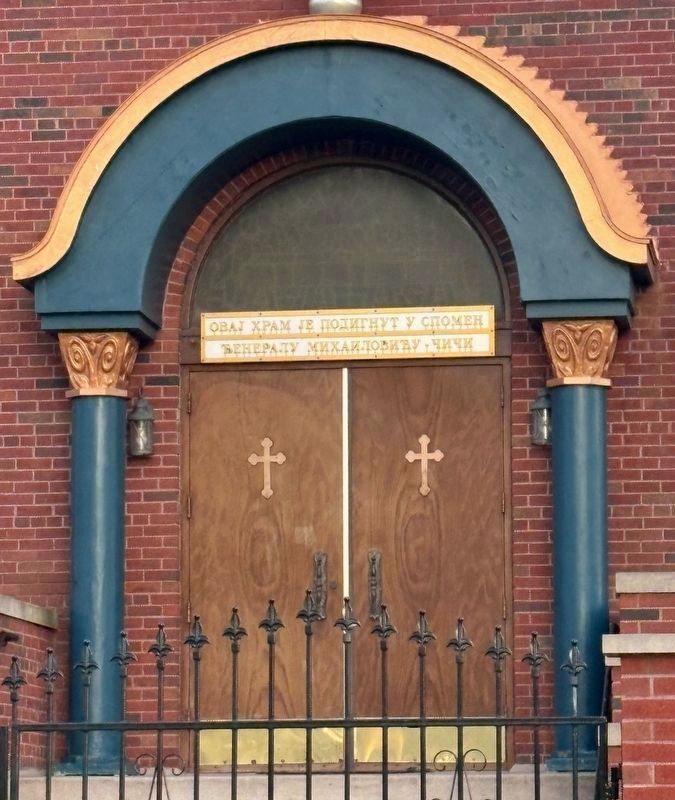
Photographed by Sean P. Flynn, November 15, 2026
1. General Mihailović Marker
The inscription is above the door to St. John the Baptist Serbian Orthodox Church in Bellwood.
Овај храм је подигнут у спомен Генералу Михаиловићу - Чичи
[English translation of the Serbian text:]
This temple was erected in memory of General Mihailović - Uncle
Erected 1959 by St. John the Baptist Serbian Orthodox Church.
Topics. This memorial is listed in these topic lists: Religion & Religious Structures • War, World II.
Location. 41° 53.105′ N, 87° 53.06′ W. Memorial is in Bellwood, Illinois, in Cook County. It is at the intersection of Englewood Avenue and Oak Street, on the left when traveling south on Englewood Avenue. The text is above the entry into St. John the Baptist Serbian Orthodox Church. Touch for map. Memorial is at or near this postal address: 405 Englewood Avenue, Bellwood IL 60104, United States of America. Touch for directions.

Regionally, this
this page online
Other nearby markers. At least 8 other markers are within 2 miles of this marker, measured as the crow flies: Pvt. Albert E. Fenhouse (approx. 0.3 miles away); First Bellwood Bell (approx. 0.7 miles away); Memorial Park (approx. 0.7 miles away); Veterans Memorial (approx. 0.7 miles away); a different marker also named Veterans Memorial (approx. 1.2 miles away); Sharp Memorial Park (approx. 1.2 miles away); Ralph "Babe" Serpico Field (approx. 1.2 miles away); a different marker also named Veterans Memorial (approx. 1.2 miles away). Touch for a list and map of all markers in Bellwood.
More about this memorial. According to a contemporary report by the Bellwood Star Progress newspaper, the land for this church was dedicated and consecrated on July 19, 1953, as part of "Mihailović
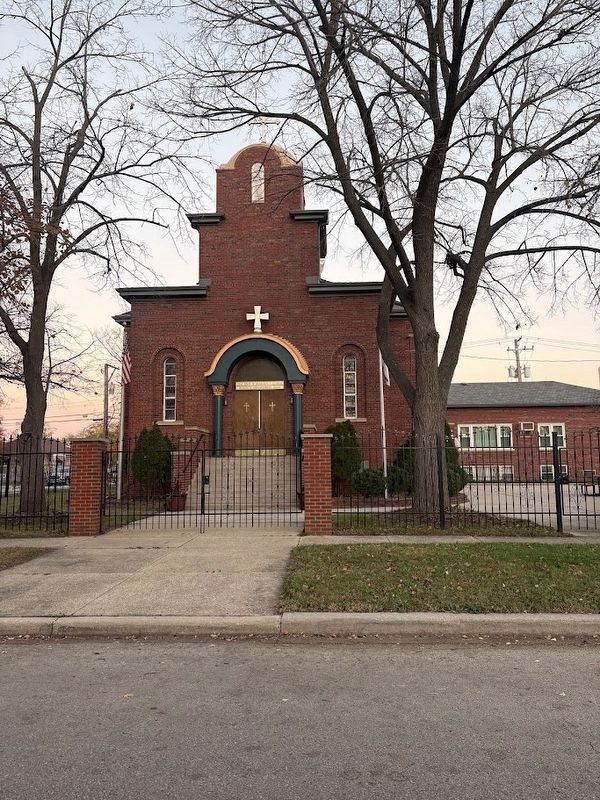
Photographed by Sean P. Flynn, November 15, 2026
2. St. John the Baptist Serbian Orthodox Church
The church opened in 1959.
Regarding General Mihailović. The text above this Serbian Orthodox church in Bellwood honors Serbian general Dragoljub “Draža” Mihailović (referenced in this sign as Čiča, the Serbian word for uncle that
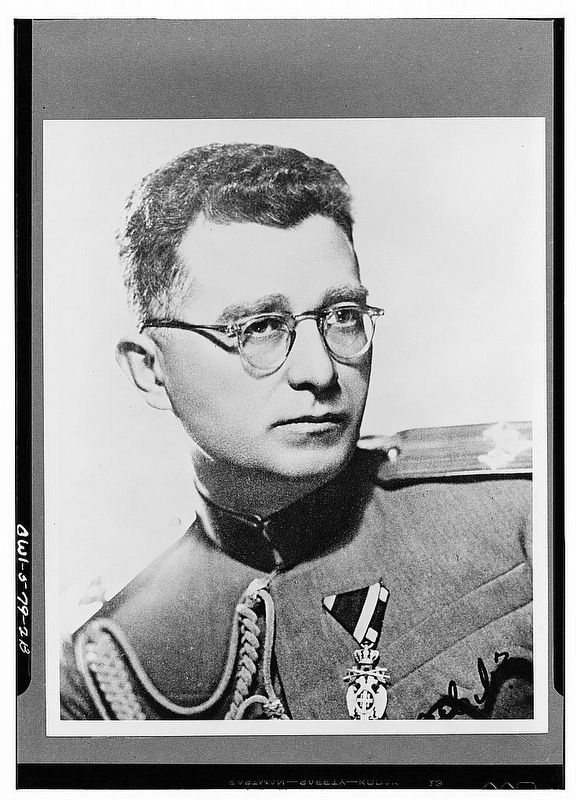
Farm Security Administration/Office of War Information collection, Library of Congress, circa 1942
3. Dragoljub Mihailović (1893-1946)
Mihailović was born in 1893 in Ivanjica, in what was then part of the Kingdom of Serbia. Orphaned at age 7, he was raised by an uncle in Belgrade. He joined the Serbian military in 1910 and served in army in the first and second Balkan Wars in 1912-1913, and later in World War I. His military service continued as Serbia merged with several other kingdoms to form Yugoslavia.
During World War II, after Yugoslavia fell to German forces in 1941, Mihailović formed a Serbian resistance force called the Chetniks, which resisted German occupation early in the war but later worked in support of fascist leaders. The Chetniks also embraced a nationalist ideology that led to actions against non-Serbs in Yugoslavia, in particular Muslims and Croats.
After the war, Mihailović went into hiding, but was captured by the Yugoslavian government in March 1946 and put on trial for treason and war crimes. Mihailović claimed that he had not ordered any of the atrocities, and that those that occurred had been hidden from him. Whatever the case, Mihailović was convicted in a hasty trial and sentenced to death. He was executed by firing squad in Belgrade in July 1946.
Mihailović's legacy remains as controversial as it was when he was executed more than 80 years ago, and even as his conviction was overturned by the Serbian high court in 2015. To many (as evidenced by the inscription above this church doorway), Mihailović was a national hero whose execution was for purely political reasons. For example, the Bellwood newspaper report referenced in the section above described Mihailović as "the leader of Serbian's democratic guerilla forces and loyal ally of the United States in World War II"; indeed, Mihailović was posthumously awarded the Legion of Merit by President Truman in 1948 for his role in rescuing hundreds of downed U.S. airmen in Serbia. Critics, however, accuse Mihailović of being a Nazi collaborator, and in particular blame him for numerous atrocities against non-Serbs in Yugoslavia during the war years.
Also see . . . 69 years after execution, WWII general gets Nazi treason conviction tossed. A news report about the 2015 overturning of the 1946 treason conviction of Dragoljub “Draža” Mihailović.
Excerpt: "As a Yugoslav royal army officer, Mihailovic launched a resistance movement in 1941 against German occupation, before turning against communist guerrillas later in the war. When World War II was over, he was jailed and sentenced to death in a hasty trial. He was buried in an unmarked grave."(Submitted on November 17, 2026, by Sean P. Flynn of Oak Park, Illinois.)
Credits. This page was last revised on November 19, 2026. It was originally submitted on November 17, 2026, by Sean P. Flynn of Oak Park, Illinois. This page has been viewed 16 times since then. Photos: 1, 2, 3. submitted on November 17, 2026, by Sean P. Flynn of Oak Park, Illinois.
