
Albany in Carroll County, New Hampshire — The American Northeast (New England)
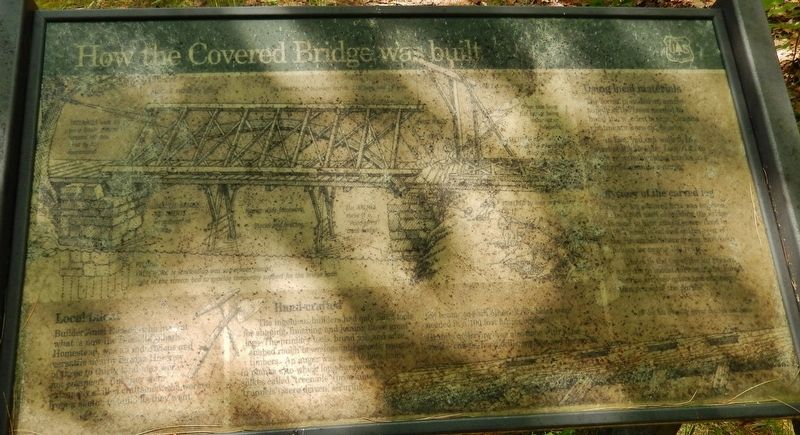
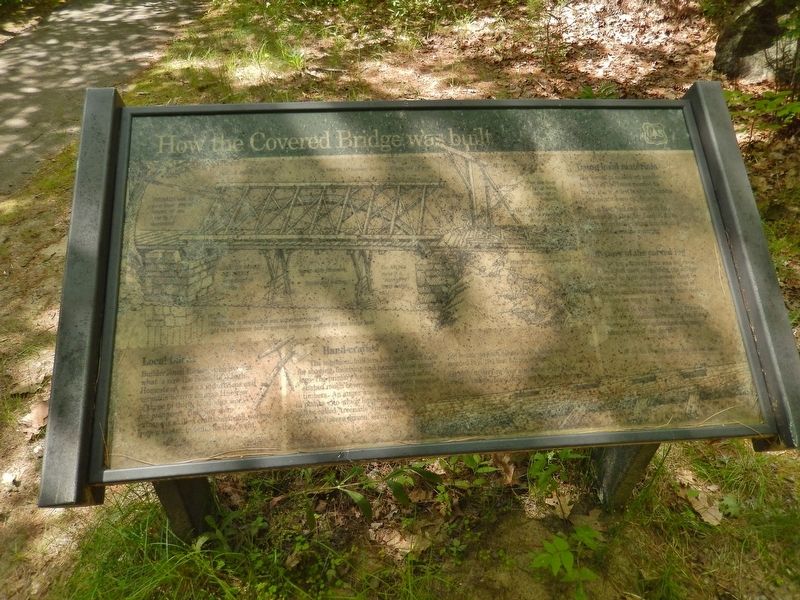
How the Covered Bridge was built
Photographed by Cosmos Mariner, July 5, 2017
1. How the Covered Bridge was Built Marker
Local Ideas
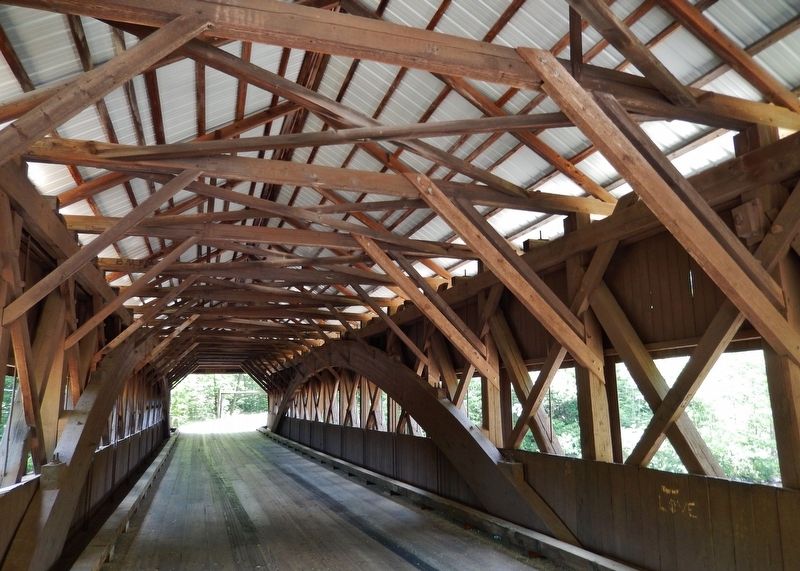
Builder Amzi Russell who lived at what is now the Russell-Colbath homestead, was an industrious and versatile nearby builder. His crew of three to thirty local hands were not engineers. But they were extremely skilled craftsmen who worked from a sketch to build as they went.
Hand-crafted
The ingenious builders had only hand tools for shaping, finishing and joining these great logs. The primary tools, broad axe and adze, shaped rough-hewn logs into smooth, squared timbers. An auger was used to bore holes in planks to which long hardwood spikes called “treenails” (pronounced “trunnels”) were driven, securing the beams to each other. Granite quarrying was also done with hand tools.
Using Local Materials
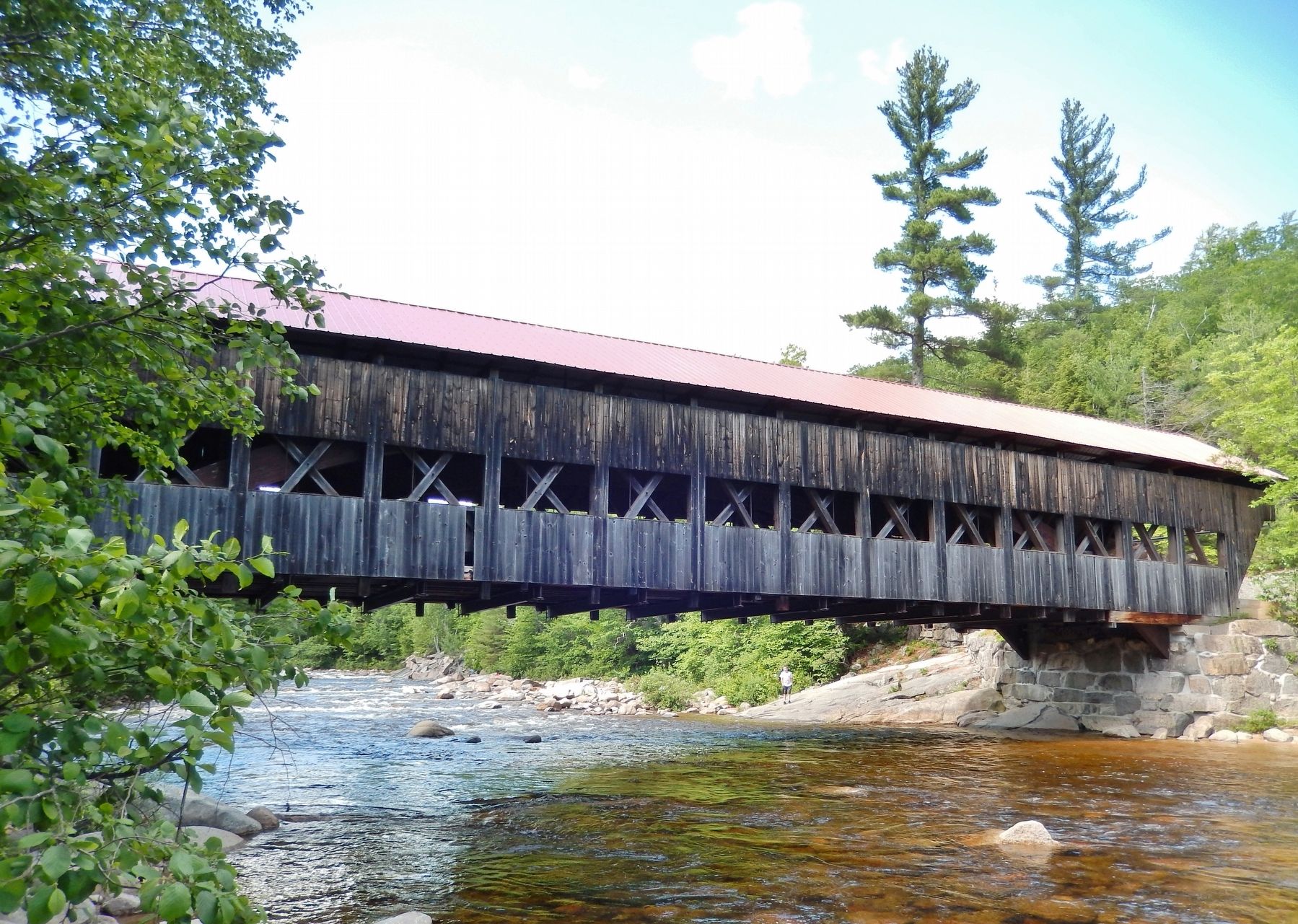
The forest provided ample supply of the trees needed to build the bridge. Granite abutments were found nearby.
Mystery of the Carved Log
The 58' log pictured here was believed to be a tool used in building the bridge. It came to light after a severe flood in 1987, when it washed onshore out of the stream bed where it had lain hidden for 100 years. Holes in the top of the log present a puzzle
this page online
Erected by Forest Service, U.S. Department of Agriculture.
Topics and series. This historical marker is listed in this topic list: Bridges & Viaducts. In addition, it is included in the Covered Bridges series list.
Location. This marker has been replaced by another marker nearby. It was located near 44° 0.351′ N, 71° 14.456′ W. Marker was in Albany, New Hampshire, in Carroll County. It could be reached from Passaconaway Road east of Kancamagus Highway (New Hampshire Route 112) when traveling east. Marker is located beside the Albany Covered Bridge. Touch for map. Marker was in this post office area: Conway NH 03818, United States of America. Touch for directions.

Regionally, this marker was in the White Mountains. It was also in the American Northeast and in New England. Globally, it was in North America, the Western Hemisphere, the Western World, and the Anglosphere. Historically, it found itself in what was once one of the original Thirteen Colonies.
Other nearby markers. At
Photographed by Cosmos Mariner, July 5, 2017
2. How the Covered Bridge was Built Marker (wide view)
Related marker. Click here for another marker that is related to this marker. This marker has been replaced with the linked marker.
Also see . . .
1. Albany Bridge. New Hampshire Covered Bridges website entry:
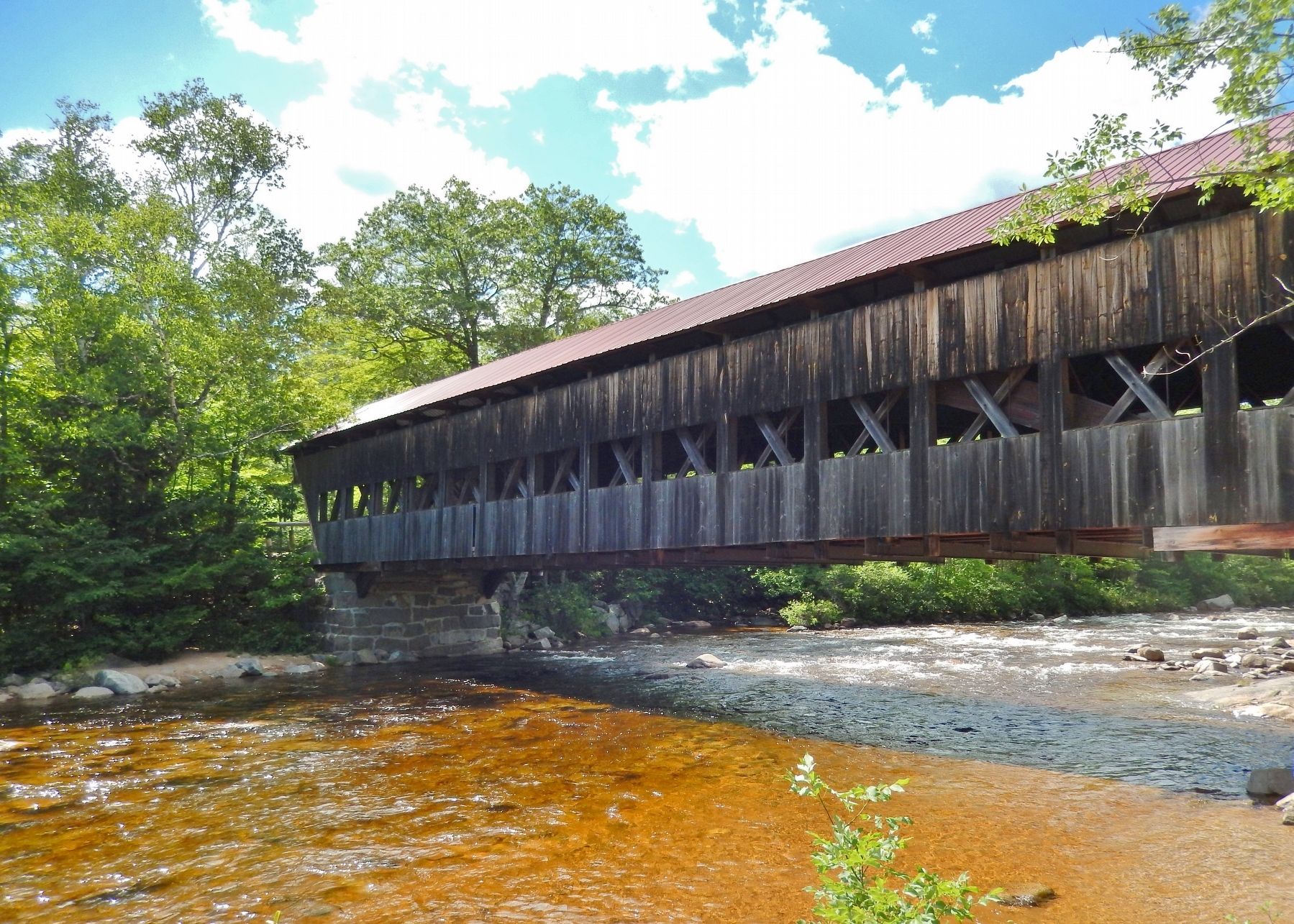
The first bridge on this site was constructed in 1857 and destroyed by a windstorm in 1858. At that time, Amzi Russell and Leandre Morton entered into an agreement with the town to build a new bridge for $1,300 minus the amount previously paid for the original
Photographed by Cosmos Mariner, July 5, 2017
3. Albany Covered Bridge (view fron near marker)
2. The Russell-Colbath Homestead. Wikipedia entry:
The house was built in 1831-32 by Thomas and Amzi Russell, and is the only surviving 19th-century homestead in the Swift River valley. The Russells were among the early permanent settlers, arriving in the 1820s (failed settlements took place in 1805 and 1815). The Russells operated a sawmill on Oliverian Brook, and were part of a small farming and logging community in the immediate area, which constituted the best farmland in the valley. (Submitted on April 12, 2018, by Cosmos Mariner of Cape Canaveral, Florida.)
Photographed by Cosmos Mariner, July 5, 2017
4. Albany Covered Bridge (view fron near marker)
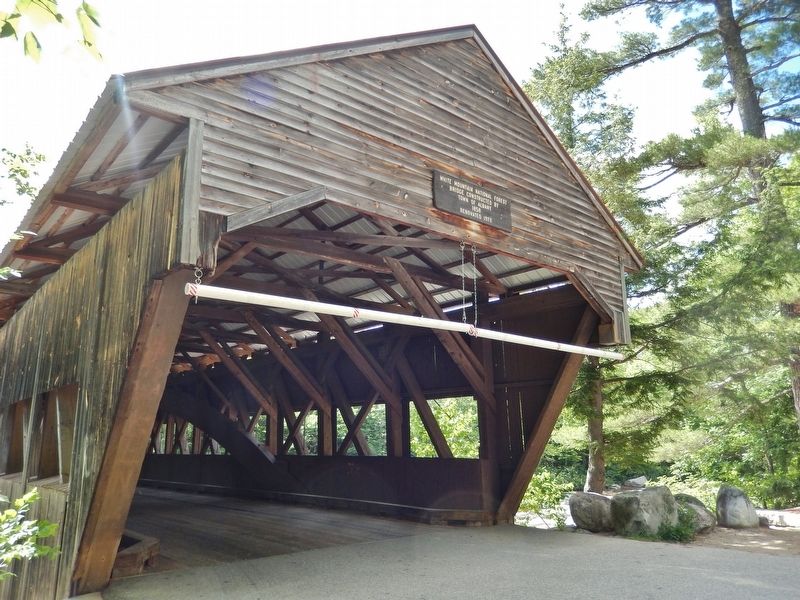
Bridge Constructed by
Town of Albany
1858
Renovated 1970
Photographed by Cosmos Mariner, July 5, 2017
5. Albany Covered Bridge (interior view)
Photographed by Cosmos Mariner, July 5, 2017
6. Albany Covered Bridge
Credits. This page was last revised on November 20, 2026. It was originally submitted on April 12, 2018, by Cosmos Mariner of Cape Canaveral, Florida. This page has been viewed 666 times since then and 56 times this year. Last updated on November 19, 2026, by Maxine Booth of Albany, New Hampshire. Photos: 1, 2, 3, 4, 5, 6. submitted on April 12, 2018, by Cosmos Mariner of Cape Canaveral, Florida. • Devry Becker Jones was the editor who published this page.
