Somerset Center in Hillsdale County, Michigan — The American Midwest (Great Lakes)
W. H. L. McCourtie / W. H. L. McCourtie Estate

By Joel S., July 9, 2010
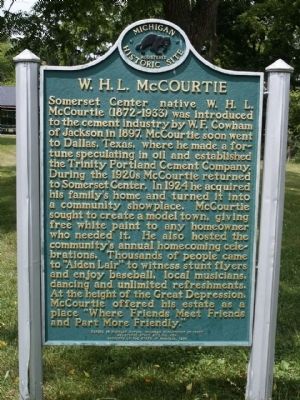
1. W. H. L. McCourtie Marker (front side)
Inscription. W. H. L. McCourtie, also, W. H. L. McCourtie Estate. .
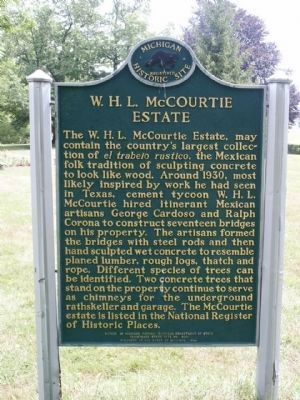
W. H. L. McCourtie. Somerset Center native W. H. L. McCourtie (1872-1933) was introduced to the cement industry by W. F. Cowham of Jackson in 1897. McCourtie soon went to Dallas, Texas, where he made a fortune speculating in oil and established the Trinity Portland Cement Company. During the 1920s McCourtie returned to Somerset Center. In 1924 he acquired his family's home and turned it into a community showplace. McCourtie sought to create a model town, giving free white paint to any homeowner who needed it. He also hosted the community's annual homecoming celebrations. Thousands of people came to "Aiden Lair" to witness stunt flyers and enjoy baseball, local musicians, dancing and unlimited refreshments. At the height of the Great Depression, McCourtie offered his estate as a place "Where Friends Meet Friends and Part More Friendly." W. H. L. McCourtie Estate. The W. H. L. McCourtie Estate, may contain the country's largest collection of el trabeio rustico, the Mexican folk tradition of sculpting concrete to look like wood. Around 1930, most likely inspired by work he had seen in Texas, cement tycoon W. H. L. McCourtie hired itinerant Mexican artisans George Cardoso and Ralph Corona to construct seventeen bridges on his property. The artisans formed the bridges with steel rods and then hand sculpted wet concrete to resemble planed lumber, rough logs, thatch and rope. Different species of trees can be identified. Two concrete trees that stand on the property continue to serve as chimneys for the underground rathskeller and garage. The McCourtie estate is listed in the National Register of Historic Places.
W. H. L. McCourtie
Somerset Center native W. H. L. McCourtie (1872-1933) was introduced to the cement industry by W. F. Cowham of Jackson in 1897. McCourtie soon went to Dallas, Texas, where he made a fortune speculating in oil and established the Trinity Portland Cement Company. During the 1920s McCourtie returned to Somerset Center. In 1924 he acquired his family's home and turned it into a community showplace. McCourtie sought to create a model town, giving free white paint to any homeowner who needed it. He also hosted the community's annual homecoming celebrations. Thousands of people came to "Aiden Lair" to witness stunt flyers and enjoy baseball, local musicians, dancing and unlimited refreshments. At the height of the Great Depression, McCourtie offered his estate as a place "Where Friends Meet Friends and Part More Friendly."
W. H. L. McCourtie Estate
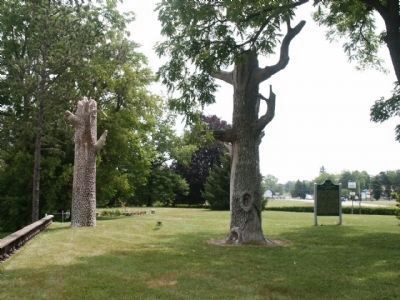
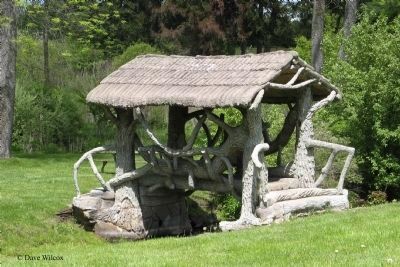
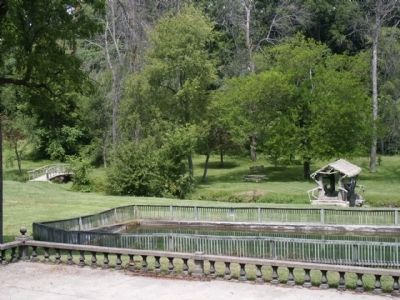
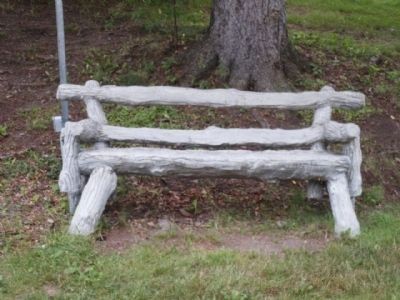
The W. H. L. McCourtie Estate, may contain the country's largest collection of el trabeio rustico, the Mexican folk tradition of sculpting concrete to look like wood. Around 1930, most likely inspired by work he had seen in Texas, cement tycoon W. H. L. McCourtie hired itinerant Mexican artisans George Cardoso and Ralph Corona to construct seventeen bridges on his property. The artisans formed the bridges with steel rods and then hand sculpted wet concrete to resemble planed lumber, rough logs, thatch and rope. Different species of trees can be identified. Two concrete trees that stand on the property continue to serve 
By Joel S., July 9, 2010
2. W. H. L. McCourtie Estate Marker (back side)
as chimneys for the underground rathskeller and garage. The McCourtie estate is listed in the National Register of Historic Places.
Erected 1994 by Bureau of Michigan History, Michigan Department of State. (Marker Number S0624.)
Topics and series. This historical marker is listed in these topic lists: Arts, Letters, Music • Bridges & Viaducts • Industry & Commerce. In addition, it is included in the Michigan Historical Commission series list.
Location. 42° 3.023′ N, 84° 24.578′ W. Marker is in Somerset Center, Michigan, in Hillsdale County. Marker is at the intersection of Chicago Road (U.S. 12) and South Jackson Road, on the right when traveling west on Chicago Road. McCourtie Park is approx. 2.7 miles west of U.S. Highway 127. Touch for map. Marker is in this post office area: Somerset Center MI 49282, United States of America. Touch for directions.

Other nearby markers. At least 8 other markers are within 13 miles of this marker, measured as the crow flies. Woodstock Manual Labor Institute (approx. 4.6 miles away); Michigan and Ohio Railroad Depot (approx. 5.2 miles away); Wellman General Store (approx. 9 miles away); Brooklyn's Founder (approx. 9.2 miles away); Brooklyn Presbyterian Church (approx. 9.2 miles away); St. Michael and All Angels Church (approx. 9.8 miles away); Ella Sharp Museum (approx. 11.4 miles away); Ed Cross Farm (approx. 12.6 miles away).
More about this marker. The marker is very hard to see from the road. The park entrance is on South Jackson Road (on the left side when driving north).
Also see . . .
1. Peek Through Time: Gangsters, ghosts, graceful art all part of mystique of McCourtie Park. 
By Dave Wilcox, October 9, 2008
3. W. H. L. McCourtie / W. H. L. McCourtie Estate
Concrete Covered Bridge
(Submitted on July 25, 2010, by Bill Pfingsten of Bel Air, Maryland.)
2. St. Joseph's Church / St. Joseph's Shrine Marker. Ralph Corona also worked on St. Joseph's Shrine in nearby Cambridge Township, Michigan. (Submitted on July 3, 2015, by Joel Seewald of Madison Heights, Michigan.)

By Joel S., July 9, 2010
4. Concrete Chimneys and Marker
By Joel S., July 9, 2010
5. Pool and Concrete Bridges
By Joel S., July 9, 2010
6. Concrete Bench
By Joel S., July 9, 2010
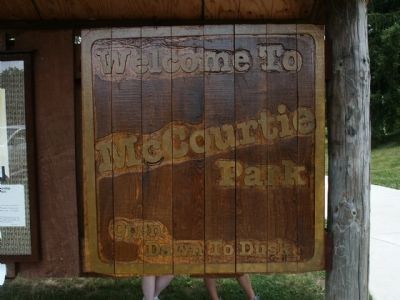
7. McCourtie Park Welcome Sign
Credits. This page was last revised on June 16, 2016. It was originally submitted on July 22, 2010, by Joel Seewald of Madison Heights, Michigan. This page has been viewed 1,821 times since then and 48 times this year. Photos: 1, 2. submitted on July 22, 2010, by Joel Seewald of Madison Heights, Michigan. 3. submitted on March 14, 2012, by Dave Wilcox of Grass Lake, Michigan. 4, 5, 6, 7. submitted on July 22, 2010, by Joel Seewald of Madison Heights, Michigan. • Bill Pfingsten was the editor who published this page.