Walnut Grove in Sacramento County, California — The American West (Pacific Coastal)
Walnut Grove, Est. 1850/Locke, Est. 1915

Photographed by Syd Whittle, October 30, 2010
1. Walnut Grove/Locke Marker
Walnut Grove, Est 1850
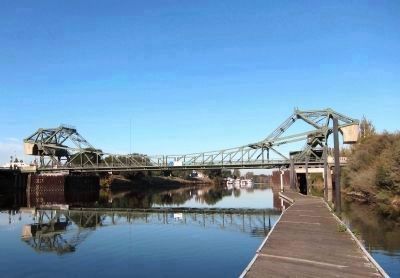
Walnut Grove was established in 1850 by John W. Sharp and is one of the earliest settlements along the Sacramento River. Chosen because of the abundant walnut and oak forests in the area, the town quickly prospered as an agricultural center and riverboat stop (the forests were timbered for steamship firewood). Walnut Grove became a major shipping port by 1865 for agricultural produce and fish, with Bartlett Pear as its primary product. By 1870 it was a thriving town full of small businesses, a school, post office, and Union Guard Armory. Due to the demands for rich agricultural land, the town’s size stayed compact but has the distinction of being the only river town along the Sacramento River to occupy both the east and west riverbanks. For years a ferry connected between, until the first bridge was opened in 1916. The bridge, since replaced by a modern span, was the first cantilevered counter-weight bascule drawbridge constructed west of the Mississippi River.
Locke, Est. 1915
The town of Locke was built in 1915 and is one of the early towns in the United States built entirely by Chinese settlers.
this page online
Erected by The Rotary Club of Walnut Grove.
Topics and series. This historical marker is listed in these topic lists: Industry & Commerce • Settlements & Settlers. In addition, it is included in the National Historic Landmarks, and the Rotary International series lists. A significant historical year for this entry is 1850.
Location. 38° 14.841′ N, 121° 30.58′ W. Marker is in Walnut Grove, California,

Photographed by Syd Whittle, October 30, 2010
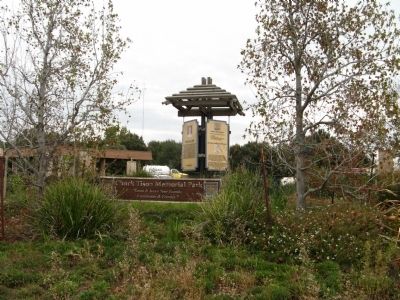
2. Kiosk at Chuck Tison Park
This marker is on the left.

Regionally, this marker is in California’s Sacramento Metro, in the Sacramento Valley, and specifically in the Central Valley. It is also on the American Pacific Coast. Globally, it is in North America, on the Ring of Fire, in the Pacific Rim, in the Western Hemisphere, in the Western World, and in the Anglosphere. Historically, it finds itself in what was once New Spain and also Mexico’s Alta California.
Other nearby markers. At least 8 other markers are within walking distance of this marker: Delta Transmission Towers/Delta Cross Channel Gates (here, next to this marker); Charles “Chuck” Tison (here, next to this marker); Locke (approx. 0.2 miles away); Locke, California (approx. 0.2 miles away); Al the Wop's / Bing Lee's Noodle House (approx. ¼ mile away); Locke Memorial Park (approx. ¼ mile away); a different
Photographed by Syd Whittle, October 30, 2010
3. Kiosk at Chuck Tison Memorial Park
More about this marker. The marker, along with the Delta Transmission Towers/Delta Cross Channel Gates marker, a Rotary of Walnut Grove Sponsorship marker, and the Charles “Chuck” Tison marker, share a kiosk located at the Chuck Tison Memorial Park.
Regarding Walnut Grove, Est. 1850/Locke, Est. 1915. The Locke Historical District has been designated as a National Historical Landmark.
Statement of Significance (as of designation - December 14, 1990):
Founded in 1915, Locke is the largest and most intact surviving example of an historic rural Chinese-American community in the United States, including more than 50 commercial and residential frame buildings and covering approximately 14 acres along the east bank of the Sacramento River, south of the city of Sacramento. Locke is the only such community remaining in the Sacramento-San Joaquin River Delta, which was a particularly important area of rural Chinese settlement.
Locke Historical District was placed
Photographed by Diane Phillips
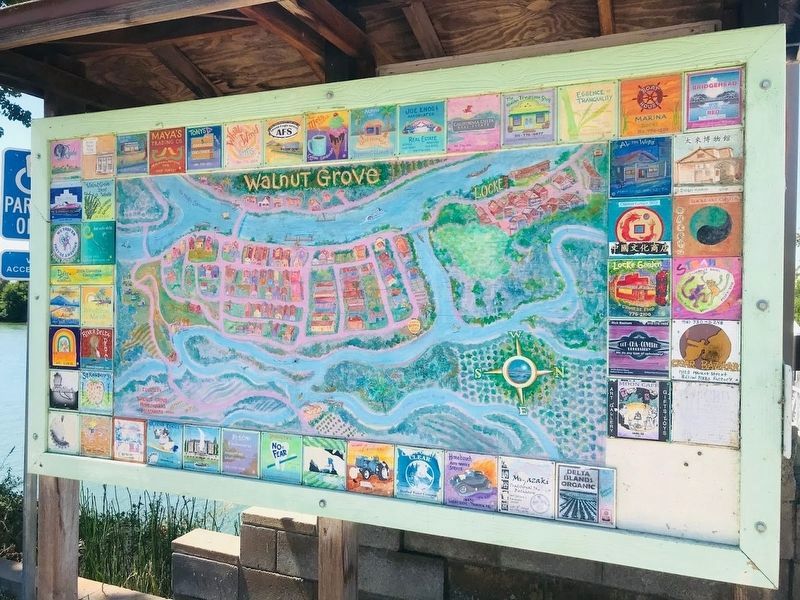
4. Walnut Grove Mural on River Road
Photographed by Diane Phillips
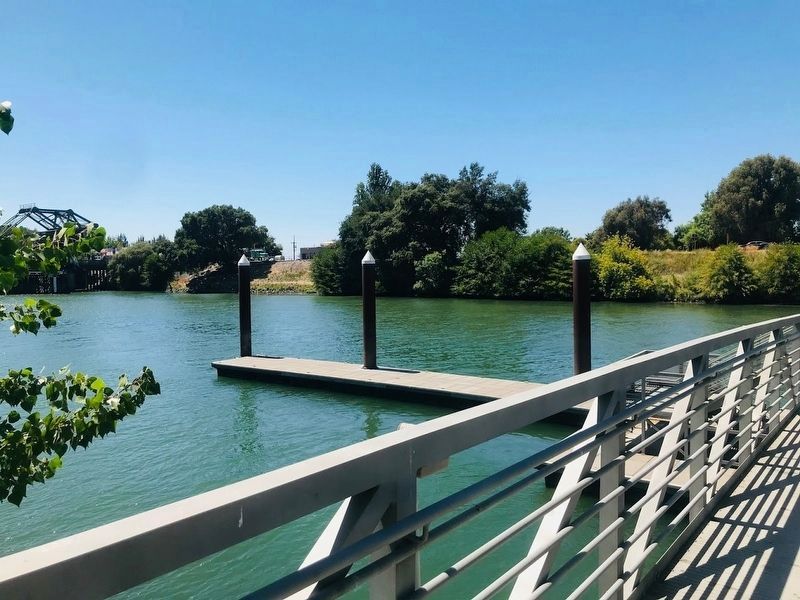
5. Sacramento River
view from River Road in Walnut Grove
Photographed by Diane Phillips
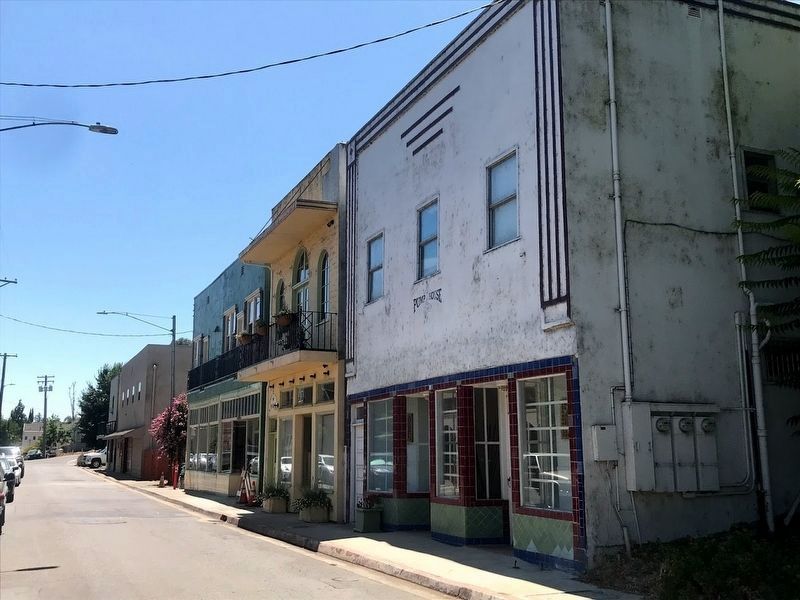
6. Market Street in Walnut Grove
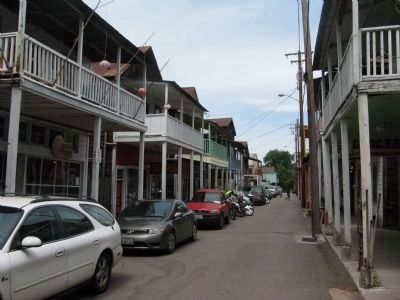
Photographed by Syd Whittle, April 23, 2009
7. Looking North on Main Street - Locke, California
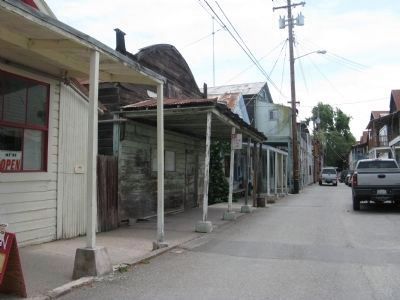
Photographed by Syd Whittle, April 23, 2009
8. Looking South on Main Street - Locke, California
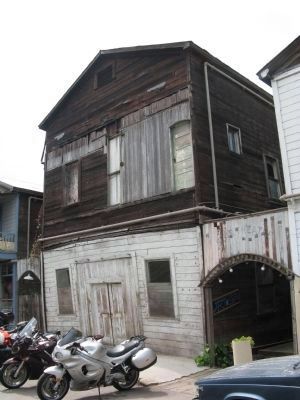
Photographed by Syd Whittle, April 23, 2009
9. The Star Theater - Locke, California
Served as a Chinese opera house, gambling den, and a brothel.
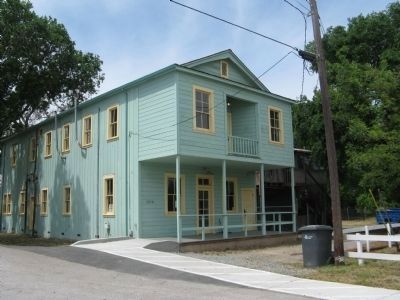
Photographed by Syd Whittle, April 23, 2009
10. Locke Boarding House
This building is a California State Park and is used as a Visitor Center and an exhibit and research facility.
November 25, 2010
11. Walnut Grove Bridge - view from south
This bridge, built in 1952, replaced the earlier historic 1916 bridge, which was the first cantilevered counter-weight bascule drawbridge constructed west of the Mississippi River.
Credits. This page was last revised on July 17, 2025. It was originally submitted on October 31, 2010, by Syd Whittle of Mesa, Arizona. This page has been viewed 1,714 times since then and 93 times this year. Photos: 1, 2, 3. submitted on October 31, 2010, by Syd Whittle of Mesa, Arizona. 4, 5, 6. submitted on August 8, 2020, by Diane Phillips of Pittsburg, California. 7, 8, 9, 10. submitted on April 24, 2009, by Syd Whittle of Mesa, Arizona. 11. submitted on February 28, 2011.
