Lewes Historic District in Sussex County, Delaware — The American Northeast (Mid-Atlantic)
David Hall House
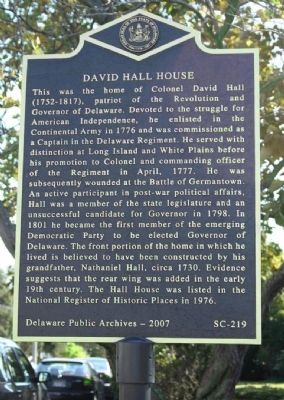
Photographed by Mike Stroud, October 15, 2010
1. David Hall House Marker
Erected 2007 by Delaware Public Archives. (Marker Number SC-219.)
Topics and series. This historical marker is listed
this page online
Location. 38° 46.441′ N, 75° 8.328′ W. Marker is in Lewes, Delaware, in Sussex County. It is in the Lewes Historic District. It is on Kings Highway (U.S. 9) near 3rd Street. Touch for map. Marker is in this post office area: Lewes DE 19958, United States of America. Touch for directions.

Regionally, this marker is on Delaware’s Beaches. It is also in the American Mid-Atlantic, on the Delmarva Peninsula, and on the Eastern Seaboard. Globally, it is in the North Atlantic Region, North America, the Western Hemisphere, the Western World, and the Anglosphere. Historically, it finds itself in what was once New Netherland, one of the original Thirteen Colonies, and the Antebellum South.
Other nearby markers. At least 8 other markers are within walking distance of this marker: H.M. Brig DeBraak (a few steps from this marker); Zwaanendael Museum (a few steps from this marker); Lewes (a few steps from this marker); Zwaanendael House
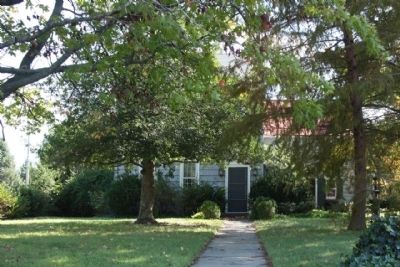
Photographed by Mike Stroud, October 15, 2010
2. David Hall House
Regarding David Hall House. National Register of Historic Places:
Hall, Col. David, House ** (added 1976 - Building - #76000585)
Historic Significance: Event, Architecture/Engineering, Person •
Architect, builder, or engineer: Unknown •
Architectural Style: No Style Listed •
Historic Person: Hall,Col. David •
Area of Significance: Military, Politics/Government, Architecture •
Period of Significance: 1750-1799 •
Also see . . . Hall, Col. David, House - National Register of Historic Places Nomination Form.
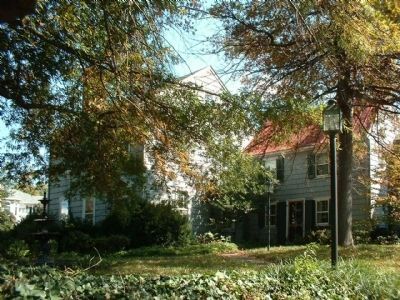
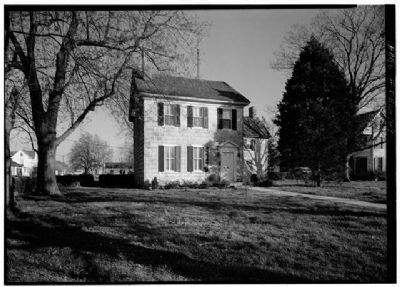
This was the home of Colonel David Hall (1752-1817), lawyer (admitted to the bar in New Castle at the age of 21); patriot; governor of Delaware; and judge, son of Captain David Hall. David Hall figured conspicuously in the American Revolution(Submitted on April 25, 2025, by Pete Skillman of Wilmington, Delaware.)as a captain in John Haslet's regiment; battalion commander under Brigadier-General John Dagworthy; and colonel of one of the Battalions of Sussex and first in command of the Sussex Brigade. In 1776 he was appointed to the Council of Safety by the General Assembly. In 1777 he was commissioned colonel of a regiment which formed part of the Delaware Line, succeeding Colonel John Haslet. He fought in the battles of Long Island, White Plains, the Brandywine (receiving a slight wound), Cooch's Bridge, Germantown (seriously wounded), was at Valley Forge, sharing General Washington's tent, and at Middlebrook, N. J., called "the forgotten Valley Forge." Following the war, he resumed his law practice in Lewes, became active in political and civic affairs of the state, serving as governor, 1802-1805. In 1813, Colonel Hall was appointed fourth associate justice of the Court of Common Pleas, Sussex County, a position he held until his death. He had married Catherine Tingley of New York soon after being admitted to the bar. They had one son, Joseph, a lawyer, who died in early manhood, and five daughters. Colonel Hall is buried in the cemeteryPhotographed by Mike Stroud, October 15, 20103. David Hall House, seen todayof the Lewes Presbyterian Church, where he had been an elder for many years.Historic American Buildings Survey Cortlandt Van Dyke Hubbard, June 19604. David Hall HouseHistoric American Engineering Record: HABS DEL,3-LEW,7-1
Credits. This page was last revised on April 25, 2025. It was originally submitted on November 16, 2010, by Mike Stroud of Bluffton, South Carolina. This page has been viewed 1,761 times since then and 43 times this year. Photos: 1, 2, 3, 4. submitted on November 16, 2010, by Mike Stroud of Bluffton, South Carolina.
