San Juan Bautista in San Benito County, California — The American West (Pacific Coastal)
Anza House
Photographed by William Fischer, Jr., March 19, 2011
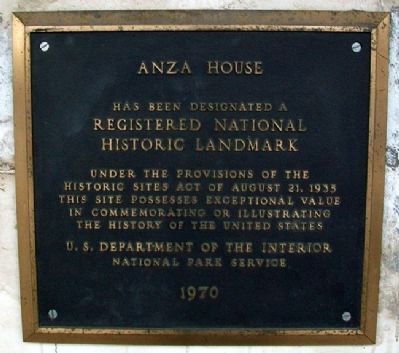
1. Anza House NHL Marker
Anza House has been designated a Registered National Historic Landmark under the provisions of the Historic Sites Act of August 21, 1935. This site possesses exceptional value in commemorating or illustrating the history of the United States.
Erected 1970 by U.S. Department of the Interior National Park Service.
Topics and series. This historical marker is listed in this topic list: Notable Buildings. In addition, it is included in the National Historic Landmarks series list. A significant historical year for this entry is 1935.
Location. 36° 50.619′ N, 121° 32.135′ W. Marker is in San Juan Bautista, California, in San Benito County. It is at the intersection of Third Street and Franklin Street, on the left when traveling west on Third Street. Touch for map. Marker is at or near this postal address: 101 Third Street, San Juan Bautista CA 95045, United States of America. Touch for directions.

Regionally, this marker is on the Central Coast and specifically on the Coast Ranges. It is also on the American Pacific Coast. Globally, it is in North America, on the Ring of Fire, on the Pacific Rim, in the Western
this page online
Other nearby markers. At least 8 other markers are within walking distance of this marker: Town Jail (about 300 feet away, measured in a direct line); Veterans of the World War (about 400 feet away); Castro - Breen Adobe (about 400 feet away); Castro/Breen Adobe and Plaza Hotel (about 500 feet away); Native Daughters Adobe (about 500 feet away); San Juan Bautista Plaza Historic District (about 500 feet away); Progress Becomes History (about 600 feet away); Vicky’s Cottage (about 600 feet away). Touch for a list and map of all markers in San Juan Bautista.
Other markers no longer nearby. El Camino Real Bell (was about 600 feet away but has been confirmed missing); Settler's Cabin (was about 600 feet away but has been permanently removed).
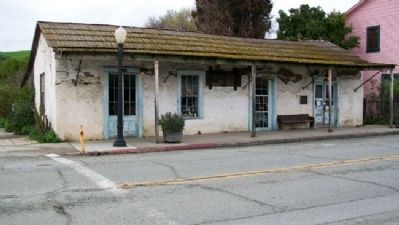
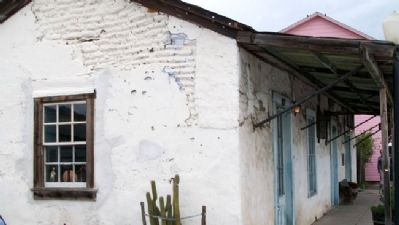
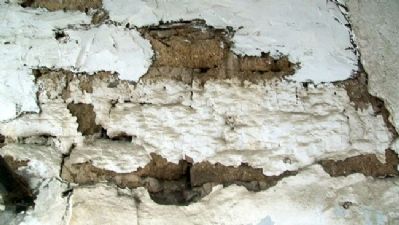
Regarding Anza House. This was a small simple pole and mud brick building that was typical for the Mexican era in California, in the 1820-1840 time period. It was "Americanized" and enlarged in the 1850s, which was typical of how traditional
Photographed by William Fischer, Jr., March 19, 2011
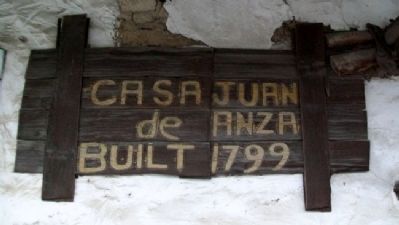
2. Anza House Sign
Photographed by William Fischer, Jr., March 19, 2011
3. Anza House
Photographed by William Fischer, Jr., March 19, 2011
4. Anza House
Photographed by William Fischer, Jr., March 19, 2011
5. Adobe and Plaster
Photographed by William Fischer, Jr., March 19, 2011
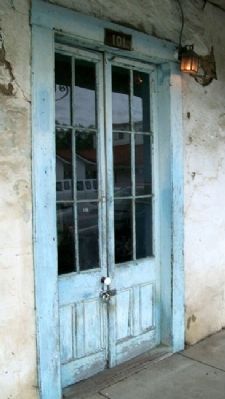
6. Doorway
Photographed by Roger Sturtevant, Photographer, February 16, 1934
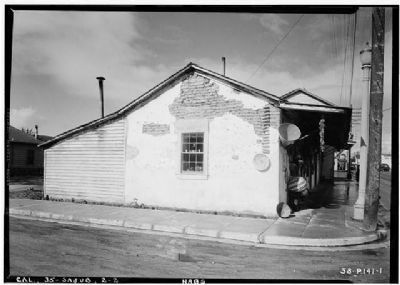
7. Anza House
Historic American Buildings Survey-HABS CAL,35-SAJUB,2-2. This 1934 photo shows the additions made to the rear of the house.

Photographed by Roger Sturtevant, Photographer, February 16, 1934
8. Anza House
Historic American Buildings Survey HABS CAL,35-SAJUB,2-1
Credits. This page was last revised on July 17, 2025. It was originally submitted on March 20, 2011, by William Fischer, Jr. of Reynoldsburg, Ohio. This page has been viewed 861 times since then and 15 times this year. Photos: 1, 2, 3, 4, 5, 6. submitted on March 20, 2011, by William Fischer, Jr. of Reynoldsburg, Ohio. 7, 8. submitted on March 20, 2011.
