Near Dublin in Pulaski County, Virginia — The American South (Mid-Atlantic)
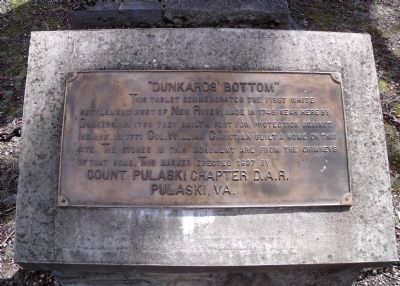
"Dunkard's Bottom"
Photographed by Bernard Fisher, April 2, 2011
1. "Dunkard's Bottom" Marker
This tablet commemorates the first white settlement west of New River, made in 1745 near here by "Dunkers". In 1756 they built a fort for protection against Indians. In 1771 Col. William Christian built a home on this site. The stones in this monument are from the chimneys of that home. This marker erected 1937 by Count Pulaski Chapter D.A.R. Pulaski, VA.
Erected 1937 by Count Pulaski Chapter D.A.R. Pulaski, VA.
Topics and series. This historical marker is listed in these topic lists: Forts and Castles • Settlements & Settlers. In addition, it is included in the Daughters of the American Revolution (DAR) series list. A significant historical year for this entry is 1745.
Location. Marker has been reported missing. It was located near 37° 3.429′ N, 80° 37.259′ W. Marker was near Dublin, Virginia, in Pulaski County. It could be reached from Ben H Bolen Drive 0.1 miles east of State Park Road (Virginia Route 660). This marker is located in Claytor Lake State Park. Touch for map. Marker was at or near this postal address: 6620 Ben H Bolen Drive, Dublin VA 24084, United States of America. Touch for directions.

Regionally,
this page online
Other nearby markers. At least 8 other markers are within 4 miles of this location, measured as the crow flies: Christian-Cloyd Chimney (a few steps from this marker); Colonel William Christian (a few steps from this marker); Snowville Christian Church (approx. 3.7 miles away); Ingles Ferry (approx. 3.8 miles away); High Water Mark (approx. 3.8 miles away); Water Works — 1870 (approx. 4 miles away); First Court House (approx. 4 miles away); The First Court held in Pulaski County (approx. 4 miles away). Touch for a list and map of all markers in Dublin.
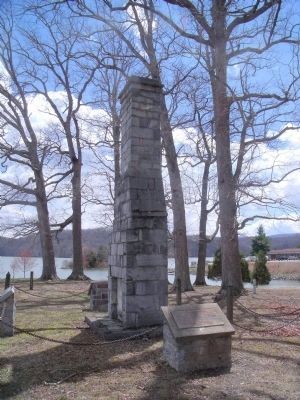
More about this marker. In 1771 Col. William Christian
Photographed by Bernard Fisher, April 2, 2011
2. Christian-Cloyd Chimney
Regarding "Dunkard's Bottom". "...Thomas Cloyd settled Dunkard’s Bottom, an area of about 7000 acres along the New River, well south of
Cloyd’s Mountain. The name Dunkard’s Bottom derived from earlier settlement of Dunkers, a German religious sect. Dunkers settled in several regions of southwestern Virginia during the eighteenth century. According to family history, Thomas Cloyd lived in one of the earlier German settlement houses until his large 2-story, 3-bay brick Greek Revival house was finished in the 1847, appropriately

3. "Dunkard's Bottom"
Dunkard's Bottom. Christian home right, Dunkard Cabin middle, Cloyd mansion left.
Also see . . .
1. Claytor Lake State Park. Virginia Department of Conservation and Recreation (Submitted on April 5, 2011.)
2. Haven B. Howe House. National Register of Historic Places (Submitted on April 5, 2011.)
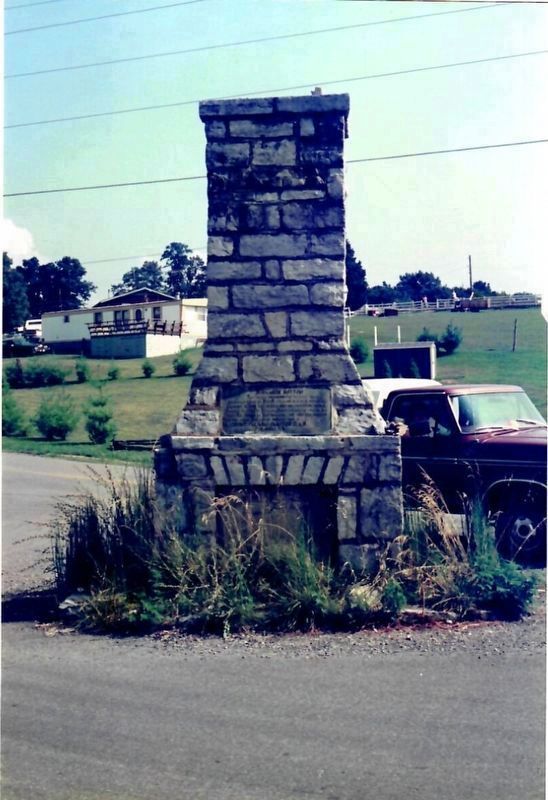
4. Dunkard's Bottom Monument
Dunkard's Bottom Monument in intersection of State Park Road and Wilderness Road before relocated to Claytor Lake State Park.
Photographed by Bernard Fisher, April 2, 2011
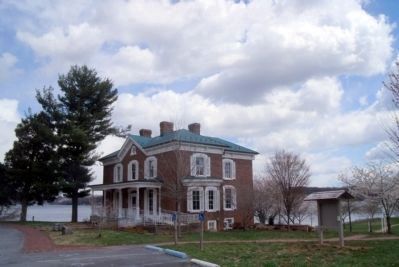
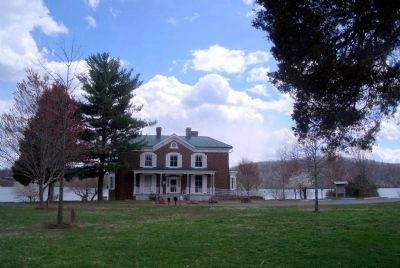
5. Haven B. Howe House, ca. 1878
The back yard overlooked Dunkard’s Bottom when the New River flowed through the valley before 1939.
Photographed by Bernard Fisher, April 2, 2011
6. Claytor Lake State Park Visitor Center
The historic Howe House now serves as the Park's VC.
Credits. This page was last revised on October 15, 2025. It was originally submitted on April 5, 2011, by Bernard Fisher of Richmond, Virginia. This page has been viewed 4,144 times since then and 176 times this year. Last updated on October 14, 2025, by Ryan Stubblebine of Dublin, Virginia. Photos: 1, 2. submitted on April 5, 2011, by Bernard Fisher of Richmond, Virginia. 3, 4. submitted on October 14, 2025. 5, 6. submitted on April 5, 2011, by Bernard Fisher of Richmond, Virginia.
