Lexington in Middlesex County, Massachusetts — The American Northeast (New England)
Battle of Lexington Monument
Photographed by Bill Coughlin, April 15, 2009
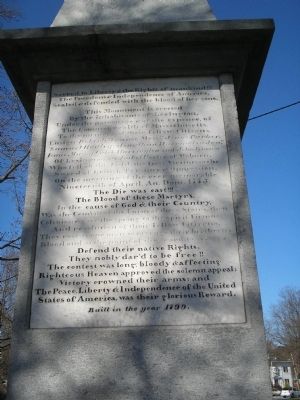
1. Battle of Lexington Monument Marker
Sacred to Liberty & the Rights of mankind!!! The Freedom & Independence of America, Sealed and defended with the blood of her sons.
This Monument is erected by the inhabitants of Lexington, under the patronage & at the expense of the Commonwealth of Massachusetts, to the memory of their fellow citizens, Ensign Robert Munroe, Mess. Jonas Parker, Samuel Hadley, Jonathan Harrington Jun.r, Isaac Muzzy, Caleb Harrington and John Brown of Lexington, Ishael Porter of Woburn, who fell on this field, the first victims to the sword of British tyranny & oppression, on the morning of the ever memorable nineteenth of April, An. Dom. 1775.
The Die was cast!!! The Blood of these Martyr’s, in the cause of God & their Country, was the cement of the Union of these States, then colonies & gave the spring to the spirit, firmness, and resolution of their fellow citizens. They rose as one man, to revenge their brethren’s blood and at the point of the sword to assert & defend their native Rights. They nobly dar’d to be free!! The contest was long, bloody & affecting. Righteous Heaven approved the solemn appeal; Victory crowned their arms; and
this page online
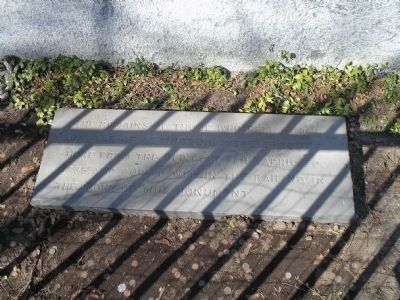
Lower Marker:
The remains of those who fell in the Battle of Lexington were brought here from the old cemetery, April 20, 1835, and buried within the railing in the front of this monument.
Erected 1799 by Citizens of Lexington.
Topics. This historical marker and monument is listed in these topic lists: Colonial Era • Notable Events • Notable Places • War, US Revolutionary. A significant historical date for this entry is April 19, 1775.
Location. 42° 26.969′ N, 71° 13.878′ W. Marker is in Lexington, Massachusetts, in Middlesex County. It is on Massachusetts Avenue, on the right when traveling west. Marker is located on the Battle Green in Lexington. Touch for map. Marker is in this post office area: Lexington MA 02420, United States of America. Touch for directions.

Regionally, this marker and monument is in Greater Boston. It is also in the American Northeast, in New England, and on the Eastern Seaboard. Globally, it is in the North Atlantic Region, North America, the Western Hemisphere, the Western World,
Photographed by Bill Coughlin, April 15, 2009
2. Lower Marker
Other nearby markers. At least 8 other markers are within walking distance of this marker: Cambridge Farms (within shouting distance of this marker); Marrett and Nathan Munroe House (within shouting distance of this marker); Lexington Green (within shouting distance of this marker); This Flag Pole (within shouting distance of this marker); Lexington Meeting Houses (within shouting distance of this marker); The Battle Green (within shouting distance of this marker); House of Jonathan Harrington (about 300 feet away, measured in a direct line); Line of the Minutemen (about 300 feet away). Touch for a list and map of all markers in Lexington.
Another marker is no longer nearby. The Site of the Old Belfry (was within shouting distance of this marker but has been confirmed missing).
Also see . . .
1. Battle of Lexington. (Submitted on April 15, 2009, by Bill Coughlin of Woodland Park, New Jersey.)
2. Battle at Lexington Green, 1775. The Start of the American Revolution and the "shot heard round the world."
Photographed by Bill Coughlin, April 15, 2009
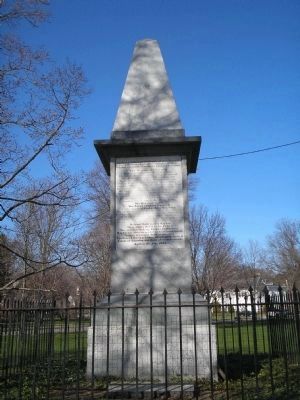
3. Marker in Lexington
Photographed by Bill Coughlin, April 15, 2009
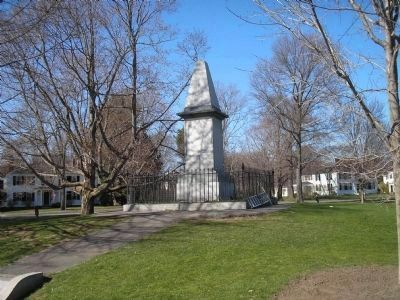
4. Marker on the Lexington Battle Green
The Battle of Lexington Monument is one of several located on the common at Lexington.
Photographed by Bill Coughlin, April 15, 2009
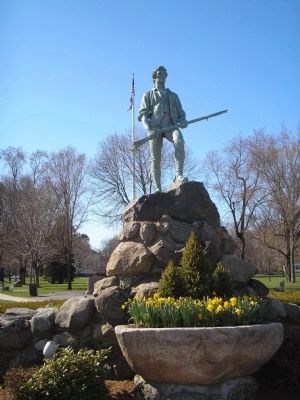
5. Minuteman Statue on Battle Green
This statue is located at the east end of the Battle Green, a short distance from the marker.
Photographed by Bill Coughlin, April 15, 2009
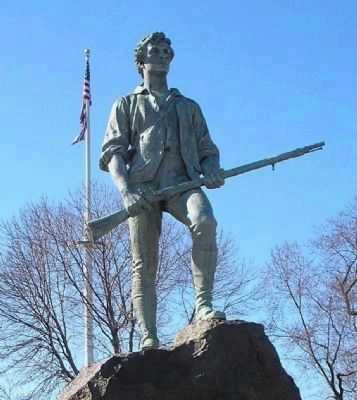
6. Minuteman
1899 bronze by sculptor Henry H. Kitson (1863-1947) is 8 feet high.
Photographed by Mike Stroud, July 3, 1983
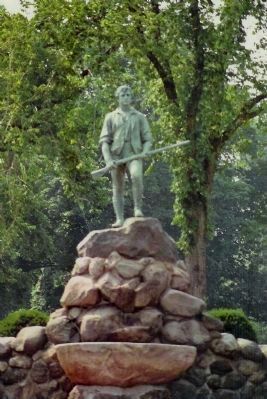
7. Lexington Minuteman, Similar view in 1983
Henry Hudson Kitson, 1863-1947, sculptor.
Credits. This page was last revised on February 12, 2026. It was originally submitted on April 15, 2009, by Bill Coughlin of Woodland Park, New Jersey. This page has been viewed 8,887 times since then and 113 times this year. Last updated on May 20, 2011, by Carol Muzzy of West Chicago, Il, 60185. It was the Marker of the Week April 14, 2013. Photos: 1, 2, 3, 4, 5, 6. submitted on April 15, 2009, by Bill Coughlin of Woodland Park, New Jersey. 7. submitted on April 18, 2009, by Mike Stroud of Bluffton, South Carolina. • Bill Pfingsten was the editor who published this page.
