Lake Township near Council Bluffs in Pottawattamie County, Iowa — The American Midwest (Upper Plains)
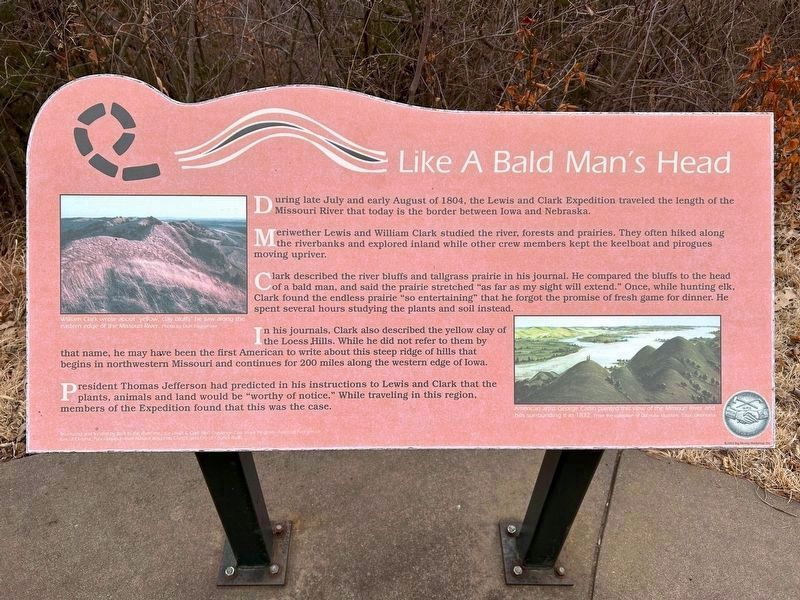
Like A Bald Man’s Head
December 26, 2024
1. Like A Bald Man’s Head Marker
this page online
William Clark wrote about "yellow, clay bluffs" he saw along the eastern edge of the Missouri River. Photo by Don Poggensee
American artist George Catlin painted this view of the Missouri River and hills surrounding it in 1832. From the collection of Gilcrease Museum, Tulsa, Oklahoma.
Erected 2003 by Big Muddy Workshop, Inc.; Back to the River, Inc., the Lewis & Clark NHT Challenge Cost Share Program - National Park Service, City of Omaha, Papio-Missouri River Natural Resources District, and City of Council Bluffs.
Topics and series. This historical marker is listed in this topic list: Exploration. In addition, it is included in the Former U.S. Presidents: #03 Thomas Jefferson, and the Lewis & Clark Expedition series lists. A significant historical year for this entry is 1804.
Location. 41° 18.205′ N, 95° 51.442′ W. Marker is near Council Bluffs, Iowa, in Pottawattamie County. It is in Lake Township. It can be reached from Monument Road 0.8 miles north of Mynster Springs Road, on the left when
Photographed by Charles T. Harrell, June 28, 2011
2. Like a Bald Man’s Head Marker

Regionally, this marker is in Western Iowa, in Loess Hills, and in Greater Omaha. It is also in the American Midwest, in the Lewis & Clark Corridor, and in the Corn Belt. Globally, it is in North America, the Western Hemisphere, the Western World, and the Anglosphere. Historically, it finds itself in what was once the territory of the Mississippian Culture and also the Louisiana Purchase.
Other nearby markers. At least 8 other markers are within 3 miles of this marker, measured as the crow flies: The Lewis & Clark Expedition (within shouting distance of this marker); Lewis and Clark Monument (within shouting distance of this marker); Anticipating an Indian Council (about 300 feet away); Colonel William H. Kinsman (approx. 2.2 miles away); Abraham Lincoln's 1859 Visit (approx. 2½ miles away); Kanesville Mormon Cemetery (approx. 2½ miles away); (missing) ... Was York (approx. 2½ miles away
December 26, 2024
3. Like A Bald Man’s Head Marker
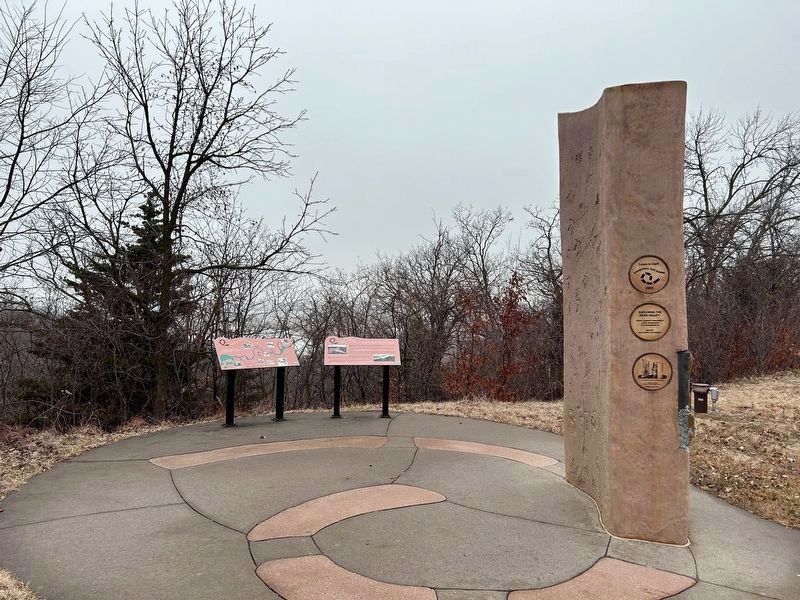
Lewis & Clark Interpretive Trail Exhibit 2004
Other markers no longer nearby. The Lewis and Clark Expedition (was within shouting distance of this marker but has been replaced with another marker now near it); Anticipating An Indian Council (was about 300 feet away, measured in a direct line but has been replaced with another marker now near it).
December 26, 2024
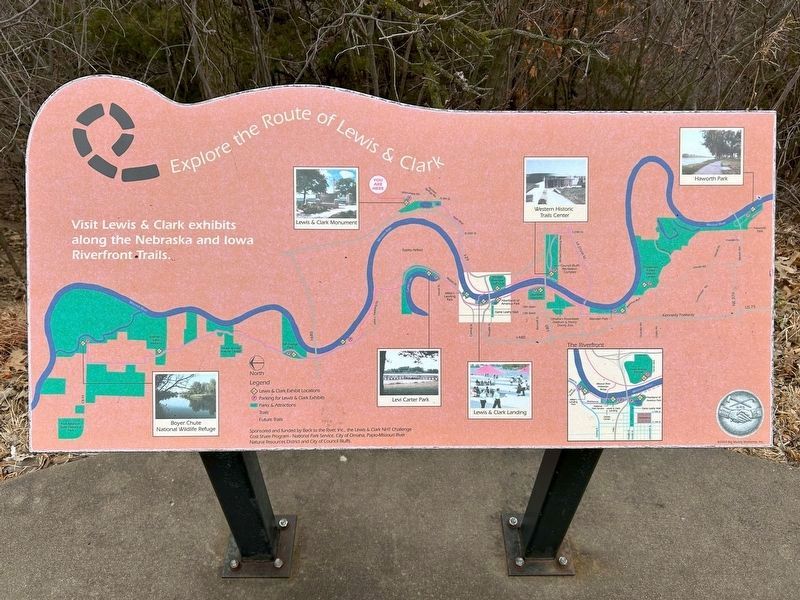
4. Explore the Route of Lewis & Clark Marker
December 26, 2024
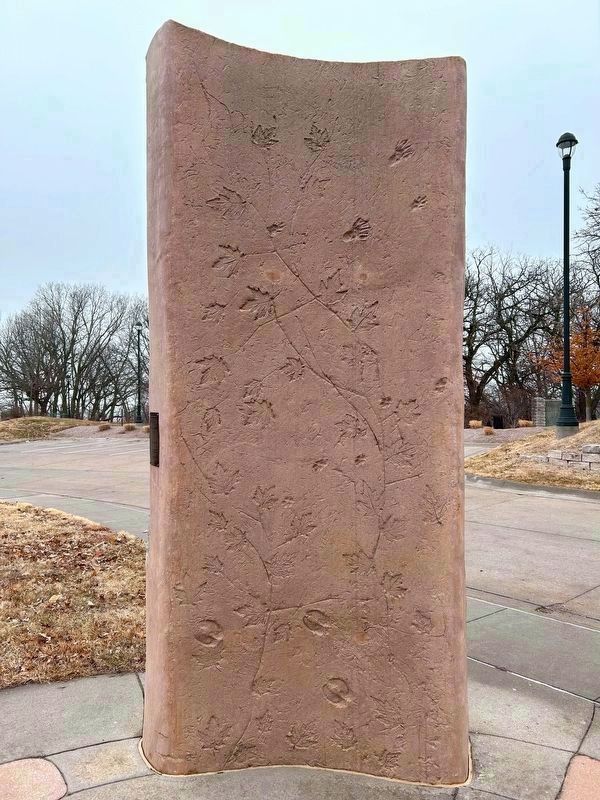
5. Lewis & Clark Interpretive Trail Exhibit Monument
Icon sculpture designed by David Barker.
Original Sculpture: Wilson Custom Design Tile Co.
Casting by Artisan Stone
Original Sculpture: Wilson Custom Design Tile Co.
Casting by Artisan Stone
December 26, 2024
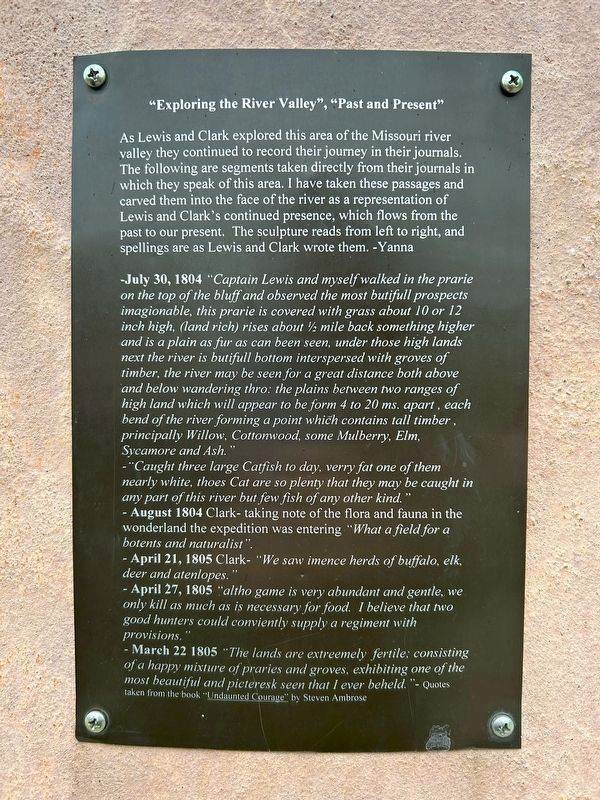
6. "Exploring the River Valley", "Past and Present"
December 26, 2024
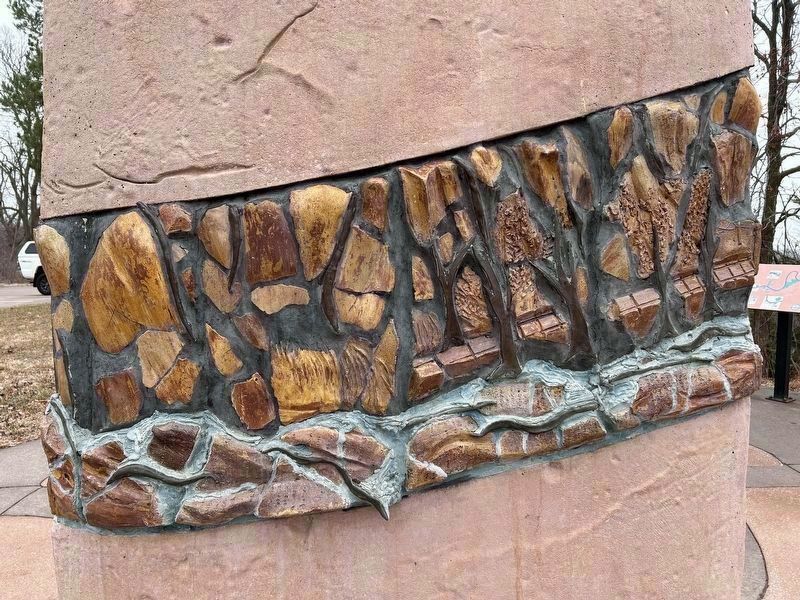
7. Monument Banner "Exploring the River Valley"
Yanna Synovia Ramaekers
Lynda Ramaekers
Fran Ramaekers Jr.
Sponsor: Iowa West Foundation
Lynda Ramaekers
Fran Ramaekers Jr.
Sponsor: Iowa West Foundation
Credits. This page was last revised on January 13, 2025. It was originally submitted on July 27, 2011, by Charles T. Harrell of Woodford, Virginia. This page has been viewed 933 times since then and 32 times this year. Photos: 1. submitted on January 13, 2025. 2. submitted on July 27, 2011, by Charles T. Harrell of Woodford, Virginia. 3, 4, 5, 6, 7. submitted on January 13, 2025. • Bill Pfingsten was the editor who published this page.
