Vore Buffalo Jump
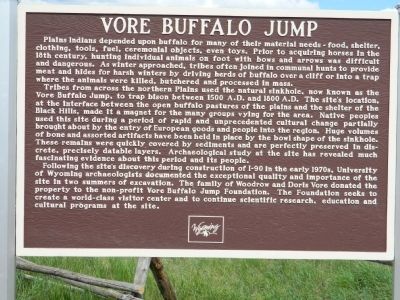
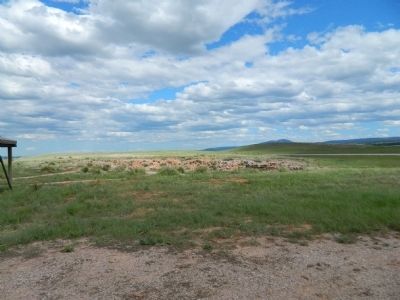
Tribes from across the northern Plains used the natural sinkhole, now known as the Vore Buffalo Jump, to trap bison between 1500 A.D. and 1800 A.D. The site's location at the interface between the open buffalo pastures of the plains and the shelter of the Black Hills, made it a magnet for the many groups vying for the area. native peoples used this site during a period of rapid and unprecedented cultural change partially brought about by the entry of European goods and people into the region. Huge volumes of bone and assorted artifacts have been held in place by the bowl shape of the sinkhole. These remains were quickly covered by sediments
this page online
Following the site's discovery during construction of I-90 in the early 1970s, University of Wyoming archaeologists documented the exceptional quality and importance of the site in two summers of excavation. The family of Woodrow and Doris Vore donated the property to the non-profit Vore Buffalo Jump Foundation. The Foundation seeks to create a world=class visitor center and to continue scientific research, education and cultural programs at the site.
Topics. This historical marker is listed in these topic lists: Animals • Indigenous Peoples and Communities. A significant historical year for this entry is 1500.
Location. 44° 32.168′ N, 104° 9.434′ W. Marker is in Aladdin, Wyoming, in Crook County. It is on Old U.S. 14 2.8 miles east of Wyoming Highway 111. Touch for map. Marker is in this post office area: Aladdin WY 82710, United States of America. Touch for directions.
Regionally, this marker is in the Powder River Basin. It is also in the American Mountain
Other nearby markers. At least 8 other markers are within 3 miles of this marker, measured as the crow flies: The Ideal Hunting Ground (within shouting distance of this marker); Preparing for Impending Blizzards (within shouting distance of this marker); Understanding Bison Behavior Brought Success (within shouting distance of this marker); Discovering the Vore Archaeological Site (within shouting distance of this marker); Trapping Buffalo (within shouting distance of this marker); A Community Processing Plant (within shouting distance of this marker); The Custer Trail (approx. 2½ miles away); Rich Colors, Rich Lands (approx. 2½ miles away).
Credits. This page was last revised on June 16, 2016. It was originally submitted on August 4, 2011, by Bill Pfingsten of Bel Air, Maryland. This page has been viewed 1,889 times since then and 40 times this year. Photos: 1, 2. submitted on August 4, 2011, by Bill Pfingsten of Bel Air, Maryland.
