Near Tignall in Wilkes County, Georgia — The American South (South Atlantic)
Clarke’s Creek Encampment
Photographed by David Seibert, September 3, 2011
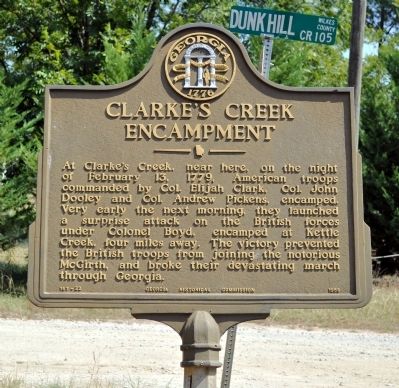
1. Clarke’s Creek Encampment Marker
At Clarke’s Creek, near here, on the night of February 13, 1779, American troops commanded by Col. Elijah Clark, Col. John Dooley and Col. Andrew Pickens, encamped. Very early the next morning, they launched a surprise attack on the British forces under Colonel Boyd, encamped at Kettle Creek, four miles away. The victory prevented the British troops from joining the notorious McGirth, and broke their devastating march through Georgia.
Erected 1958 by Georgia Historical Commission. (Marker Number 157-22.)
Topics and series. This historical marker is listed in this topic list: War, US Revolutionary. In addition, it is included in the Georgia Historical Society series list. A significant historical date for this entry is February 13, 1852.
Location. 33° 53.415′ N, 82° 50.751′ W. Marker is near Tignall, Georgia, in Wilkes County. It is at the intersection of Mallorysville Road (County Route 106) and Dunkhill Road (County Route 105), on the right when traveling west on Mallorysville Road. Touch for map. Marker is in this post office area: Tignall GA 30668, United States of America. Touch for directions.

Regionally, this marker is
this page online
Other nearby markers. At least 10 other markers are within 10 miles of this marker, measured as the crow flies: Independence United Methodist Church (approx. 6 miles away); Governor Mathews' Homesite (approx. 7.2 miles away); Rock Methodist Church (approx. 7.7 miles away); Nancy Hart (approx. 7.9 miles away); Walnut Hill Academy (approx. 8½ miles away); The Rev. John Springer (approx. 8½ miles away); Pope’s Chapel United Methodist Church (approx. 8.8 miles away); Nancy Hart Cabin (approx. 8.8 miles away); Columbus Granade (approx. 9 miles away); Fishing Creek Baptist Church (approx. 9½ miles away). Touch for a list and map of all markers in Tignall.
Also see . . .
1. Battle of Kettle Creek. The Battle of Kettle Creek (February
Photographed by Brian Scott, October 19, 2014
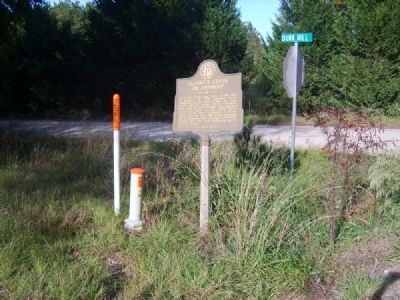
2. Clarke’s Creek Encampment Marker
2. Elijah Clarke. Elijah Clarke (1742 – December 15, 1799), born in 1742 at Anson County, North Carolina, was an officer of the Georgia Militia and hero in the American Revolutionary War. He fought in the southern theater and in the Battle of Kettle Creek. (Submitted on December 7, 2014, by Brian Scott of Anderson, South Carolina.)
3. John Dooly. Colonel John Dooly (1740–1780), born in Wilkes County, North Carolina, was an American Revolutionary war hero. He commanded a regiment at the Battle of Kettle Creek in 1779 and was killed at his home by Tories in 1780. (Submitted on December 7, 2014, by Brian Scott of Anderson, South Carolina.)
4. Andrew Pickens. Andrew Pickens (September 13, 1739

Photographed by David Seibert, September 3, 2011
3. Clarke’s Creek Encampment Marker
5. Biographical Sketch of Daniel McGirt. Within the present limits of Kershaw County was born, about the middle of the eighteenth century, a doubtful hero, Daniel McGirtt, one of the most picturesque figures of the Revolution. He was a savage Tory outlaw, another “Terror of Loch Lomond’s side,” whose career might well adorn a highly colored page of Scottish Border fiction. (Submitted on December 7, 2014, by Brian Scott of Anderson, South Carolina.)
Photographed by David Seibert, September 3, 2011
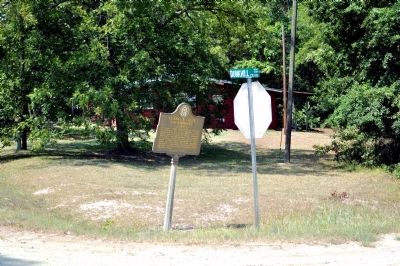
4. Clarke’s Creek Encampment Marker

Photographed by David Seibert, September 3, 2011
5. Clarke’s Creek Encampment Marker
Looking south across Mallorysville Road at Newtown Road. This is the route the American forces would have followed to the Kettle Creek Battlefield.

Photographed by David Seibert, September 3, 2011
6. Clarke’s Creek Encampment Marker
Looking west on Mallorysville Road
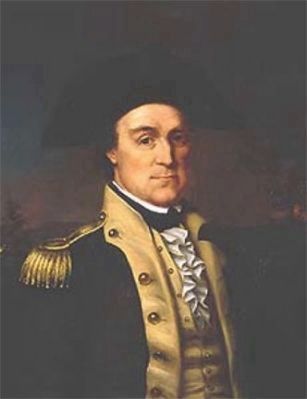
Photographed by Rembrandt Peale
7. Elijah Clark
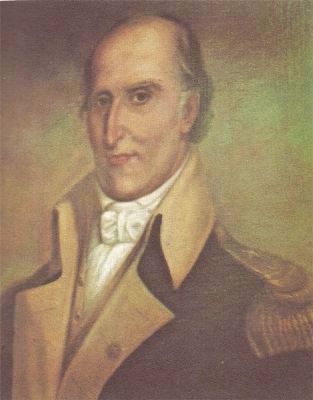
Photographed by Thomas Sully
8. Andrew Pickens
Credits. This page was last revised on June 16, 2016. It was originally submitted on September 4, 2011, by David Seibert of Sandy Springs, Georgia. This page has been viewed 1,460 times since then and 64 times this year. Photos: 1. submitted on September 4, 2011, by David Seibert of Sandy Springs, Georgia. 2. submitted on December 7, 2014, by Brian Scott of Anderson, South Carolina. 3, 4, 5, 6. submitted on September 4, 2011, by David Seibert of Sandy Springs, Georgia. 7, 8. submitted on December 7, 2014, by Brian Scott of Anderson, South Carolina. • Bill Pfingsten was the editor who published this page.
