Leesburg in Loudoun County, Virginia — The American South (Mid-Atlantic)
George Catlett Marshall
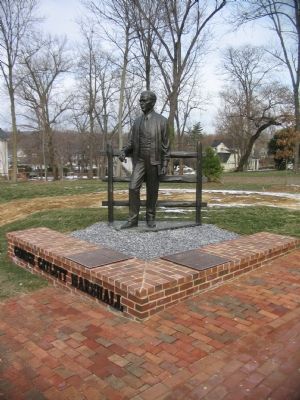
Photographed by Craig Swain, January 26, 2008
1. George Catlett Marshall Marker
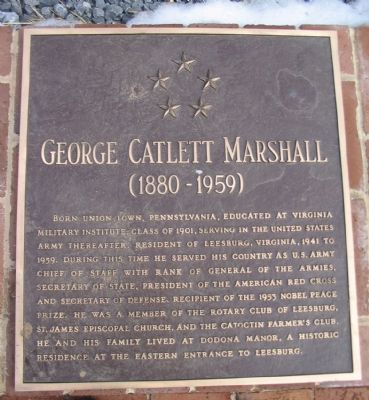
George Catlett Marshall
(1880-1959)
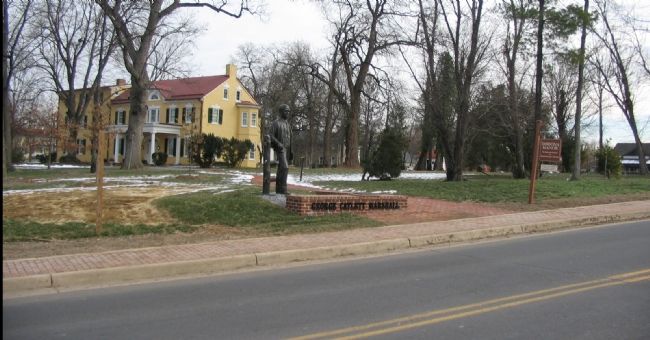
Born Union Town, Pennsylvania, educated at Virginia Military Institute, class of 1901, serving in the United States Army thereafter, resident of Leesburg, Virginia, 1941 to 1959. During this time he served his country as U.S. Army Chief of Staff with rank of General of the Armies, Secretary of State, President of the American Red Cross, and Secretary of Defense. Recipient of the 1953 Nobel Peace Prize. He was a member of the Rotary Club of Leesburg, St. James Episcopal Church, and the Catoctin Farmer's Club. He and his family lived at Dodona Manor, a historic residence at the eastern entrance to Leesburg.
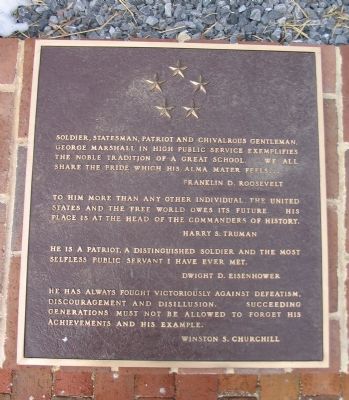
Soldier, statesman, patriot and chivalrous gentleman, George Marshall in high public service exemplifies the noble tradition of a great school. We all share the pride which his alma mater feels…
- Franklin D. Roosevelt
To him more than any other individual, the United States and the free world owes its future. His place is at the head of the commanders of history.
-Harry S. Truman
He is a patriot, a distinguished soldier, and the most selfless public servant I haveever met.
Click or scan to see
this page online
-Dwight D. Eisenhower
He has always fought victoriously against defeatism, discouragement and disillusion. Succeeding generations must not be allowed to forget his achievements and his example.
-Winston S. Churchill
Topics and series. This historical marker is listed in this topic list: Patriots & Patriotism. In addition, it is included in the Former U.S. Presidents: #33 Harry S. Truman, and the Former U.S. Presidents: #34 Dwight D. Eisenhower series lists. A significant historical year for this entry is 1901.
Location. 39° 6.795′ N, 77° 33.585′ W. Marker is in Leesburg, Virginia, in Loudoun County. It is at the intersection of East Market Street (Business State Highway 7) and Loudoun Street, on the right when traveling west on East Market Street. It is directly across Market St. from Mom’s Apple Pie, which is at the east fork of Loudoun and Market Streets. Touch for map. Marker is at or near this postal address: 217 Edwards Ferry Road, Leesburg VA 20176, United States of America. Touch for directions.

Regionally, this marker is in the Washington Metropolitan Area and in Northern Virginia. It is also in the American South,
Photographed by Craig Swain, January 26, 2008
2. Left Side
Other nearby markers. At least 8 other markers are within walking distance of this marker: General George C. Marshall House (within shouting distance of this marker); Dodona Manor (within shouting distance of this marker); The Depot (approx. 0.2 miles away); McKimmey's Mill (approx. 0.2 miles away); Osterburg Mill (approx. 0.2 miles away); Stationmaster's House (approx. 0.2 miles away); Dairy Barn (approx. 0.2 miles away); Log House (approx. 0.2 miles away). Touch for a list and map of all markers in Leesburg.
Another marker is no longer nearby. Gen. George C. Marshall House (was within shouting distance of this marker but has been confirmed missing).
Photographed by Craig Swain, January 26, 2008
3. Right Side
Photographed by Craig Swain, January 26, 2008
4. The Marshall Statue and Dodona Manor
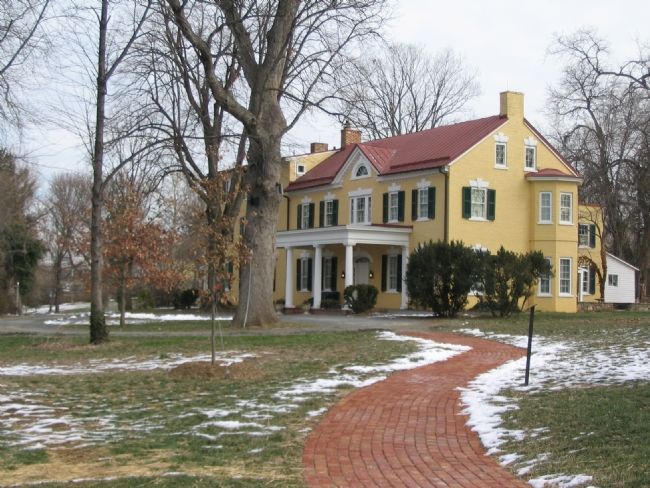
Photographed by Craig Swain, January 26, 2008
5. Dodona Manor
Photographed by Allen C. Browne, November 29, 2015
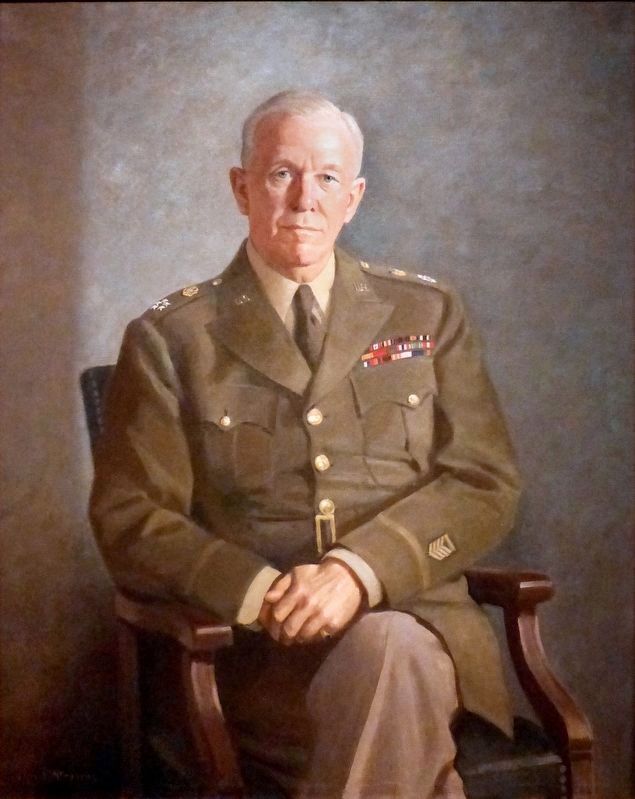
6. George Catlett Marshall
This c. 1949 portrait of George C. Marshall(1880-1959) by Thomas E. Stephens hangs in the National Portrait Gallery in Washington, DC.
“George C. Marshall was, according to one expert observer, the ‘perfect’ soldier. Endowed with a quick mind, a good memory, and a superb sense of strategy, he did not particularly relish war. Yet as chief of staff during World War II, he proved to be a masterful orchestrator of military mobilization. In 1945 President Harry Truman remarked that millions of Americans had served the country well in that conflict, but it had been Marshall who ‘gave it victory.’ As capable in peace as in wartime, Marshall later became Truman's secretary of state, and it was he who unveiled in 1947 the American aid program for rebuilding Europe's war-ravaged economies. Ultimately named the Marshall Plan, this venture became one of the greatest triumphs in the entire history of American diplomacy." National Portrait Gallery
“George C. Marshall was, according to one expert observer, the ‘perfect’ soldier. Endowed with a quick mind, a good memory, and a superb sense of strategy, he did not particularly relish war. Yet as chief of staff during World War II, he proved to be a masterful orchestrator of military mobilization. In 1945 President Harry Truman remarked that millions of Americans had served the country well in that conflict, but it had been Marshall who ‘gave it victory.’ As capable in peace as in wartime, Marshall later became Truman's secretary of state, and it was he who unveiled in 1947 the American aid program for rebuilding Europe's war-ravaged economies. Ultimately named the Marshall Plan, this venture became one of the greatest triumphs in the entire history of American diplomacy." National Portrait Gallery
Photographed by Allen C. Browne, November 8, 2017
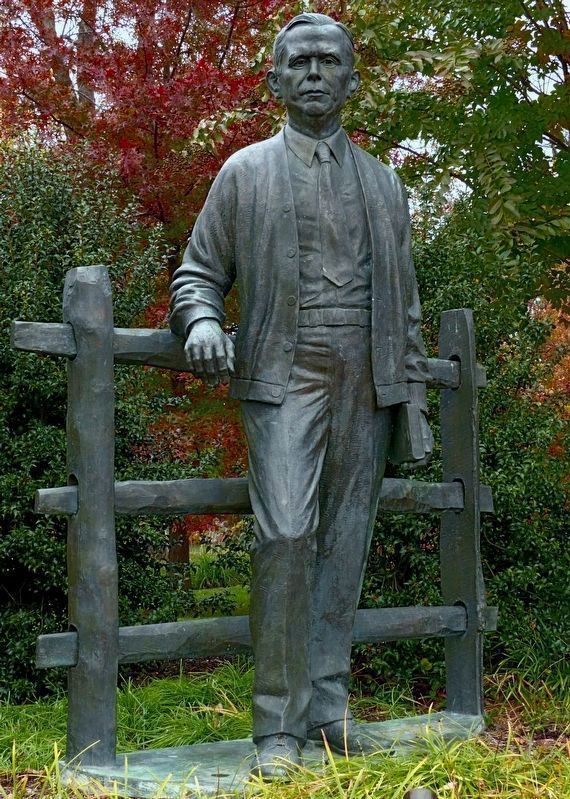
7. George Catlett Marshall
1980 by Rosario R. Fiori
1980 by Rosario R. Fiori
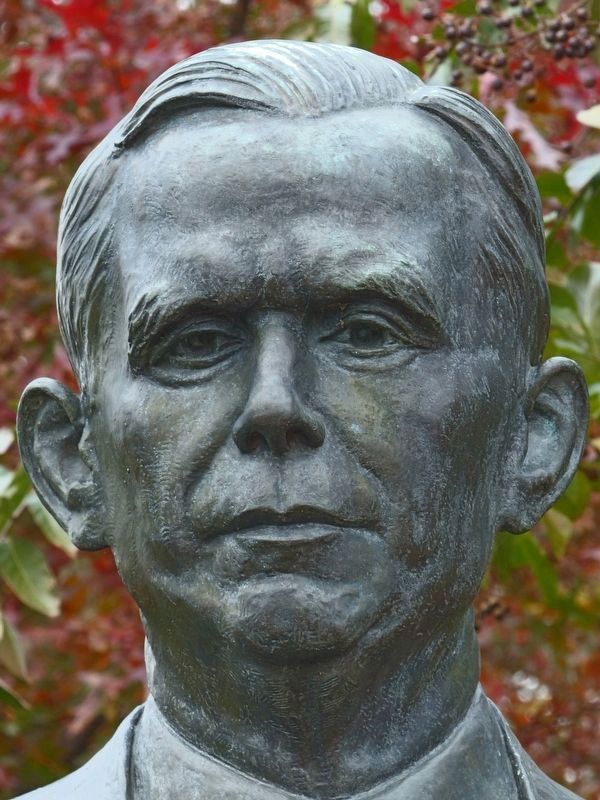
“On December 6, 1980 this statue of General George C. Marshall was dedicated on the grounds of the Loudon County Courthouse.” It was removed from the courthouse lawn when the courthouse was renovated and placed here at Dodona in 2007.
Photographed by Allen C. Browne, November 8, 2017
8. George Catlett Marshall
1980 by Rosario R. Fiori
1980 by Rosario R. Fiori
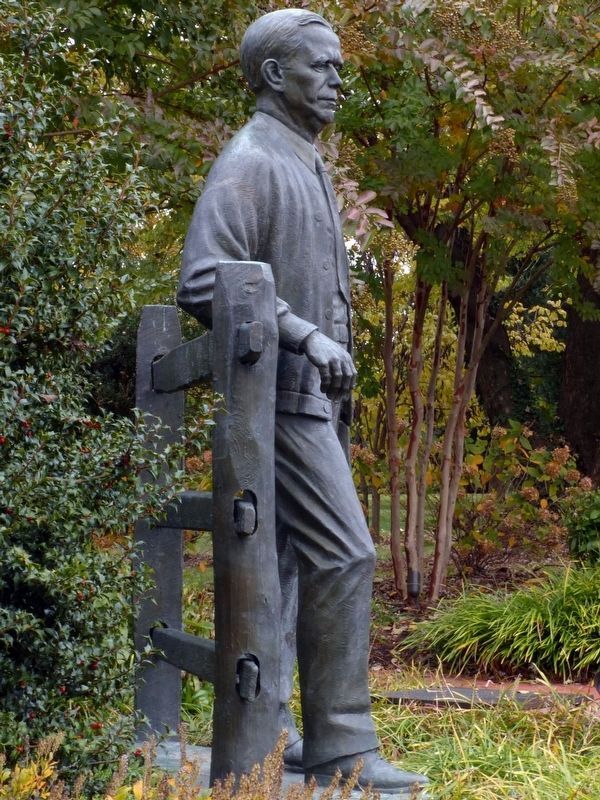
Photographed by Allen C. Browne, November 8, 2017
9. George Catlett Marshall
1980 by Rosario R. Fiori
1980 by Rosario R. Fiori
Credits. This page was last revised on January 11, 2026. It was originally submitted on January 26, 2008, by Craig Swain of Leesburg, Virginia. This page has been viewed 1,570 times since then and 27 times this year. Photos: 1, 2, 3, 4, 5. submitted on January 26, 2008, by Craig Swain of Leesburg, Virginia. 6. submitted on October 23, 2017, by Allen C. Browne of Silver Spring, Maryland. 7, 8, 9. submitted on November 12, 2017, by Allen C. Browne of Silver Spring, Maryland.
