Radcliffeborough in Charleston in Charleston County, South Carolina — The American South (South Atlantic)
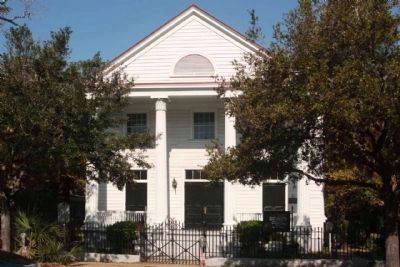
Old Bethel United Methodist Church
Photographed by Mike Stroud, August 14, 2011
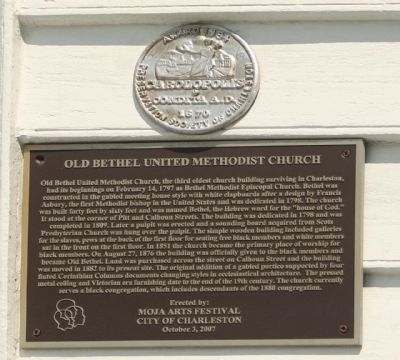
1. Old Bethel United Methodist Church Marker
Upper Medallion reads:
Carolopolis
Condita A.D.
1670
Awarded 1984
Preservation Society of Charleston
The Carolopolis Award is a plaque placed on buildings that have been preserved, restored, rehabilitated or are outstanding examples of new construction. The award is presented to those individuals, businesses or organizations that currently own the property. The Carolopolis Award is a slightly modified reproduction of the seal of the City of Charleston. The word Carolopolis comes from the original name of the city.
Condita A.D.
1670
Awarded 1984
Preservation Society of Charleston
The Carolopolis Award is a plaque placed on buildings that have been preserved, restored, rehabilitated or are outstanding examples of new construction. The award is presented to those individuals, businesses or organizations that currently own the property. The Carolopolis Award is a slightly modified reproduction of the seal of the City of Charleston. The word Carolopolis comes from the original name of the city.
this page online
MoJA Arts Festival
City of Charleston
October 3, 2007
Topics. This historical marker is listed in these topic lists: African Americans • Religion & Religious Structures. A significant historical month for this entry is February 1839.
Location. 32° 47.057′ N, 79° 56.517′ W. Marker is in Charleston, South Carolina, in Charleston County. It is in Radcliffeborough. It is on Calhoun Street near Pitt Street, on the right when traveling west. Touch for map. Marker is at or near this postal address: 222 Calhoun Street, Charleston SC 29401, United States of America. Touch for directions.

Regionally, this marker is in Historic Charleston and in the Lowcountry. It is also in the American South, specifically in the Deep South, and on the Eastern Seaboard. Globally, it is in
Photographed by Mike Stroud, August 14, 2011
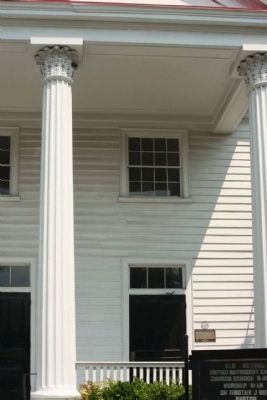
2. Old Bethel United Methodist Church Marker
Other nearby markers. At least 8 other markers are within walking distance of this marker: Old Bethel Methodist Church (here, next to this marker); Bethel Methodist Church (about 300 feet away, measured in a direct line); Bishop England High School (about 700 feet away); Charity and Benevolence (about 700 feet away); Benjamin Lucas House (approx. 0.2 miles away); 66 Bull Street The John Cart House (approx. 0.2 miles away); 63 ½ Coming Street (approx. 0.2 miles away); William Blacklock House (approx. 0.2 miles away). Touch for a list and map of all markers in Charleston.
Regarding Old Bethel United Methodist Church. National Register of Historic Places:
Old Bethel United Methodist Church *** (added 1975 - - #75001693)
Also known as Bethel Methodist Church
222 Calhoun St. , Charleston
♦ Historic Significance:Architecture/Engineering, Event
♦ Area of Significance: Black, Architecture, Religion
♦ Period of Significance: 1800-1824, 1750-1799
Begun in 1797 and completed in 1809, Old Bethel Methodist Church is the oldest Methodist church building still standing in Charleston. Construction of the original meeting house style church was planned by Francis Asbury, the first Bishop of American Methodism, in the 18th century. The founding of Old Bethel Church by both black and white members was indicative of the Methodist Church philosophy of encouraging black membership in the church. Originally located at the corner of Pitt and Calhoun Streets, the church served a congregation of blacks and
Photographed by Mike Stroud, August 14, 2011
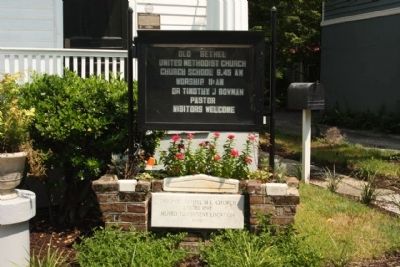
3. Old Bethel United Methodist Church
Erected 1797
Moved To Present Location
1880
(South Carolina Department of Archives and History)
Photographed by Mike Stroud, August 14, 2011
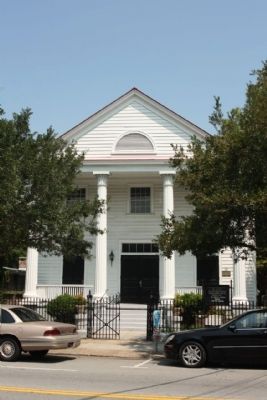
4. Old Bethel United Methodist Church Marker, seen at right
Photographed by Mike Stroud, November 10, 2011
5. Old Bethel United Methodist Church , receives its State Historical marker (left ) in 2011
* See nearby markers
Credits. This page was last revised on February 16, 2023. It was originally submitted on December 9, 2011, by Mike Stroud of Bluffton, South Carolina. This page has been viewed 825 times since then and 35 times this year. Photos: 1, 2, 3, 4, 5. submitted on December 9, 2011, by Mike Stroud of Bluffton, South Carolina.
