Arsenal Hill in Columbia in Richland County, South Carolina — The American South (South Atlantic)
Lace House
Photographed by Brian Scott, July 25, 2011
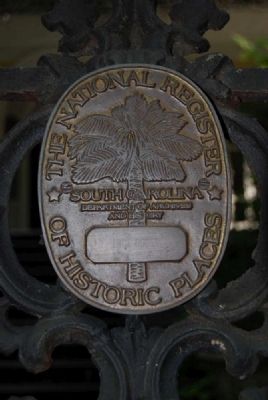
1. Lace House Marker
of Historic Places
South Carolina
Department of Archives
and History:
Lace House
Erected 1969.
Topics. This historical marker is listed in this topic list: Notable Buildings.
Location. 34° 0.538′ N, 81° 2.646′ W. Marker is in Columbia, South Carolina, in Richland County. It is in Arsenal Hill. It can be reached from the intersection of Richland Street and Gadsden Street. Touch for map. Marker is at or near this postal address: 803 Richland Street, Columbia SC 29201, United States of America. Touch for directions.

Regionally, this marker is in the Midlands. It is also in the American South and specifically in the Deep South. Globally, it is in North America, the Western Hemisphere, the Western World, and the Anglosphere. Historically, it finds itself in what was once the territory of the Mississippian Culture, one of the original Thirteen Colonies, one of the Confederate States of America, and the Antebellum South.
Other nearby markers. At least 10 other markers are within walking distance of this marker: The Figure Eight in South Carolina (within shouting distance of this marker); Sir William Berkeley (within shouting distance of this marker); Duke of Albemarle (within shouting distance of this marker); Sir George Carteret (within shouting distance of this marker); Lord William Craven (within shouting distance of this marker); Earl of Clarendon (within shouting distance of this marker); Sir John Colleton (within shouting distance of this marker); Lord Ashley (within shouting distance of this marker); Lord John Berkeley (within shouting distance of this marker); The Gonzales Fountain (within shouting distance of this marker). Touch for a list and map of all markers in Columbia.
Also see . . . Lace House.
this page online
Photographed by Brian Scott, July 25, 2011
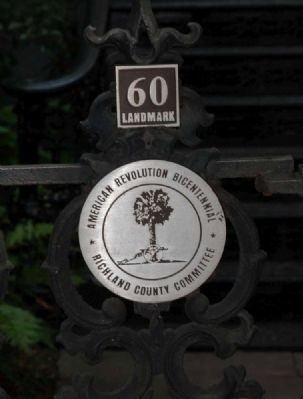
2. Lace House Markers
Photographed by Brian Scott, July 25, 2011
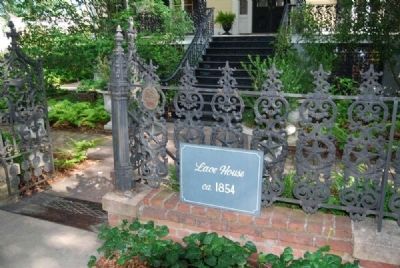
3. Lace House Marker
Photographed by Brian Scott, July 25, 2011
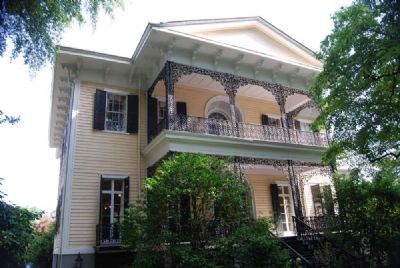
4. Lace House (1854)
South (Front) Facade
South (Front) Facade
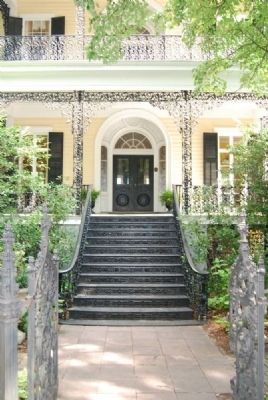
Photographed by Brian Scott, July 25, 2011
5. Lace House Entrance
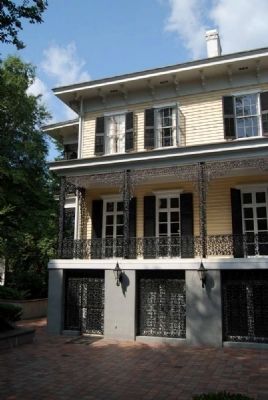
Photographed by Brian Scott, July 25, 2011
6. Lace House (1854)
East Corner
East Corner
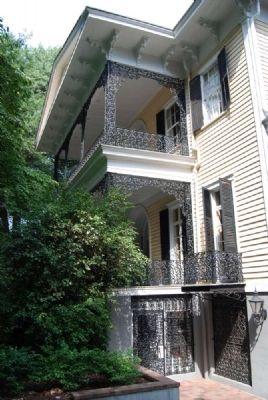
Photographed by Brian Scott, July 25, 2011
7. Lace House (1854)
East Corner
East Corner
Credits. This page was last revised on February 16, 2023. It was originally submitted on December 26, 2011, by Brian Scott of Anderson, South Carolina. This page has been viewed 779 times since then and 19 times this year. Photos: 1, 2, 3, 4, 5, 6, 7. submitted on December 26, 2011, by Brian Scott of Anderson, South Carolina.
