French Quarter in New Orleans in Orleans Parish, Louisiana — The American South (West South Central)
Fort St. Charles
[Louisiana Rebellion of 1768]
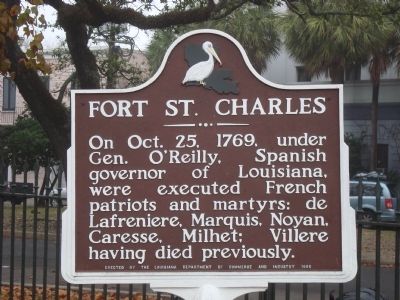
Photographed by Barry Swackhamer, December 26, 2011
1. Fort St. Charles Marker
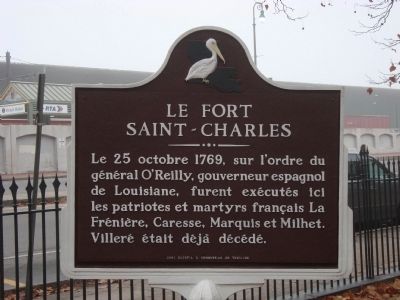
[Back, in French]
Le Fort Saint – Charles
Le 25 octobre 1769, sur l’ordre du général O’Reilly, gouverneur espagnol de Louisiane, furent exécutés ici les patriotes et martyrs français La Frénière, Caresse, Marquis et Milhet. Villeré était déjà décédé.
Don: Godofil & Commission du Tourisme
Erected 1955 by Louisiana Department of Commerce and Industry/Commission du Tourisme.
Topics. This historical marker is listed in this topic list: Forts and Castles. A significant historical year for this entry is 1769.
Location. 29° 57.68′ N, 90° 3.448′ W. Marker is in New Orleans, Louisiana, in Orleans Parish. It is in the French Quarter. It is at the intersection of Esplanade Avenue and North Peters Street on Esplanade Avenue. Touch for map. Marker is at or near this postal address: 400 Esplanade Avenue, New Orleans LA 70116, United States of America. Touch for directions.

Regionally,
this page online
Other nearby markers. At least 8 other markers are within walking distance of this marker: United States Mint (a few steps from this marker); Sicilian Jazz / Sicilian Swing & Rock n’ Roll (about 300 feet away, measured in a direct line); Faubourg Marigny (about 300 feet away); Calle del Cuartel (about 400 feet away); Solomon Northup (about 700 feet away); New Orleans and the Domestic Slave Trade (about 800 feet away); Denis House (about 800 feet away); Bringier – Barnett House (about 800 feet away). Touch for a list and map of all markers in New Orleans.
Regarding Fort St. Charles. Interestingly, the French
Photographed by Barry Swackhamer, December 26, 2011
2. Le Fort Saint – Charles Marker
Also see . . .
1. Louisiana Rebellion of 1768 - Wikpedia. (Submitted on January 12, 2012, by Barry Swackhamer of Brentwood, California.)
2. New Orleans Mint. The New Orleans Mint was used by both the United States and Confederate States of America. It is now used by the Louisiana State Museum as a Jazz Museum. (Submitted on January 12, 2012, by Barry Swackhamer of Brentwood, California.)
Additional keywords. Louisiana Rebellion of 1768
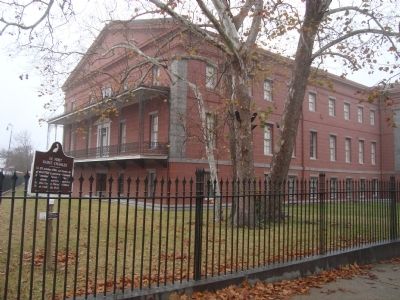
Photographed by Barry Swackhamer, December 26, 2011
3. Fort St. Charles Marker
The United State Mint is in the background.
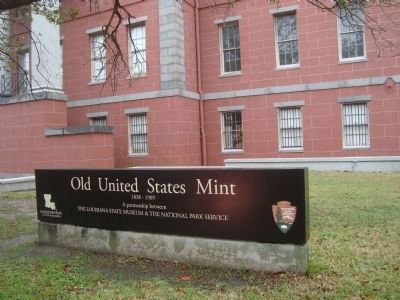
Photographed by Barry Swackhamer, December 26, 2011
4. The United States Mint
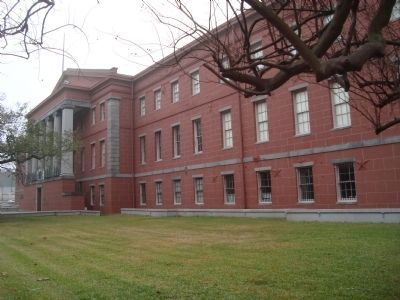
Photographed by Barry Swackhamer, December 26, 2011
5. The United States Mint
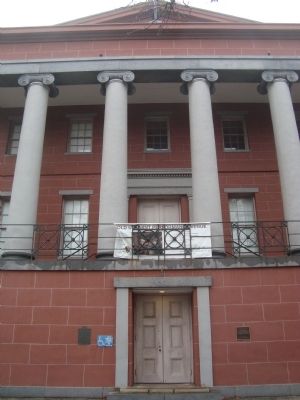
Photographed by Barry Swackhamer, December 26, 2011
6. The United States Mint - entrance
Credits. This page was last revised on February 12, 2023. It was originally submitted on January 12, 2012, by Barry Swackhamer of Brentwood, California. This page has been viewed 3,100 times since then and 143 times this year. Photos: 1, 2, 3, 4, 5, 6. submitted on January 12, 2012, by Barry Swackhamer of Brentwood, California. • Craig Swain was the editor who published this page.
