Central City in Gilpin County, Colorado — The American Mountains (Southwest)
Central City
Photographed by Barry Swackhamer, July 1, 2009
1. Central City Marker -Panel 1
[Three panels on this marker describe the history of Central City, Colorado]
[Panel 1]
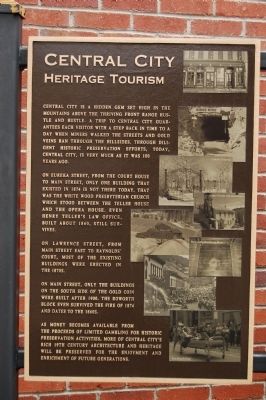
On Eureka Street, from the Court House to Main Street, only one building that existed in 1874 is not there today. That was the white wood Presbyterian Church which stood between the Teller House and the Opera House. Even Henry Teller’s Law Office, built about 1860, still survives.
On Lawrence Street, from Main Street east to Raynolds' Court, most of the existing buildings were erected in the 1870s.
On Main Street, only the buildings on the south side of the Gold Coin were built after 1900. The Roworth Block even survived the fire of 1874 and dates to the 1860s.
As money becomes available from the proceeds of limited gambling for historic preservation activities, more of Central City’s rich 19th century architecture and heritage will be preserved for the enjoyment and enrichment of future generations.
[Panel 2]
this page online
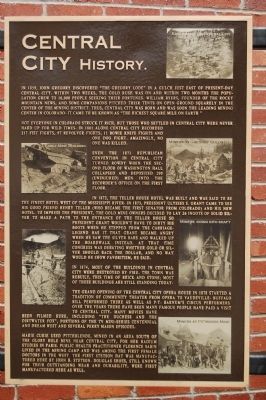
Not everyone in Colorado struck it rich, but those who settled in Central City were never hard up for wild times. In 1861 alone Central City recorded 217 fist fights, 97 revolver fights, 11 Bowie knife fights and one dog fight. Amazingly, no one was killed.
Even the 1871 Republican Convention in Central City turned rowdy when the second floor of Washington Hall collapsed and deposited 200 (uninjured) men into the recorder’s office on the first floor.
In 1872, the Teller House Hotel was built and was said to be the finest hotel west of the Mississippi River. In 1873, President Ulysses S. Grant came to see his good friend Henry Teller (who became the first senator from Colorado) and his new hotel. To impress the President, the gold mine owners decided to lay 26 ingots of solid silver to make a path to the entrance of the Teller House so President Grant wouldn’t have to dirty his boots when he stepped from the carriage. Legend has it that Grant became angry when he saw the silver bars and walked up the boardwalk instead. At that time Congress was debating whether gold or silver should back
Photographed by Barry Swackhamer, July 1, 2009
2. Central City Marker -Panel 2
In 1874, most of the buildings in Central City were destroyed by fire. The town was rebuilt. This time of brick and stone; most of these buildings are still standing today.
The grand opening of the Central City Opera House in 1878 started a tradition of community theater from opera to vaudeville. Buffalo Bill performed there as well as P.T. Barnum’s circus performers. Over the years there have been many famous people have paid a visit to Central City. Many movies have been filmed here, including “The Duchess and the Dirtwater Fox”, portions of the TV mini-series Centennial and Dream West and several Perry Mason episodes.
Marie Curie used pitchblende, mined in an area south of the Glory Hole Mine near Central City, for her radium studies in Paris. Public health practitioner Florence Sabin lived in the mining camp and was among the first female doctors in the west. The first Stetson hat was manufactured here by John B. Stetson. Douglas Shoes, still known for there outstanding wear and durability, were first manufactured here as well.
[Panel 3]
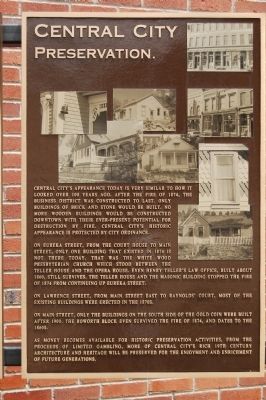
On Eureka Street, from the Court House to Main Street, only one building that existed in 1874 is not there today. That was the white wood Presbyterian Church which stood between the Teller House and the Opera House. Even Henry Teller’s Law Office, built about 1860, still survives. The Teller
Photographed by Barry Swackhamer, July 1, 2009
3. Central City Marker -Panel 3
On Lawrence Street, from Main Street east to Raynold’s Court, most of the existing buildings were erected in the 1870s.
On Main Street, only the buildings on the south of the Gold Coin were built after 1900. The Roworth Block even survived the fire of 1874 and dates to the 1860s. As money becomes available for historic preservation activities, from the proceeds of limited gambling, more of Central City’s rich 19th century architecture and heritage will be preserved for the enjoyment and enrichment of future generations
Erected by The Gold Belt Tour.
Topics and series. This historical marker is listed in this topic list: Settlements & Settlers. In addition, it is included in the Former U.S. Presidents: #18 Ulysses S. Grant, and the National Historic Landmarks series lists. A significant historical year for this entry is 1874.
Location. 39° 47.968′ N, 105° 30.752′ W. Marker is in Central City, Colorado, in Gilpin County. It is at the intersection of Main Street (State Highway 279) and Spring Street on Main Street. Touch for map. Marker is in this post office area: Central City CO 80427, United States of America. Touch for directions.

Regionally, this marker is in the Colorado High Rockies. It is also in the American Mountain West. Globally, it is in North America, the Rocky Mountains, the Western Hemisphere, the Western World, and the Anglosphere.
Other nearby markers. At least 8 other markers are within walking distance of this marker: Central City Opera (here, next to this marker); The AOUW Building (within shouting distance of this marker); The Ignatz Meyer Building (within shouting distance of this marker); The Rose Haydee Building (within shouting distance of this marker); St Mary's Catholic Church (within shouting
Photographed by Barry Swackhamer, July 1, 2009
4. Central City Marker
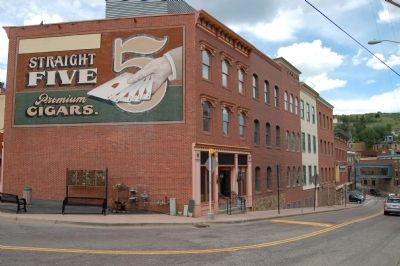
Looking down Spring Street,
More about this marker. This marker is located at the intersection of Main, Spring, Nevada and Roworth Streets which was the site of the fountain and flower beds.
Regarding Central City. The Central City/Blackhawk Historic District has been designated a National Historic Landmark:
Statement of Significance (as of designation - July 4, 1961):
The Central City/ Black Hawk NHL is at the heart of one of the richest mining areas of the Rocky Mountain West. It was the discovery of gold here, in 1859, which triggered the great Pike's Peak gold rush.
Also see . . .
1. History Facts of Central City. Gilpin Historical Society entry (Submitted on January 21, 2012, by Barry Swackhamer of Brentwood, California.)
2. Central City, Colorado. Wikipedia entry. (Submitted on January 21, 2012, by Barry Swackhamer of Brentwood, California.)
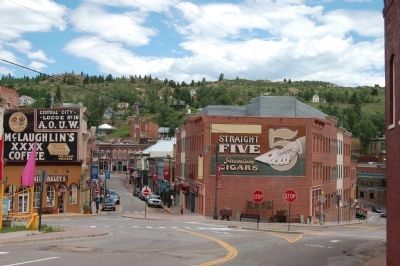
Photographed by Barry Swackhamer, July 1, 2009
5. Central City
Main Street is ahead and Spring Street to the right.
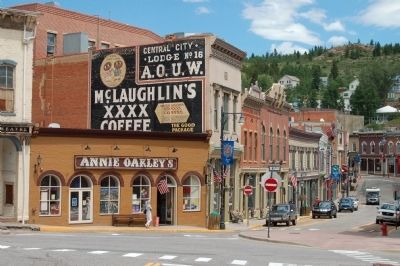
Photographed by Barry Swackhamer, July 1, 2009
6. Main Street from the South
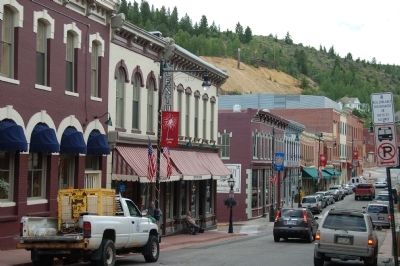
Photographed by Barry Swackhamer, July 1, 2009
7. Main Street from the North
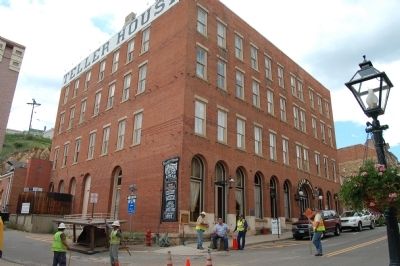
Photographed by Barry Swackhamer, July 1, 2009
8. The Teller House on Eureka Street
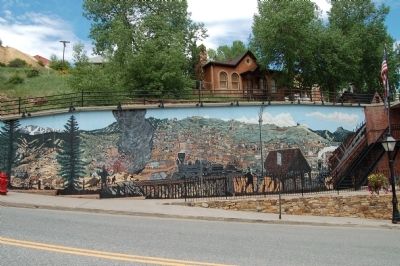
Photographed by Barry Swackhamer, July 1, 2009
9. Central City Mural by Wendell Pugh
Credits. This page was last revised on October 10, 2020. It was originally submitted on January 21, 2012, by Barry Swackhamer of Brentwood, California. This page has been viewed 2,264 times since then and 96 times this year. Photos: 1, 2, 3, 4, 5, 6, 7, 8, 9. submitted on January 21, 2012, by Barry Swackhamer of Brentwood, California. • Syd Whittle was the editor who published this page.
