Helena in Phillips County, Arkansas — The American South (West South Central)
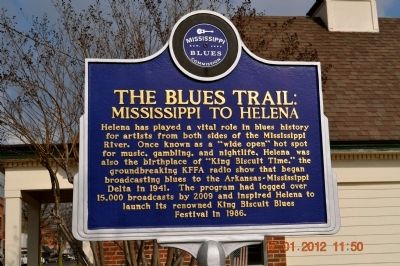
The Blues Trail: Mississippi to Helena
Photographed by Sandra Hughes, January 17, 2012
1. The Blues Trail: Mississippi to Helena Marker
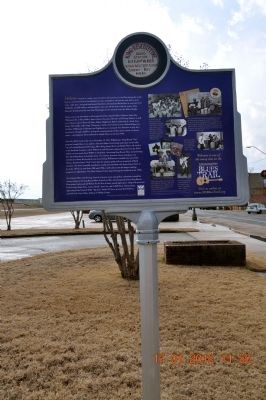
(Side 2):
The town emerged as a major center of culture and commerce in the Delta during the steamboat era and maintained its freewheeling river port atmosphere well into the mid-20th century. Cafes, night spots, and good-time houses flourished, and musicians flocked here to entertain local fieldhands, sawmill workers, and roustabouts who came off the boats ready for action. Many bluesmen ferried across the river from Mississippi or later motored across the Helena Bridge. Others came from elsewhere in Arkansas, up from Louisiana, or down from Memphis.
Helena was at one time home to Mississippi-born blues legends Robert Johnson,
this page online
Soon after KFFA went on the air on November 19, 1941, Williamson’s broadcasts on “King Biscuit Time” brought blues to an audience that had seldom if ever heard such music on the radio. Up-and-coming bluesmen B.B. King, Albert King, Jimmy Reed, and Muddy Waters all tuned in to the lunchtime broadcasts from the KFFA studios, or on occasion from WROX in Clarksdale, advertising King Biscuit Flour and promoting their upcoming shows at local juke joints and house parties. The sponsor, Interstate Grocer Company, even introduced a Sonny Boy brand of corn meal. During
Photographed by Sandra Hughes, January 17, 2012
2. The Blues Trail: Mississippi to Helena Marker
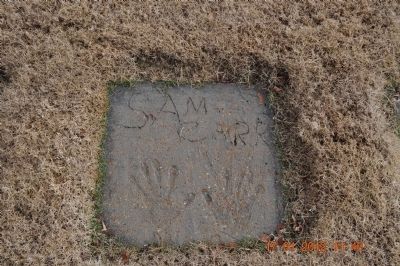
The Arkansas Blues and Heritage Festival, a favorite event among blues enthusiasts around the country, began as the King Biscuit Blues Festival in 1986, welcoming back former King Biscuit Entertainers Robert Lockwood and Pinetop Perkins for the first of many annual appearances, along with a variety of other acts including perennial local favorites Frank Frost, Lonnie Shields, Sam Carr, and CeDell Davis.
Erected 2009 by the Mississippi Blues Commission. (Marker Number 88.)
Topics and series. This historical marker is listed in these topic lists: African Americans • Arts, Letters, Music. In addition, it is included in the Mississippi Blues Trail series list. A significant historical month for this entry is November 1829.
Location. 34° 31.412′ N, 90° 35.166′ W. Marker is in Helena, Arkansas, in Phillips County. It is on Cherry Street north of Missouri Street. Touch for map. Marker is at or near this postal address: 141 Cherry Street, Helena AR 72342, United States of America. Touch for directions.

Regionally, this marker is in the Arkansas Delta, in Crowley’s Ridge, in the Mississippi Alluvial Plain, and in the Quapaw Homeland. It is also in the American South, specifically in the Upper South, in the Mississippi Delta, and in the Great River Road Region. Globally, it is in North America, the Western Hemisphere, the Western World, and the Anglosphere. Historically, it finds itself
Photographed by Sandra Hughes, January 17, 2012
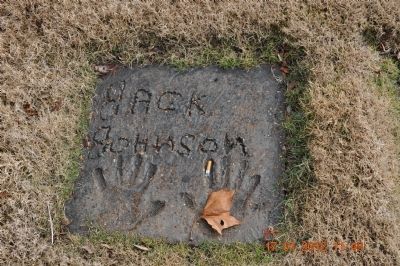
3. The Blues Trail: Mississippi to Helena Marker
Jack Johnson
Other nearby markers. At least 8 other markers are within walking distance of this marker: KFFA 1360 Helena (within shouting distance of this marker); Hernando De Soto (about 400 feet away, measured in a direct line); A Great Upheaval (about 400 feet away); A Union Stronghold in Confederate Arkansas (about 400 feet away); Phillips County Goes to War (about 400 feet away); The Battle of Helena (about 400 feet away); Helena and The Trail of Tears (about 500 feet away); They Passed This Way (about 500 feet away). Touch for a list and map of all markers in Helena.
Photographed by Sandra Hughes, January 17, 2012
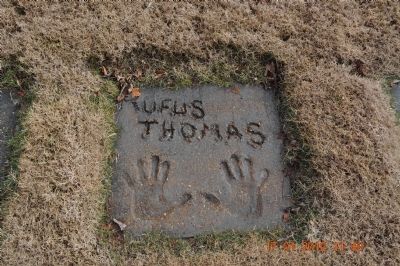
4. The Blues Trail: Mississippi to Helena Marker
Rufus Thomas
Photographed by Sandra Hughes, January 17, 2012
5. The Blues Trail: Mississippi to Helena Marker
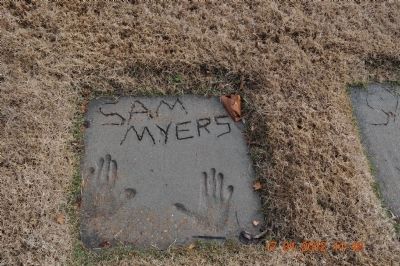
Sam Myers
Photographed by Sandra Hughes, January 17, 2012
6. The Blues Trail: Mississippi to Helena Marker
Sam Carr
Photographed by Sandra Hughes, January 17, 2012
7. The Blues Trail: Mississippi to Helena Marker
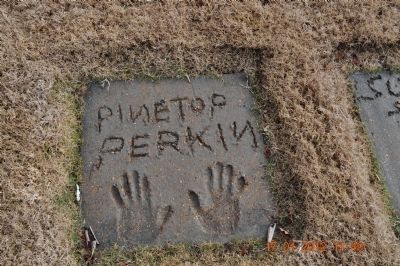
Pinetop Perkins
Photographed by Sandra Hughes, January 17, 2012
8. The Blues Trail: Mississippi to Helena Marker
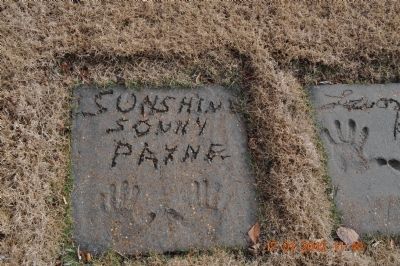
Sunshine Sonny Payne
Photographed by Sandra Hughes, January 17, 2012
9. The Blues Trail: Mississippi to Helena Marker
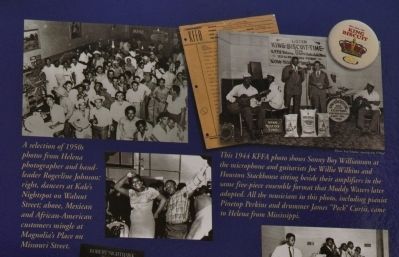
A Selection of 1950s photos from Helena photographer and bandleader Rogerline Johnson: right dancers at Kale's Nightspot on Walnut Street, above, Mexican and African-American customers mingle at Magnolia's Place on Missouri St.
This 1944 KFFA photo shows Sonny Boy Williamson at the microphone and guitarists Joe Willie Wilkins and Houston Stackhouse sitting beside their amplifiers in the same five-piece ensemble format that Muddy Waters later adopted. All the musicians in this photo, including pianists Pinetop Perkins, and drummer James "Peck" Curtis, came to Helena from Mississippi.
Photographed by Sandra Hughes, January 17, 2012
10. The Blues Trail: Mississippi to Helena Marker
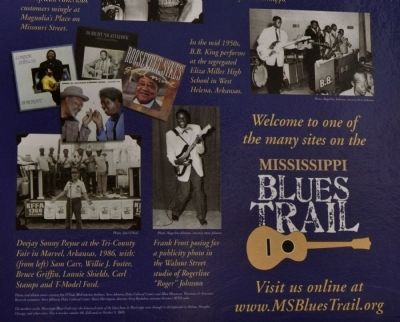
In the mid 1950s, BB King performs at the segregated Eliza Miller High School in West Helena, Arkansas
Deejay Sonny Payne at the Tri-country Fair in Marvel, Arkansas, 1986, with (from left) Sam Carr, Willie J. Forest, Bruce Griffin, Lonnie Shields, Carl Stamps and T-Model Ford.
Frank Frost posing for a publicity photo in the Walnut Street radio of Rogerline "Roger" Johnson
Photographed by Mark Hilton, August 26, 2017
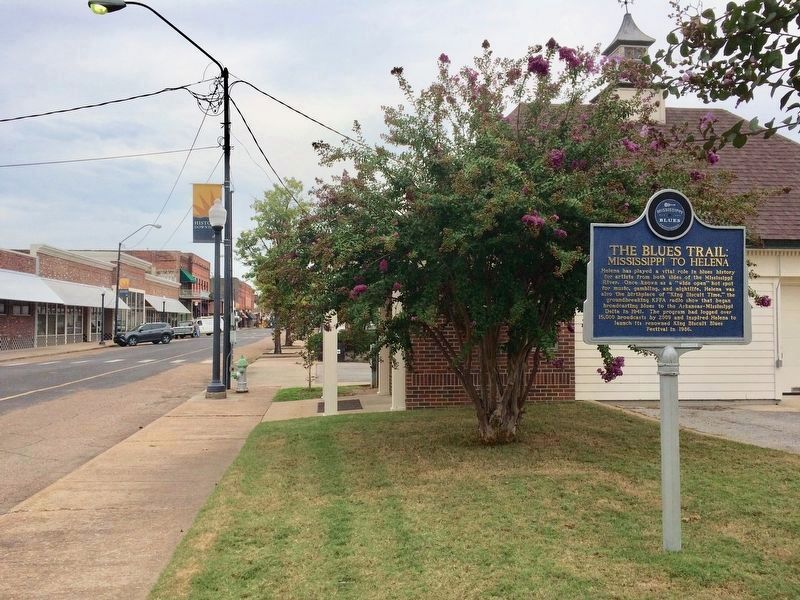
11. View of marker looking north on Cherry Street.
Photographed by Mark Hilton, August 26, 2017
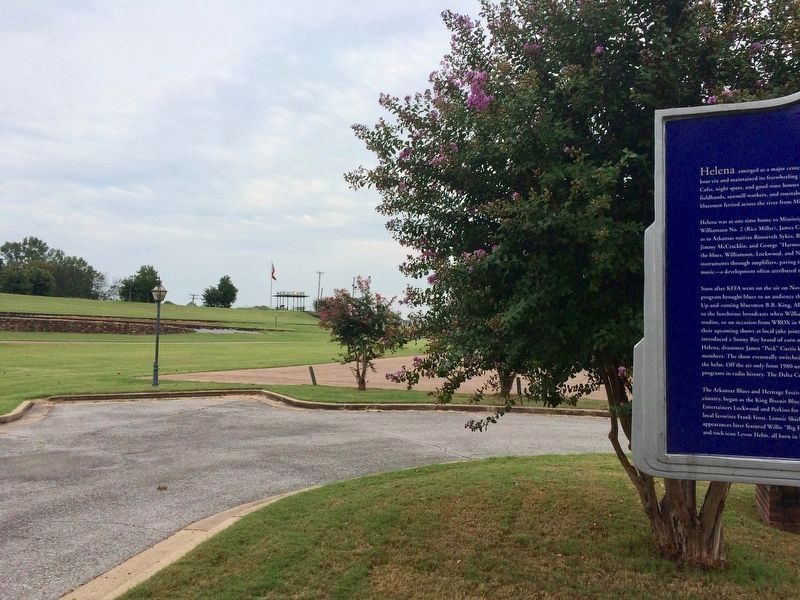
12. View from marker East towards Mississippi River levee.
In foreground is part of the Delta Cultural Center, Cherry Street Pavilion, which serves as the main stage for the King Biscuit Blues Festival.
Credits. This page was last revised on September 1, 2017. It was originally submitted on January 23, 2012, by Sandra Hughes Tidwell of Killen, Alabama, USA. This page has been viewed 1,554 times since then and 39 times this year. Photos: 1, 2, 3, 4, 5, 6, 7, 8, 9, 10. submitted on January 23, 2012, by Sandra Hughes Tidwell of Killen, Alabama, USA. 11, 12. submitted on August 26, 2017, by Mark Hilton of Montgomery, Alabama. • Craig Swain was the editor who published this page.
