Sharpsburg in Washington County, Maryland — The American Northeast (Mid-Atlantic)
Old Slave Block
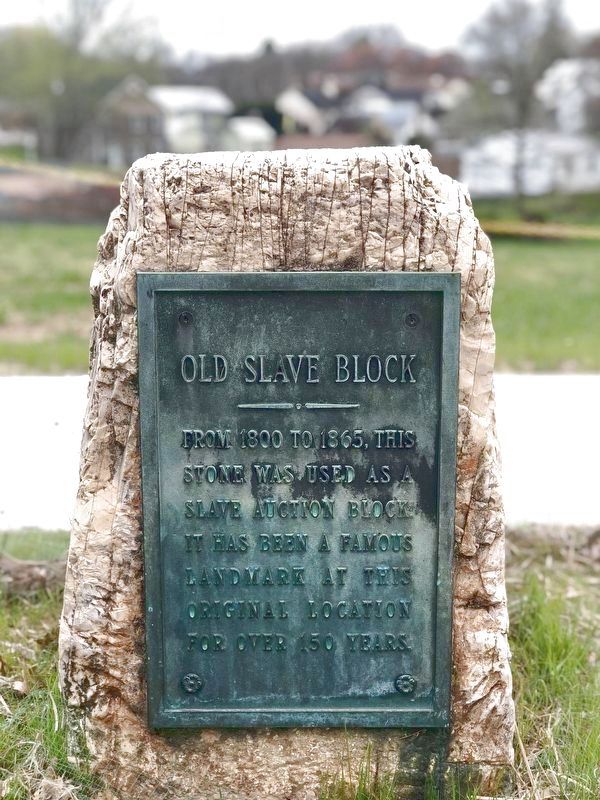
Photographed by Jordan Butler, April 5, 2020
1. Old Slave Block Marker
Topics. This historical marker is listed in these topic lists: African Americans • Industry & Commerce. A significant historical year for this entry is 1800.
Location. 39° 27.429′ N, 77° 44.704′ W. Marker is in Sharpsburg, Maryland, in Washington County. It can be reached from the intersection of South Church Street (Maryland Route 65) and Alley 3, on the right when traveling north. The marker has been moved into storage. Touch for map. Marker is at or near this postal address: 206B S Church St, Sharpsburg MD 21782, United States of America. Touch for directions.

Regionally, this marker is in Western Maryland. It is also in the American Mid-Atlantic, in Appalachia, and specifically in Northern Appalachia. Globally, it is in North America, the Western Hemisphere, the Western World, and the Anglosphere. Historically, it finds itself in what was once one of the original Thirteen Colonies.
Other nearby markers. At least 8 other markers are within walking distance of this marker:
this page online
Also see . . . Marker temporarily removed. (Submitted on November 10, 2021, by Jordan Butler of New Windsor, Maryland, USA.)
Additional commentary.
1. Interesting Historical Connection
The slave auction block stands just a few hundred yards from the Antietam National Cemetery. The lasting impact of the battle fought at Antietam on September 17, 1862 was the Emancipation Proclamation issued by President Lincoln on September 22. Lincoln felt he could not issue such an executive order abolishing slavery, even if only applying to the seceded states, without some signal victory on the battlefield. The Battle of Antietam,
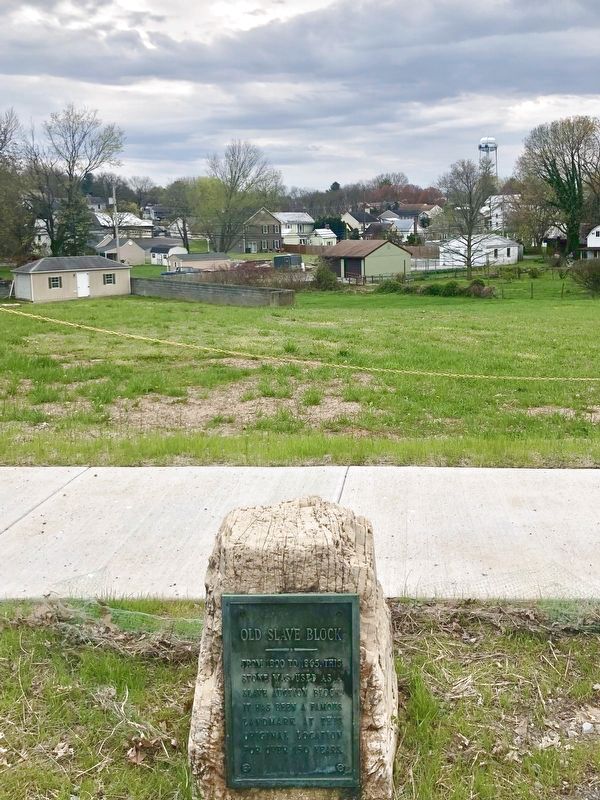
Photographed by Jordan Butler, April 5, 2020
2. Old Slave Block Marker
— Submitted February 10, 2008, by Craig Swain of Leesburg, Virginia.
Additional keywords. slavery, human trafficking
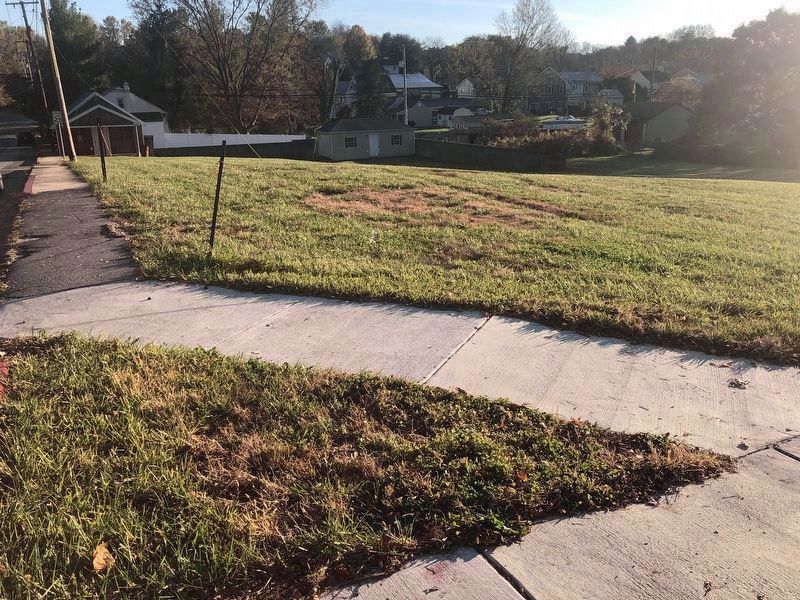
Photographed by Jordan Butler, November 9, 2021
3. Old Slave Block Marker Temporarily Removed
Marker has been temporarily removed to clean and restore the Old Slave Block following vandalism in June 2020.
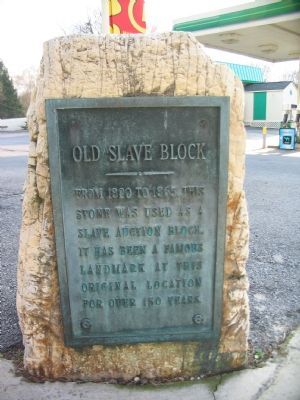
Photographed by Craig Swain, February 9, 2008
4. Old Slave Block Marker
With now-demolished gas station barely visible.
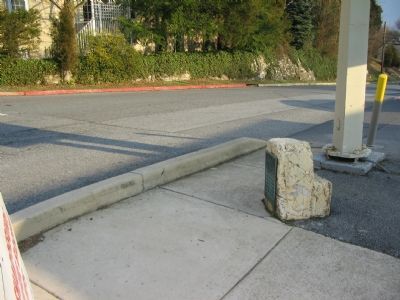
Photographed by Craig Swain, February 9, 2008
5. Old Slave Block Marker
Credits. This page was last revised on April 1, 2025. It was originally submitted on February 10, 2008, by Craig Swain of Leesburg, Virginia. This page has been viewed 14,863 times since then and 220 times this year. Last updated on November 10, 2021, by Jordan Butler of New Windsor, Maryland, USA. Photos: 1, 2, 3. submitted on November 10, 2021, by Jordan Butler of New Windsor, Maryland, USA. 4, 5. submitted on February 10, 2008, by Craig Swain of Leesburg, Virginia. • Mark Hilton was the editor who published this page.
