Near Sharpsburg in Washington County, Maryland — The American Northeast (Mid-Atlantic)
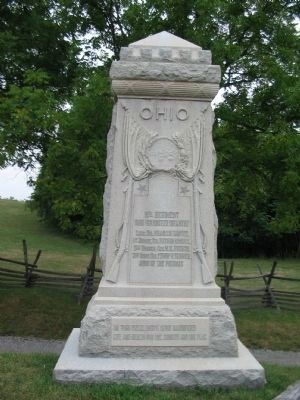
8th Ohio Regiment
Photographed by Craig Swain, August 5, 2007
1. 8th Ohio Regiment Monument
Ohio Volunteer Infantry
Lieut. Col. Franklin Sawyer
1st Brigade Gen. Nathan Kimball
3rd Division Gen. W. H. French
2nd Corps, Gen. Edwin V. Sumner
Army of the Potomac
On this field Ohio's sons sacrificed
life and health for one country and one flag.
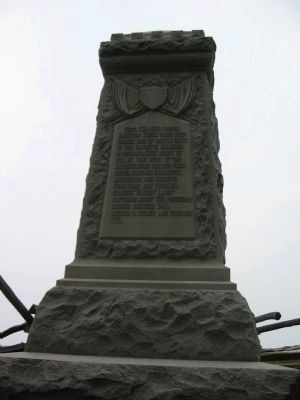
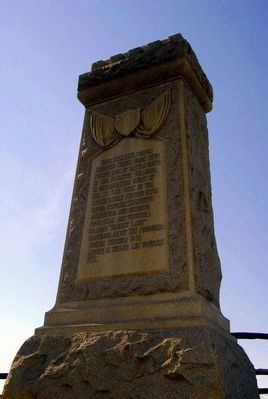
(Rear):
Antietam Creek waist deep;
formed line of battle South
of the Roulette buildings,
in orchard, took crest of
hill at the point of the
bayonet; held position four
hours; supplies exhausted
ammunition and muskets
from dead and wounded;
charged "Bloody Lane"
captured about 300 prisoners;
number engaged 341;
Losses in killed and wounded
162.
Erected 1903.
Topics. This historical marker is listed in this topic list: War, US Civil. A significant historical date for this entry is September 17, 1862.
Location. 39° 28.272′ N,
this page online

Regionally, this marker is in Western Maryland. It is also in the American Mid-Atlantic, in Appalachia, and specifically in Northern Appalachia. Globally, it is in North America, the Western Hemisphere, the Western World, and the Anglosphere. Historically, it finds itself in what was once one of the original Thirteen Colonies.
Other nearby markers. At least 8 other markers are within walking distance
Photographed by Craig Swain, August 5, 2007
2. Rear of Monument
Regarding 8th Ohio Regiment. This marker is included on the Sunken Road or Bloody Lane Virtual Tour by Markers
Photographed by Brian Scott, September 19, 2015
3. 8th Ohio Regiment Monument
Rear Inscription
Rear Inscription
Also see . . .
1. 8th Ohio Infantry Regiment. Stone Sentinels website entry (Submitted on January 9, 2026, by Larry Gertner of New York, New York.)
2. Co. B, The 8th Ohio Volunteer Infantry. The Reenactors of Co. B, 8th Ohio Volunteer Infantry-The Hibernian Guard - website homepage (Submitted on April 5, 2022, by Larry Gertner of New York, New York.)
3. Franklin Sawyer (1825-1892). Find A Grave website entry:
After the war Sawyer A Military History of the 8th Regiment Ohio Volunteer Infantry published in 1881. (Submitted on September 27, 2015, by Brian Scott of Anderson, South Carolina.)
4. Nathan Kimball. Wikipedia entry:
Nathan Kimball (November 22, 1822 – January 21, 1898) was a physician, politician, postmaster, and military officer, serving as a general in the Union army during the American Civil War. He was the first statewide commander of the Grand Army of the Republic veterans organization in Indiana. (Submitted on September 27, 2015, by Brian Scott of Anderson, South Carolina.)
5. William H. French. Wikipedia entry:
William Henry French (January 13, 1815 – May 20, 1881) was a career United States Army officer and a Union Army General in the American Civil War. He rose to temporarily command a corps within the Army of the Potomac, but was relieved of active field duty following poor performance
Photographed by Craig Swain, August 5, 2007
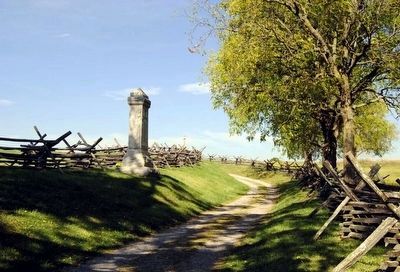
4. Sunken Road or Bloody Lane
The 8th Ohio Monument stands on the embankment to the right of the road, as seen here looking to the east. The natural breastwork formed by the road bed is easily seen here.
6. Edwin Vose Sumner. Wikipedia entry:
Edwin Vose Sumner (January 30, 1797 – March 21, 1863) was a career United States Army officer who became a Union Army general and the oldest field commander of any Army Corps on either side during the American Civil War. His nicknames "Bull" or "Bull Head" came both from his great booming voice and a legend that a musket ball once bounced off his head. (Submitted on September 27, 2015, by Brian Scott of Anderson, South Carolina.)
Photographed by Brian Scott, September 19, 2015
5. 8th Ohio Regiment Monument
Photographed by Craig Swain, August 5, 2007
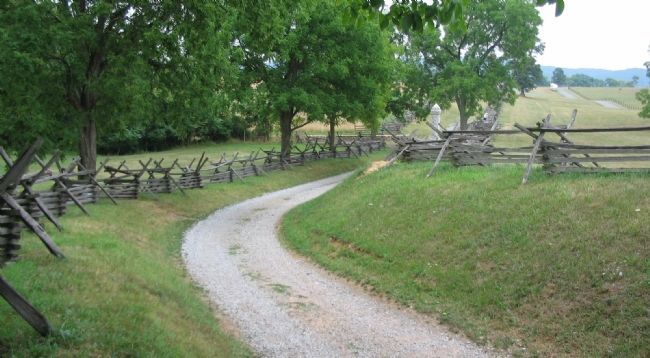
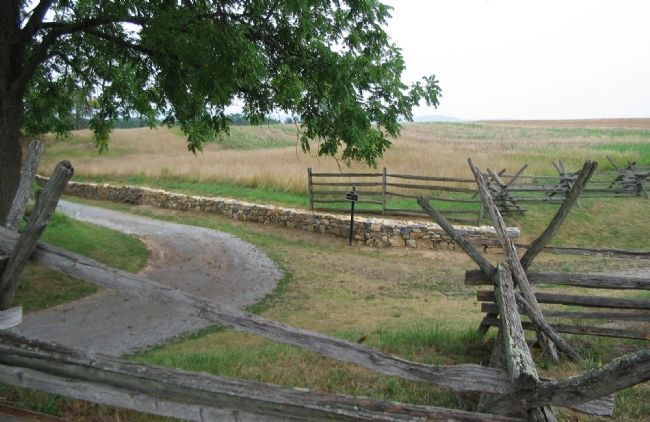
6. Roulette Farm Lane
The Roulette Farm Lane branches off from the Sunken Road near the monument. The 8th Ohio's attack came to rest just short of this junction.
Photographed by Craig Swain, March 29, 2008
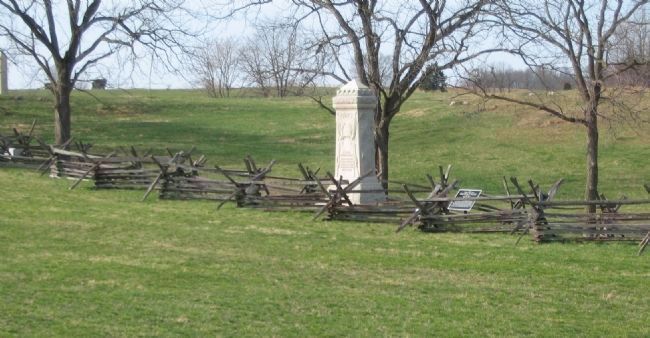
7. 8th Ohio Infantry Monument along the Sunken Road
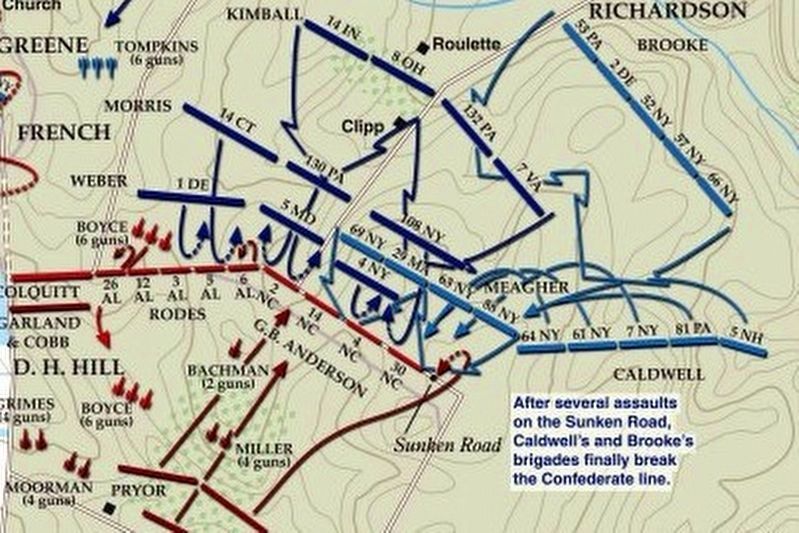
Shortly after reaching the Sunken Road, the 8th Ohio and several other regiments were forced to turn and face north as new threats developed. A counterattack that included Manning's (Walker's) Confederate brigade broke through from the Hagerstown Pike and nearly turned French's Division flanks in this area.
Photographed by Brian Scott
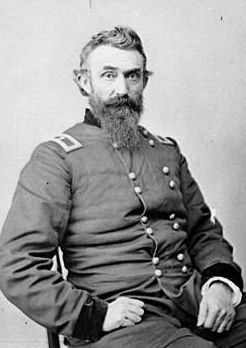
8. Gen. Franklin Sawyer (1825-1892)
In 1860, General Sawyer organized the Norwalk Light Guards, which on April 20, 1861 became Company D, 8th Ohio Volunteer Infantry and he was commissioned its captain.
Photographed by Brian Scott
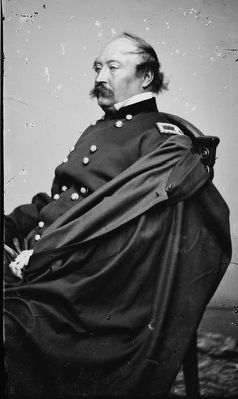
9. Brig. General Nathan Kimball (1822-1898)
His brigade formed the right of the division during its series of assaults on the Sunken Road at the Battle of Antietam, losing over 600 men killed or wounded. Despite the severe losses, the men held their ground and eventually pushed aside the Confederates in their front, capturing 300 men and several colors. Kimball's brigade became known as the "Gibraltar Brigade" for their steadfast ability to withstand enemy fire.
Photographed by Matthew Brady, LOC
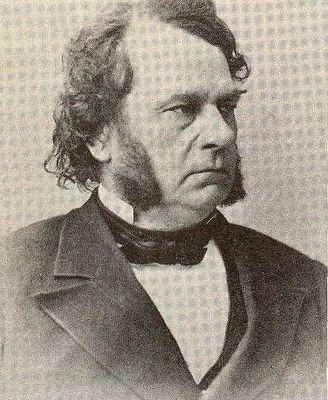
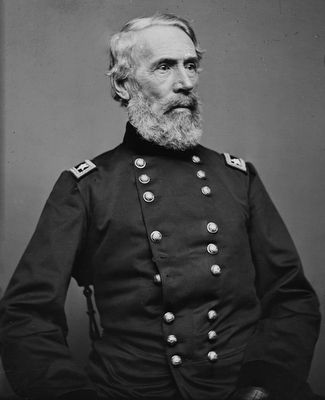
10. Gen. William French (1815-1881)
French commanded the 3rd Division of the II Corps at the Battle of Antietam, making the first attack on the Confederate Division in the Sunken Road.
Photographed by Brian Scott
11. Gen. Edwin V. Sumner
In February 1861, Brig. Gen. David E. Twiggs was dismissed from the Army for treason by outgoing U.S. President James Buchanan, and on March 12, 1861, Sumner was nominated by the newly inaugurated Lincoln to replace Twiggs as one of only three brigadier generals in the regular army, with date of rank March 16. Sumner was thus the first new Union general created by the secession crisis. At Antietam, he commanded the II Corps.
Photographed by Bill Coughlin, November 9, 2005
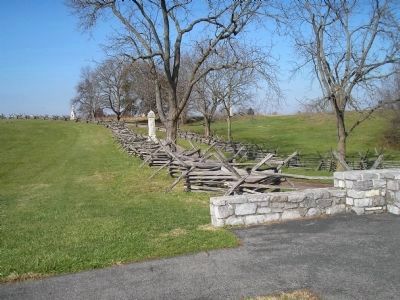
12. Antietam's Bloody Lane
The 8th Ohio Regiment marker is seen here at the end of Bloody Lane.
via American Battlefield Trust, unknown
13. Sunken Road or Bloody Lane Virtual Tour by Markers.
A collection of markers interpreting the action of during the Battle of Antietam around the Sunken Road.
(Submitted on February 23, 2008, by Craig Swain of Leesburg, Virginia.)
Click for more information.
(Submitted on February 23, 2008, by Craig Swain of Leesburg, Virginia.)
Click for more information.
Credits. This page was last revised on January 9, 2026. It was originally submitted on February 18, 2008, by Craig Swain of Leesburg, Virginia. This page has been viewed 1,800 times since then and 158 times this year. Photos: 1, 2. submitted on February 18, 2008, by Craig Swain of Leesburg, Virginia. 3. submitted on September 27, 2015, by Brian Scott of Anderson, South Carolina. 4. submitted on February 18, 2008, by Craig Swain of Leesburg, Virginia. 5. submitted on September 27, 2015, by Brian Scott of Anderson, South Carolina. 6. submitted on February 18, 2008, by Craig Swain of Leesburg, Virginia. 7. submitted on April 5, 2008, by Craig Swain of Leesburg, Virginia. 8, 9, 10, 11. submitted on September 27, 2015, by Brian Scott of Anderson, South Carolina. 12. submitted on November 24, 2010, by Bill Coughlin of Woodland Park, New Jersey. 13. submitted on April 3, 2022, by Larry Gertner of New York, New York.
