Elberton in Elbert County, Georgia — The American South (South Atlantic)
Elberton Granite Bicentennial Memorial Fountain
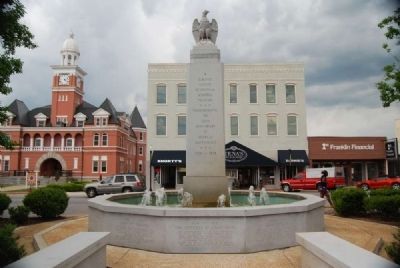
Photographed by Brian Scott, April 7, 2011
1. Elberton Granite Bicentennial Memorial Fountain
[Column - East/West Inscription]:
Granite
Bicentennial
Memorial
Fountain
***
Commemorating
The
200th
Anniversary
of
American
Independence
***
1776 — 1976
During
1976
As A
Gift
to
Elberton
and
Elbert County
by
Member-Firms
of the
Elberton Granite
Association, Inc
***
May this fountain serve
as an everyday reminder
of the Elberton Granite
Industry's interest in
this community and con-
tributions to this area's
economic and civic life.
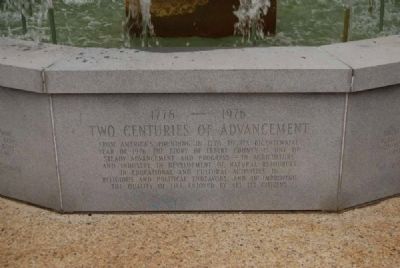
[First Panel]:
Two Centuries of Advancement
From America's founding in 1776 to its bicentennial year of 1976, the story of Elbert County is one of steady advancement and progress — in agriculture and industry, in development of natural resources, in education and cultural activities, in religious and political endeavors, and in improving the quality of life enjoyed by all its citizens.
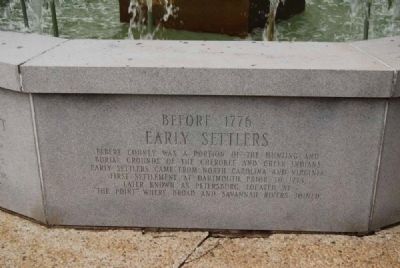
[Second Panel]:
Early Settlers
Elbert County was a portion of the hunting and burial grounds of the Cherokee and Creek Indians. Early settlers came from North Carolina and Virginia.
this page online
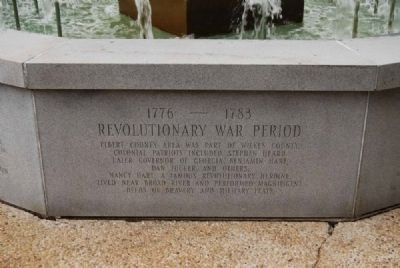
[Third Panel]:
Revolutionary War Period
Elbert County area was part of Wilkes County. Colonial Patriots included Stephen Heard, later Governor of Georgia, Benjamin Hart, Dan Tucker, and others. Nancy Hart, a famous Revolutionary heroine, lived near Broad River and performed magnificent deeds of bravery and military feats.
[Fourth Panel]:
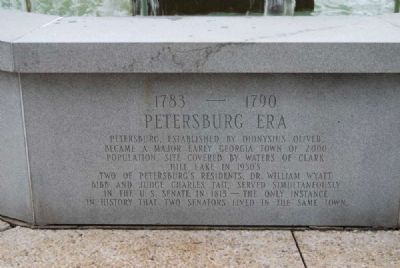
Petersburg Era
Petersburg, established by Dionysius Oliver, became a major early Georgia town of 2,000 population. Site covered by waters of Clark Hill Lake in 1950s. Two of Petersburg's residents, Dr. William Wyatt Bibb and Justice Charles Tate, served simultaneously in the U.S. Senate in 1813 -- the only instance in history that two senators lived in the same town.
[Fifth Panel]:
Elbert County Established
On December 10, 1790, Elbert County was created from Wilkes County by Act of the Georgia Legislature. Named for General Samuel Elbert, Revolutionary soldier and Governor of Georgia. First session of Elbert County Superior Court
Photographed by Brian Scott, April 7, 2011
2. Elberton Granite Bicentennial Memorial Fountain
First Panel
First Panel
[Sixth Panel]:
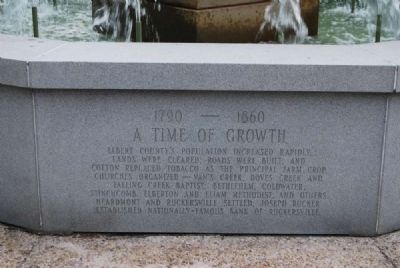
A Time of Growth
Elbert County's population increased rapidly. Lands were cleared, roads were built, and cotton replaced tobacco as the principal farm crop. Churches organized -- Van's Creek, Doves Creek and Falling Creek Baptist; Bethlehem, Coldwater, Stinchcomb, Elberton and Eliam Methodist, and others. Heardmont and Ruckersville settled. Joseph Rucker established nationally famous Bank of Ruckersville.
[Seventh Panel]:
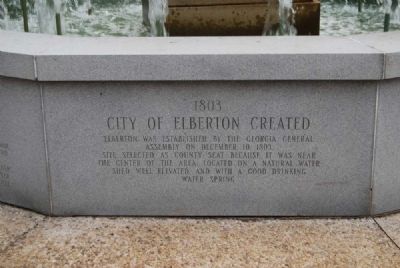
City of Elberton Created
Elberton was established by the Georgia General Assembly on December 10, 1803. Site selected as county seat because it was near the center of the area, located on a natural water shed, well elevated, and with a good drinking spring.
[Eighth Panel]:
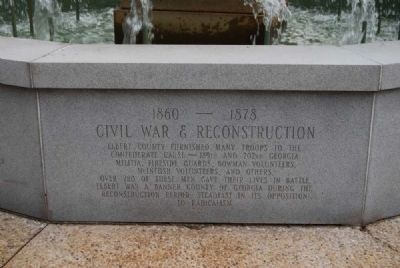
Civil War & Reconstruction
Elbert County Furnished many troops to the Confederate cause -- 189th and 202nd Georgia Militia, Fireside Guards, Bowman Volunteers, McIntosh Volunteers, and others. Over 280 of these men gave their lives in battle. Elbert was a banner county of Georgia during the Reconstruction period,
Photographed by Brian Scott, April 7, 2011
3. Elberton Granite Bicentennial Memorial Fountain
Second Panel
Second Panel
[Eighth Panel]:
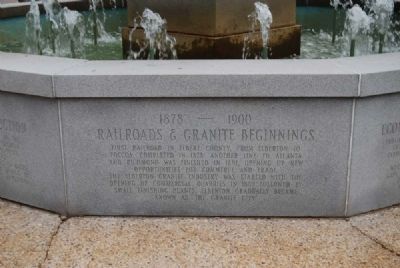
Railroads & Granite Beginnings
First railroad in Elbert County, from Elberton to Toccoa, completed in 1878. Another line to Atlanta and Richmond was finished in 1891, opening up new opportunities for commerce and trade. The Elberton granite industry was started with the opening of commercial quarries in 1889 followed by small finishing plants, Elberton gradually became known as "The Granite City."
[Tenth Panel]:
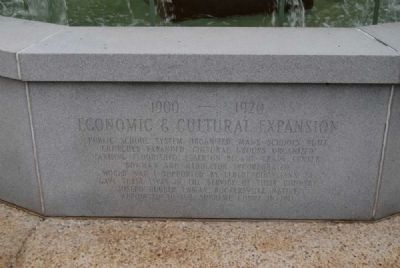
Economic & Cultural Expansion
Public school system organized. Many schools built. Churches expanded. Cultural groups organized. Farming flourished. Elberton became trade center. Bowman and Middleton incorporated. World War I supported by Elbert Countians. 24 gave their lives in the service of their country. Joseph Rucker Lamar, Ruckersville native, appointed to U.S. Supreme Court in 1911.
[Eleventh Panel]:
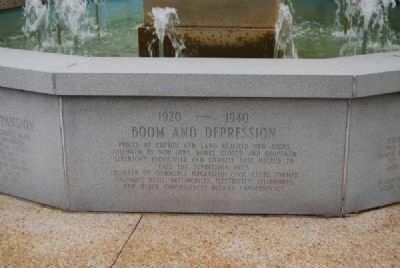
Boom and Depression
Prices of cotton and land reached new highs, followed by new lows. Banks closed and reopened. Elberton's industrial and granite base helped to ease the Depression woes. Chamber of Commerce organized;
Photographed by Brian Scott, April 7, 2011
4. Elberton Granite Bicentennial Memorial Fountain
Third Panel
Third Panel
[Twelfth Panel]:
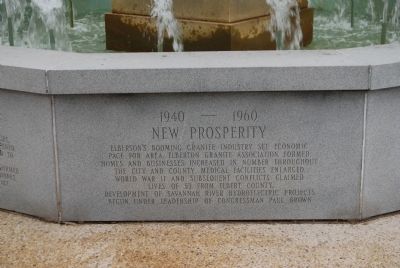
New Prosperity
Elberton's booming granite industry set economic pace for area. Elberton Granite Association formed. Homes and businesses increased in number throughout the city and county. Medical facilities enlarged. World War II and subsequent conflicts claimed lives of 53 from Elbert County. Development of Savannah River hydroelectric projects begun under leadership of Congressman Paul Brown.
[Thirteenth Panel]:
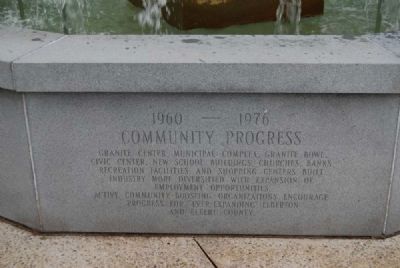
Community Progress
Granite Center, Municipal Complex, Granite Bowl, Civic Center, new school buildings, churches, banks, recreation facilities, and shopping centers built. Industry more diversified with expansions of employment opportunities. Active community-boosting organizations encourage progress for "ever-expanding" Elberton and Elbert County.
Erected 1976 by Elberton Granite Association, Inc.
Topics. This historical marker is listed in these topic lists: Industry & Commerce • Settlements & Settlers. A significant historical month for this entry is January 1862.
Location. 34° 6.597′ N,
Photographed by Brian Scott, April 7, 2011
5. Elberton Granite Bicentennial Memorial Fountain
Fourth Panel
Fourth Panel

Regionally, this marker is in the Mountains. It is also in the American South and specifically in the Deep South. Globally, it is in North America, the Western Hemisphere, the Western World, and the Anglosphere. Historically, it finds itself in what was once the territory of the Mississippian Culture, one of the original Thirteen Colonies, one of the Confederate States of America, and the Antebellum South.
Other nearby markers. At least 10 other markers are within walking distance of this marker: Confederate Dead (within shouting distance of this marker); Elbert County (within shouting distance of this marker); In the Year 1803 (within shouting distance of this marker); In Memory (within shouting distance of this marker); Grave of General Wiley Thompson (within shouting distance of this marker); Old Post Road (within shouting distance of

Photographed by Brian Scott, April 7, 2011
6. Elberton Granite Bicentennial Memorial Fountain
Fifth Panel
Fifth Panel
Photographed by Brian Scott, April 7, 2011
7. Elberton Granite Bicentennial Memorial Fountain
Sixth Panel
Sixth Panel
Photographed by Brian Scott, April 7, 2011
8. Elberton Granite Bicentennial Memorial Fountain
Seventh Panel
Seventh Panel
Photographed by Brian Scott, April 7, 2011
9. Elberton Granite Bicentennial Memorial Fountain
Eighth Panel
Eighth Panel
Photographed by Brian Scott, April 7, 2011
10. Elberton Granite Bicentennial Memorial Fountain
Ninth Panel
Ninth Panel
Photographed by Brian Scott, April 7, 2011
11. Elberton Granite Bicentennial Memorial Fountain
Tenth Panel
Tenth Panel
Photographed by Brian Scott, April 7, 2011
12. Elberton Granite Bicentennial Memorial Fountain
Eleventh Panel
Eleventh Panel
Photographed by Brian Scott, April 7, 2011
13. Elberton Granite Bicentennial Memorial Fountain
Twelfth Panel
Twelfth Panel
Photographed by Brian Scott, April 7, 2011
14. Elberton Granite Bicentennial Memorial Fountain
Thirteenth Panel
Thirteenth Panel
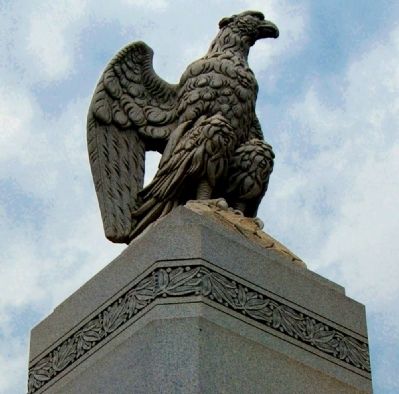
Photographed by Brian Scott, April 7, 2011
15. Elberton Granite Bicentennial Memorial Fountain
Eagle Detail
Eagle Detail
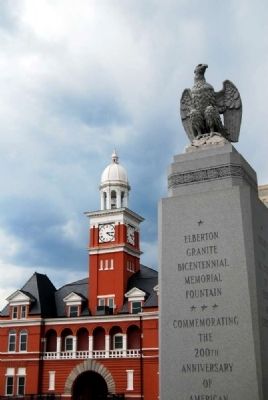
Photographed by Brian Scott, April 7, 2011
16. Elberton Granite Bicentennial Memorial Fountain
Elbert County Courthouse in Background
Elbert County Courthouse in Background
Credits. This page was last revised on June 20, 2020. It was originally submitted on May 8, 2012, by Brian Scott of Anderson, South Carolina. This page has been viewed 1,236 times since then and 66 times this year. Photos: 1, 2, 3, 4, 5, 6, 7, 8, 9, 10, 11, 12, 13, 14, 15, 16. submitted on May 8, 2012, by Brian Scott of Anderson, South Carolina.
