Upper Merion Township near Phoenixville in Montgomery County, Pennsylvania — The American Northeast (Mid-Atlantic)
Artillery Park
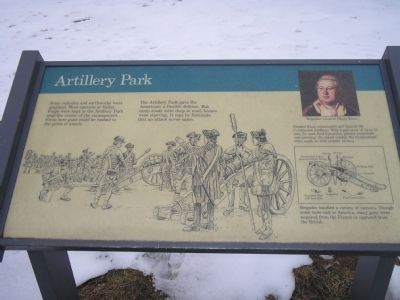
Photographed by Bill Coughlin, February 22, 2007
1. Artillery Park Marker
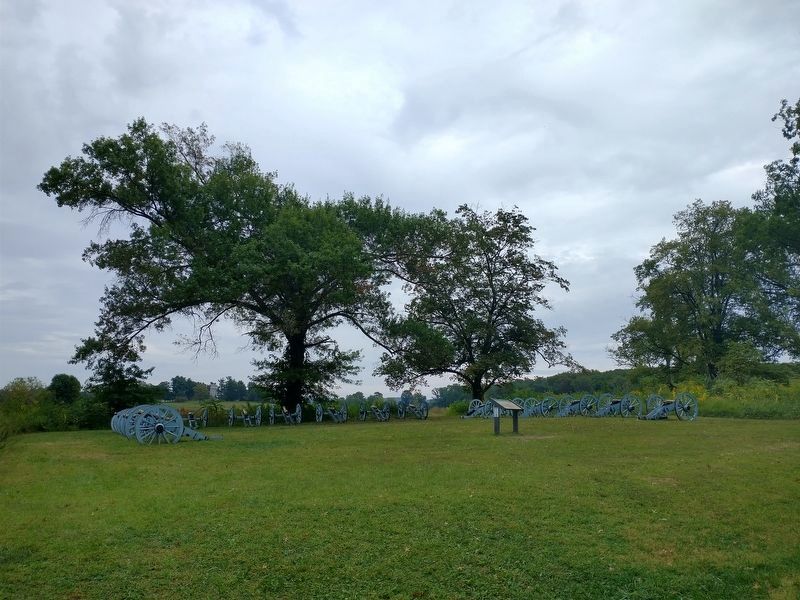
The Artillery Park gave the Americans a flexible defense. But camp roads were deep in mud; horses were starving. It may be fortunate that an attack never came.
Erected by Valley Forge National Historical Park, National Park Service, Department of the Interior.
Topics. This historical marker is listed in this topic list: War, US Revolutionary.
Location. 40° 5.623′ N, 75° 26.865′ W. Marker is near Phoenixville, Pennsylvania, in Montgomery County. It is in Upper Merion Township. It is on Camp Drive, on the right when traveling north. Marker is at stop eight of the Valley Forge National Historical Park driving tour, on Camp Drive, just south of North Gulph Road. Touch for map. Marker is in this post office area: King of Prussia PA 19406, United States of America. Touch for directions.

Regionally, this marker is in Southeast Pennsylvania and in Greater Philadelphia. It is also
this page online
Other nearby markers. At least 8 other markers are within walking distance of this marker: The Camp’s Road System (about 400 feet away, measured in a direct line); Schoolhouse (approx. 0.2 miles away); To Build a Redoubt (approx. 0.2 miles away); Innerline Defense (approx. ¼ mile away); Site of the Marquee (approx. ¼ mile away); A Pointed Defense (approx. 0.4 miles away); Pennsylvania Brigade (approx. 0.4 miles away); Virginia (approx. half a mile away). Touch for a list and map of all markers in Phoenixville.
More about this marker. In the main section of the marker is a depiction of a Revolutionary War battery of artillery in action.
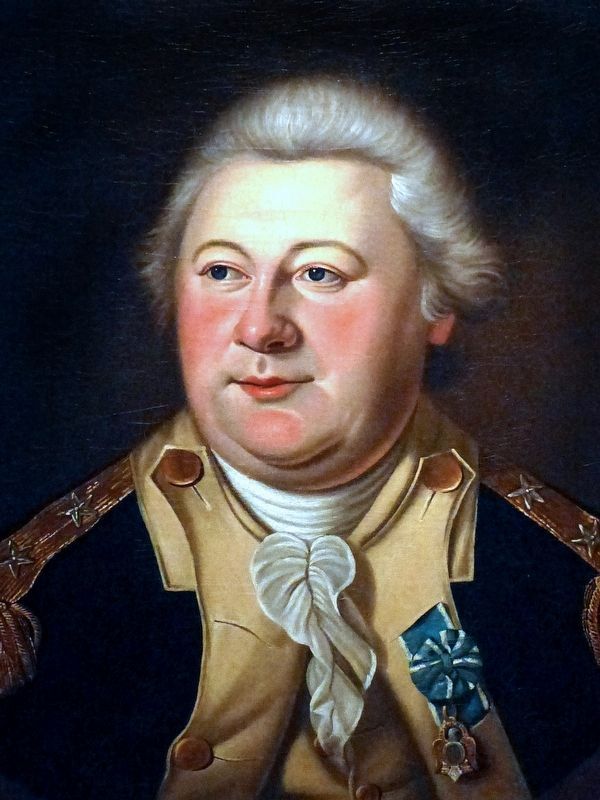
In the upper right is a portrait of Brigadier General Henry Knox, with a caption:
General Knox commanded and trained the Continental Artillery. With a gun crew of 14 to 15 men for each field 6-pounder, precise teamwork was essential. (In actual combat the Continentals often made do with smaller crews.)
Below
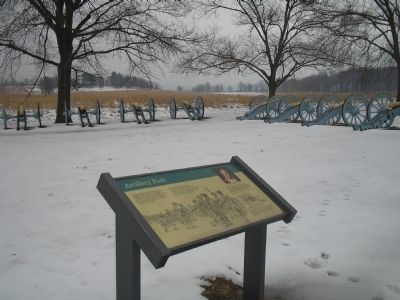
Photographed by Bill Coughlin, February 22, 2007
2. Artillery Park Marker with cannons
Also see . . . Valley Forge. National Park Service site. Under the Photos and Multimedia navigation section are links to various video and audio podcasts about Valley Forge. (Submitted on February 24, 2008, by Craig Swain of Leesburg, Virginia.)
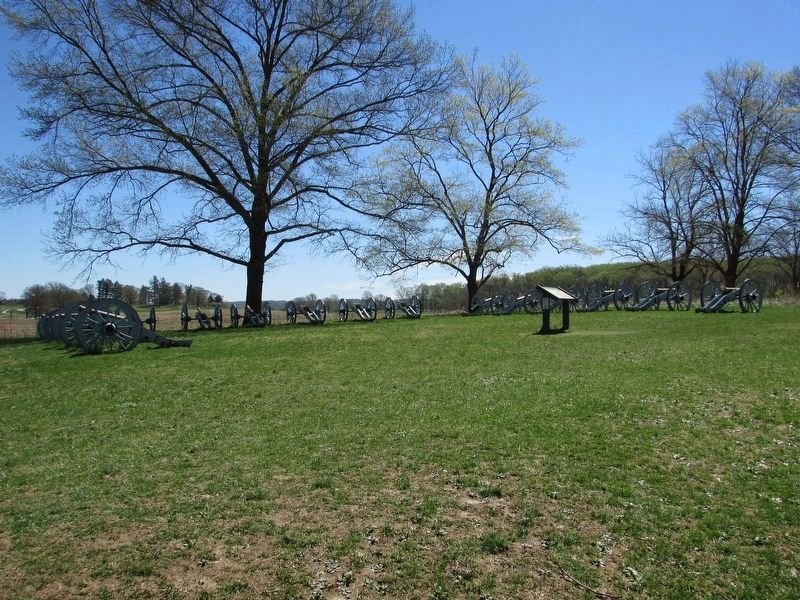
Photographed by Bill Coughlin, April 16, 2019
3. Artillery Park and Marker
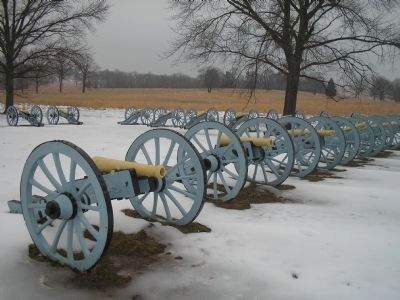
Photographed by Bill Coughlin, February 22, 2007
4. Brig. Gen. Henry Knox's Cannons
Knox located his Artillery Park in the center of the Valley Forge encampment so that they were available to any point that came under attack. Gun crews trained here, and artillery repairs were done here as well.
Photographed by Allen C. Browne, August 9, 2015
5. General Knox
General Knox commanded and trained the Continental Artillery. With a gun crew of men for each field 6-pounder, precise teamwork was essential. (In actual combat the Continentals often made do with smaller crews.)
c.1783 portrait by Charles Peale Polk after 1783 Charles Willson Peale original. National Portrait Gallery, Washington, D.C.
c.1783 portrait by Charles Peale Polk after 1783 Charles Willson Peale original. National Portrait Gallery, Washington, D.C.
Photographed by Tom Bosse, September 16, 2025
6. Artillery Park Marker
Credits. This page was last revised on February 19, 2026. It was originally submitted on February 23, 2008, by Bill Coughlin of Woodland Park, New Jersey. This page has been viewed 2,851 times since then and 67 times this year. Photos: 1, 2. submitted on February 23, 2008, by Bill Coughlin of Woodland Park, New Jersey. 3. submitted on April 17, 2019, by Bill Coughlin of Woodland Park, New Jersey. 4. submitted on February 23, 2008, by Bill Coughlin of Woodland Park, New Jersey. 5. submitted on December 26, 2023, by Allen C. Browne of Silver Spring, Maryland. 6. submitted on January 31, 2026, by Tom Bosse of Jefferson City, Tennessee. • Craig Swain was the editor who published this page.
