Fort Smith in Sebastian County, Arkansas — The American South (West South Central)
Old Commissary
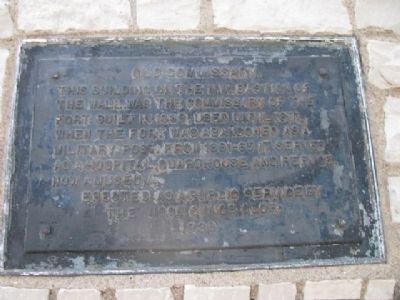
Photographed by Denise Boose, July 13, 2012
1. Old Commissary Marker
Erected as a public service by The Noon Civics Club
Erected 1936 by The Noon Civics Club.
Topics. This historical marker is listed in these topic lists: Military • Notable Buildings. A significant historical year for this entry is 1839.
Location. 35° 23.365′ N, 94° 25.808′ W. Marker is in Fort Smith, Arkansas, in Sebastian County. It is on Parker Avenue, on the right when traveling east. Within the Fort Smith National Historic Site. Touch for map. Marker is at or near this postal address: 301 Parker Avenue, Fort Smith AR 72901, United States of America. Touch for directions.

Regionally, this marker is in the Arkansas River Valley, in the Cherokee Heritage Region, and in Osage Territory. It is also in the American South and specifically in the Upper South. Globally, it is in North America, the Western Hemisphere, the Western World, and the Anglosphere. Historically,
this page online
Other nearby markers. At least 8 other markers are within walking distance of this marker: A Building Worth Saving (within shouting distance of this marker); Frisco Train Depot (within shouting distance of this marker); The Bastion That Never Was (within shouting distance of this marker); Explorando Fort Smith / Exploring Fort Smith (within shouting distance of this marker); Officer’s Garden (within shouting distance of this marker); The Parade Grounds (within shouting distance of this marker); The Guardhouse, 1849-1871 (about 300 feet away, measured in a direct line); The Women’s Jail, 1872-1888 (about 300 feet away). Touch for a list and map of all markers in Fort Smith.
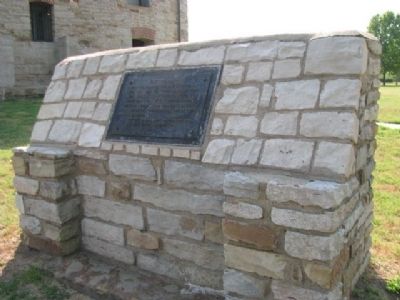
Photographed by Denise Boose, July 13, 2012
2. Old Commissary Marker
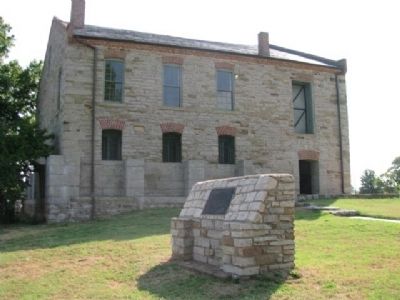
Photographed by Denise Boose, July 13, 2012
3. Old Commissary Marker
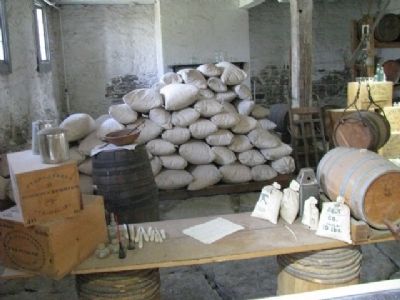
Photographed by Denise Boose, July 13, 2012
4. Inside Old Commissary Museum
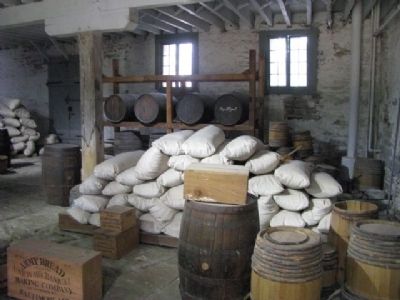
Photographed by Denise Boose, July 13, 2012
5. Inside Old Commissary Museum
Photographed by Denise Boose, July 13, 2012
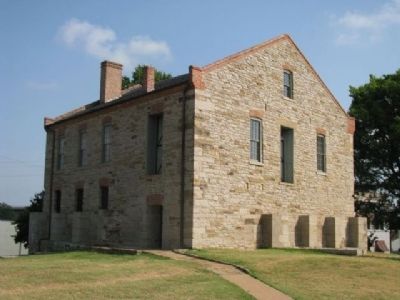
6. Old Commissary
Photographed by Denise Boose, July 13, 2012
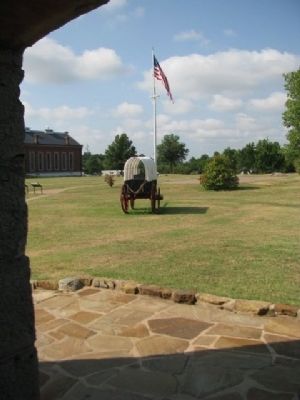
7. From inside Old Commissary looking out to Fort Smith grounds.
Credits. This page was last revised on June 16, 2016. It was originally submitted on July 28, 2012, by Denise Boose of Tehachapi, California. This page has been viewed 840 times since then and 46 times this year. Photos: 1, 2, 3, 4, 5, 6, 7. submitted on July 28, 2012, by Denise Boose of Tehachapi, California. • Craig Swain was the editor who published this page.
