Eastport in Annapolis in Anne Arundel County, Maryland — The American Northeast (Mid-Atlantic)
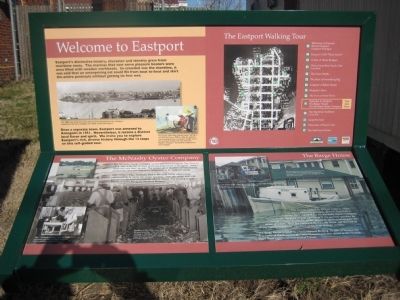
Welcome to Eastport
| — | Eastport Walking Tour | — |
Photographed by F. Robby, January 28, 2008
1. Welcome to Eastport Marker
Eastport's distinctive history, character and identity grew from maritime roots. The marinas that now serve pleasure boaters were once filled with wooden workboats. So crowded was the shoreline, it was said that an enterprising cat could flit from boat to boat and skirt the entire peninsula without getting its feet wet. Once a separate town, Eastport was annexed to Annapolis in 1951. Nevertheless, it retains a distinct local flavor and spirit. We invite you to explore Eastport's rich, diverse history through the 14 stops on this self-guided tour. [Caption:]
The popular yellow flags with the motto "We like it this way" flew first in 1998. To offset the potential loss to businesses from a temporary bridge closure, the community created the mock "Maritime Republic of Eastport" and declared independence from Annapolis.
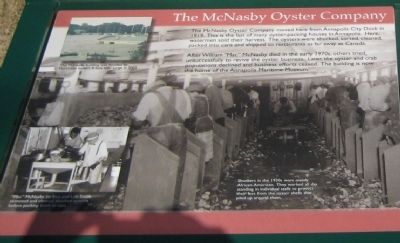
The McNasby Oyster Company
The McNasby Oyster Company moved here from Annapolis City Dock in 1919. This is the last of many oyster-packing houses in Annapolis. Here, watermen sold their harvest. The oysters were shucked, sorted, cleaned, packed into cans and shipped to restaurants as far away as
this page online
After William "Mac" MacNasby died in the early 1970s, others tried unsuccessfully to revive the oyster business. Later, the oyster and crab populations declined and business efforts ceased. The building is now the home of the Annapolis Maritime Museum.
[Captions:]
The McNasby building was flooded by Hurricane Isabel's 8-foot tidal surge in 2003.
"Mac" McNasby (in hat) and Lyle Smith skimmed and cleaned shucked oysters before packing them in cans.
Shuckers in the 1920s were mainly African-American. They worked all day standing in individual stalls to protect their feet from the oyster shells that piled up around them.
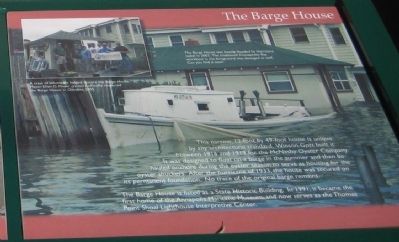
The Barge House
This narrow, 12-foot by 49-foot house is unique by any architectural standard. Winson Gott built it between 1916 and 1919 for the McNasby Oyster Company. It was designed to float on a barge in the summer and then be hauled onshore during the oyster season to serve as housing for the oyster shuckers. After the hurricane of 1933, the house was secured on its permanent foundation. No trace of the original barge remains.
The Barge House is listed as a State Historic Building. In 1991,
Photographed by F. Robby, January 28, 2008
2. The McNasby Oyster Company
Closeup of the McNasby Oyster Company section of the marker.
[Caption:]
A crew of volunteers helped restore the Barge House. Mayer Ellen O. Moyer (center) officially reopened the Barge House in October, 2005.
The Barge House was heavily flooded by Hurricane Isabel in 2003. This traditional Chesapeake Bay workboat in the foreground was damaged as well. Can you find it now?
Erected by Chesapeake Bay Gateways Network, Annapolis Maritime Museum, Four Rivers Garden Club. (Marker Number 10.)
Topics and series. This historical marker is listed in these topic lists: African Americans • Industry & Commerce • Political Subdivisions • Settlements & Settlers. In addition, it is included in the Lighthouses series list. A significant historical month for this entry is October 2005.
Location. This marker has been replaced by another marker nearby. It was located near 38° 58.144′ N, 76° 28.601′ W. Marker was in Annapolis, Maryland, in Anne Arundel County. It was in Eastport. It was at the intersection of Second Street and Bay Shore Avenue, on the left when traveling
Photographed by F. Robby, January 28, 2008
3. The Barge House
Closeup of the Barge House section of the marker.

Regionally, this marker was in Central Maryland. It was also in the American Mid-Atlantic, in the Chesapeake Bay Region, and on the Eastern Seaboard. Globally, it was in the North Atlantic Region, North America, the Western Hemisphere, the Western World, and the Anglosphere. Historically, it found itself in what was once one of the original Thirteen Colonies and also the Antebellum South.
Other nearby markers. At least 8 other markers are within walking distance of this location: A different marker also named Welcome to Eastport (here, next to this marker); Bay Workboats (a few steps from this marker); Harvesting the Bay (within shouting distance of this marker); Cap'n Herbie Sadler (within shouting distance of this marker); Deadrise Defined (within shouting distance of this marker); Draketail Peg Wallace (within shouting distance of this marker); From this spot, you can see 1774 - The "Annapolis Tea Party"
Photographed by F. Robby, January 28, 2008
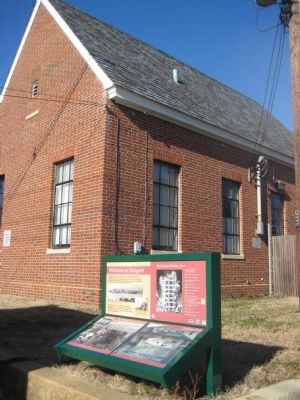
4. Welcome to Eastport Marker
Also see . . . Annapolis Maritime Museum. Museum website homepage (Submitted on March 2, 2008, by F. Robby of Baltimore, Maryland.)
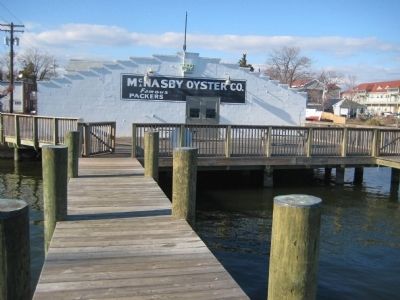
Photographed by F. Robby, January 28, 2008
5. The McNasby Oyster Company
Now home of the Annapolis Maritime Museum.
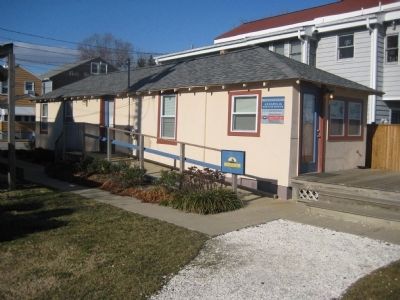
Photographed by F. Robby, January 28, 2008
6. The Barge House
Now home of the Thomas Point Shoal Lighthouse Interpretive Center.
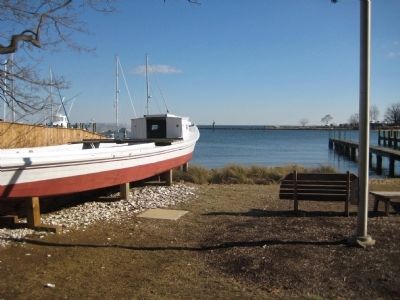
Photographed by F. Robby, January 28, 2008
7. Back Creek
View of Back Creek from the Annapolis Maritime Museum.
Credits. This page was last revised on October 26, 2025. It was originally submitted on March 2, 2008, by F. Robby of Baltimore, Maryland. This page has been viewed 1,632 times since then and 52 times this year. Photos: 1, 2, 3, 4, 5, 6, 7. submitted on March 2, 2008, by F. Robby of Baltimore, Maryland.
