Old Town in Alexandria, Virginia — The American South (Mid-Atlantic)
D.C.'s First Building Block
Jones Point Park
| — | National Park Service, U.S. Department of the Interior | — |
Photographed by Allen C. Browne, October 7, 2012
1. D.C.'s First Building Block Marker
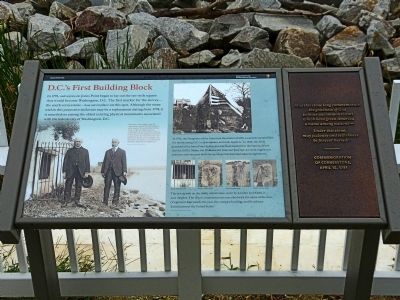
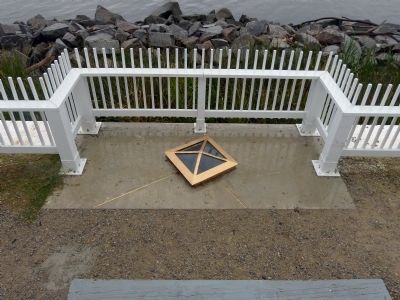
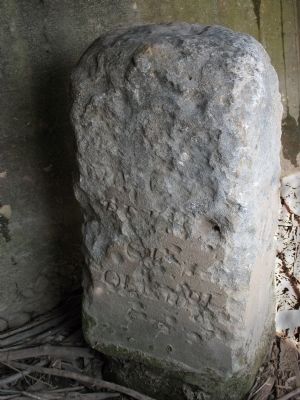
In 1791, surveyors on Jones Point began to lay out the ten-mile square that would become Washington, D.C. The first marker for the survey—the south cornerstone—was set in place on this spot. Although the stone within this protective enclosure may be a replacement dating from 1794, it is nonetheless among the oldest existing physical monuments associated with the federal city of Washington, D.C.
[Caption:]
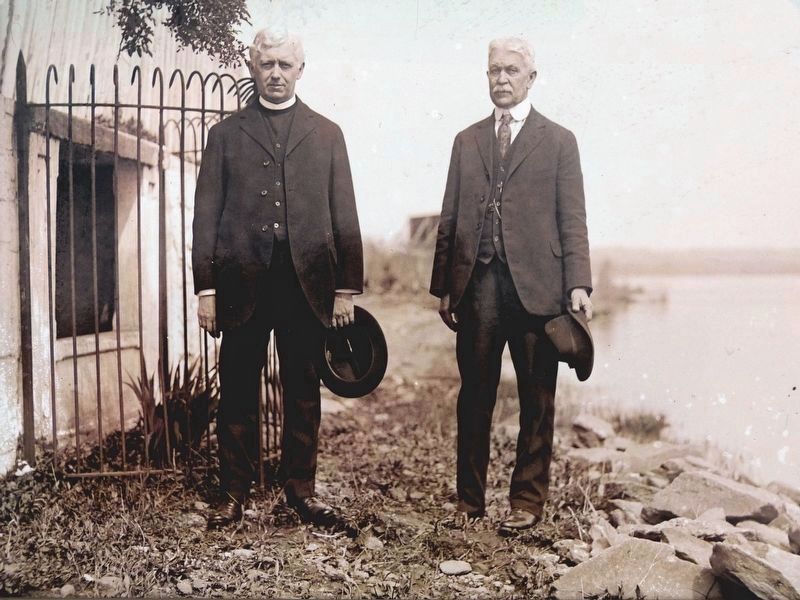
With water levels steadily rising, the cornerstone on Jones Point has long been at the mercy of encroaching Hunting Creek. In 1861, a retaining wall was constructed in front of the stone, creating a raised yard in the lighthouse constructed six years earlier. The stone remained "lost" behind this wall for over five decades. This 1921 photo was taken at a commemorative celebration following its "rediscovery." Image courtesy of the Library of Congress
[Sidebar:]
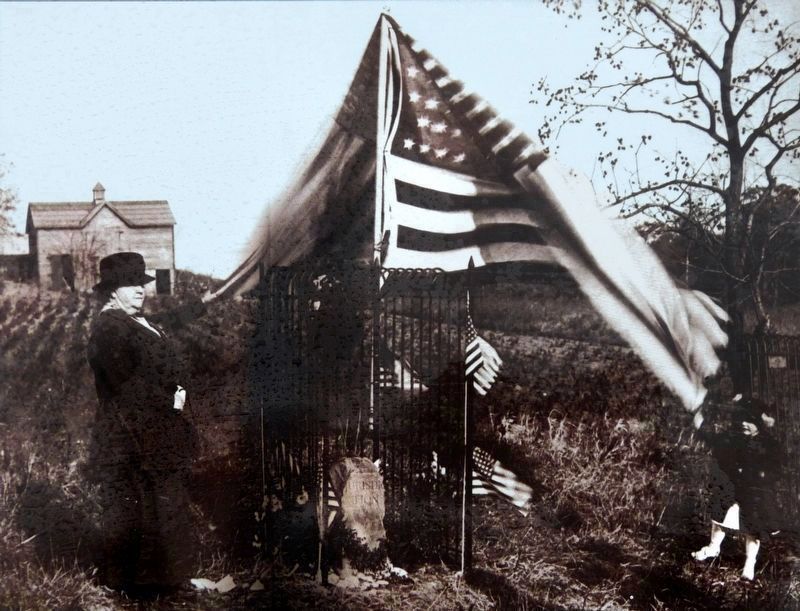
In 1916, the Daughters of the American Revolution (DAR) assumed responsibility for maintaining D.C.'s cornerstones and mile markers. In 1926, the DAR purchased the Jones Point lighthouse and later deeded it to the National Park Service (NPS). Today, the DAR and the National Park Service work together to preserve and interpret both the south cornerstone and the adjacent lighthouse. Image courtesy of the Daughters of the American Revolution
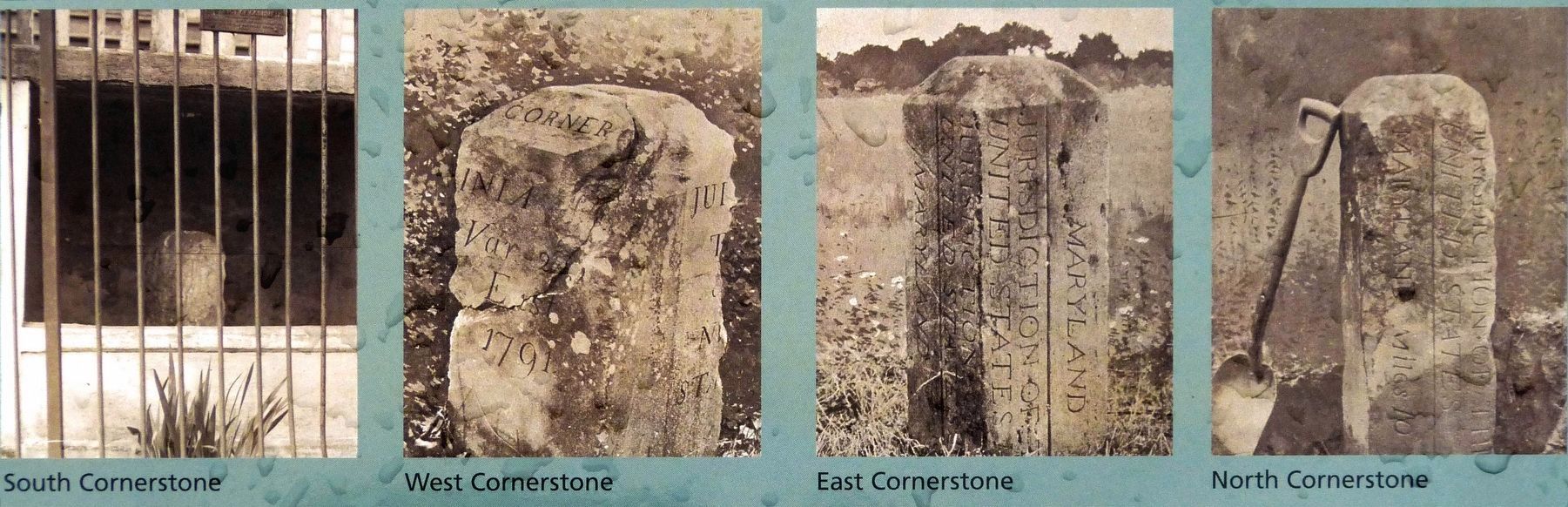
The inscription on the south cornerstone, worn by weather and water is now illegible. The other cornerstones are inscribed with the name of the state (Virginia or Maryland), the year, the compass heading, and the phrase 'Jurisdiction of the United States.' Images courtesy of the Library of Congress
[Sidebar:]
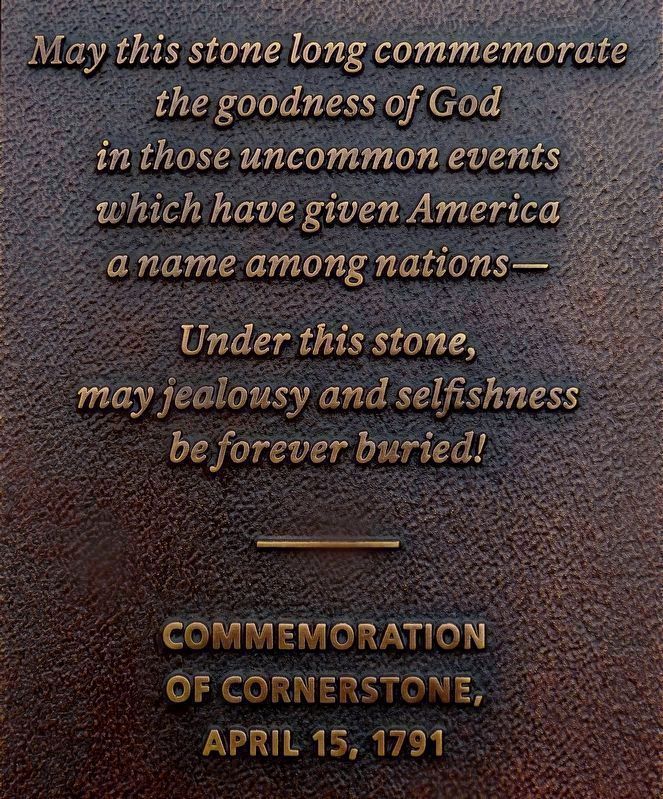
May
this page online
Under this stone may jealousy and selfishness be forever buried!
Commemoration of Cornerstone April 15, 1791
Erected 2012 by National Park Service, U.S. Department of the Interior.
Topics and series. This historical marker is listed in this topic list: Political Subdivisions. In addition, it is included in the Lighthouses, and the Original Federal Boundary Stones series lists. A significant historical year for this entry is 1791.
Location. 38° 47.42′ N, 77° 2.436′ W. Marker is in Alexandria, Virginia. It is in Old Town. It can be reached from Jones Point Drive east of South Royal Street, on the right when traveling east. It is on the seawall of Jones Point lighthouse.
PLEASE NOTE: The automated “Touch for directions” link at the end of this paragraph, when used in driving mode, takes you to I-95’s Wilson Bridge, where you cannot park, much less stop, and then seems to indicate that you should jump off the bridge and walk to the marker. You will surely break your neck—among many other bones—if you jump off the bridge. Instead, set your destination to “Jones Point Park Parking” in order to obtain driving directions to where you can park and walk to the marker. .
Photographed by Allen C. Browne, October 7, 2012
2. Window in the seawall covering the south cornerstone of the District of Columbia

Regionally, this marker is in the Washington Metropolitan Area and in Northern Virginia. It is also in the American South, specifically in the Upper South, in the Mid-Atlantic, and on the Eastern Seaboard. Globally, it is in the North Atlantic Region, North America, the Western Hemisphere, the Western World, and the Anglosphere. Historically, it finds itself in what was once the territory of the Mississippian Culture, one of the original Thirteen Colonies, one of the Confederate States of America, and the Antebellum South.
Other nearby markers. At least 8 other markers are within walking distance of this marker: The Nation's Capital Begins Here 1791-1793 (here, next to this marker); Who Owns the River? (within shouting distance of this marker); Mistress Margaret Brent (within shouting distance of this marker); The Remarkable Margaret Brent (within shouting distance of this marker); What's below the water at Jones Point? (within shouting distance of this marker); The Jones Point Lighthouse
Photographed by Allen C. Browne, February 18, 2007
3. The south cornerstone of the District of Columbia
Another marker is no longer nearby. Original Federal Boundary Stone, District of Columbia, South Cornerstone (was here, next to this marker but has been permanently removed).
Photographed by Allen C. Browne, October 7, 2012
4. Cornerstones of the District of Columbia
Photographed by Allen C. Browne, October 7, 2012
5. Fred Woodward (on the right) and an unknown clergyman
With water levels steadily rising, the cornerstone on Jones Point has long been at the mercy of the encroaching Hunting Creek. In 1861, a retaining wall was constructed in front of the stone, creating a raised yard for the lighthouse constructed six years earlier. The stone remained “lost” behind this wall for over five decades. This 1921 photo was taken at a commemorative celebration following its “rediscovery.”Close-up of Library of Congress photo on marker
Photographed by Allen C. Browne, October 7, 2012
6. DAR and the North DC Cornerstone
on Building Block Marker
on Building Block Marker
Photographed by Allen C. Browne, October 7, 2012
7. Commemoration of Cornerstone, April 15, 1791.
the goodness of God
in those uncommon events
which have given America
a name among nations—
Under this stone,
may jealousy and selfishness
be forever buried!
---------
Commemoration
of Cornerstone
April 15, 1791
The words of Rev. James Muir, delivered at the dedication of the South Cornerstone, appear on a bronze plaque mounted on the marker.
Credits. This page was last revised on January 28, 2023. It was originally submitted on October 8, 2012, by Allen C. Browne of Silver Spring, Maryland. This page has been viewed 2,328 times since then and 84 times this year. Photos: 1, 2, 3. submitted on October 8, 2012, by Allen C. Browne of Silver Spring, Maryland. 4, 5, 6. submitted on October 16, 2019, by Allen C. Browne of Silver Spring, Maryland. 7. submitted on April 16, 2021, by Allen C. Browne of Silver Spring, Maryland. • Bernard Fisher was the editor who published this page.
