Scotland in St. Mary's County, Maryland — The American Northeast (Mid-Atlantic)
"The Bean Pot"
Photographed by Don Morfe, March 11, 2012
1. "The Bean Pot" Marker
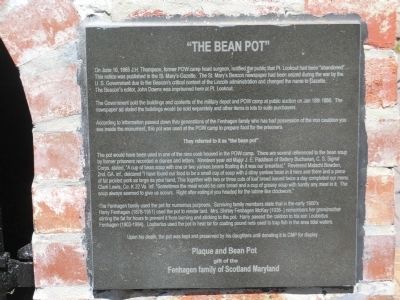
On June 10, 1865 J.H. Thompson, former POW camp head surgeon, notified the public that Pt. Lookout had been “abandoned”. This notice was published in the St. Mary’s Gazette. The St. Mary’s Beacon newspaper had been seized during the war by the U.S. Government due to the Beacon’s critical content of the Lincoln administration and changed the name to Gazette. The Beacon’s editor, John Downs was imprisoned here at Pt. Lookout.
The Government sold the buildings and contents of the military depot and POW camp at public auction on Jan 18th 1866. The newspaper ad stated the buildings would be sold separately and other items in lots to suite purchasers.
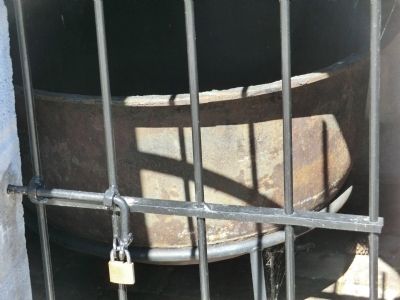
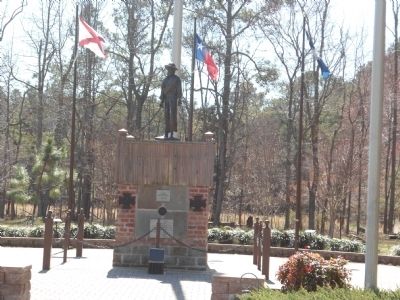
According to information passed down thru generations of the Fenhagen family who had possession of the iron cauldron you see inside the monument, this pot was used at the POW camp to prepare food for the prisoners.
They referred to it as “the bean pot”.
The pot would have been used in one of the nine cook houses in the POW camp. There are several references to the bean soup by former prisoners recorded in diaries and letters. Nineteen year old Major J.E. Paddison
this page online
The Fenhagen family used the pot for numerous purposes. Surviving family members state that in the early 1900’s Harry Fenhagen (1878-1851) used the pot to render lard. Mrs. Shirley Fenhagen McKay (1936-) remembers her grandmother stirring the fat for hours to prevent it from burning and sticking to the pot. Harry passed the caldron to his son Loubertus Fenhagen (1903-1984). Loubertus used the pot to heat tar for coating pound nets used to trap fish in the area tidal waters.
Upon his
Photographed by Don Morfe, March 10, 2012
2. "The Bean Pot" Marker
Plaque and Bean Pot gift of the Fenhagen family of Scotland Maryland
Erected by Confederate Memorial Park, Inc.; Fenhagen family of Scotland Maryland.
Topics and series. This historical marker is listed in this topic list: War, US Civil. In addition, it is included in the Sons of Confederate Veterans/United Confederate Veterans, and the United Daughters of the Confederacy series lists. A significant historical month for this entry is June 1954.
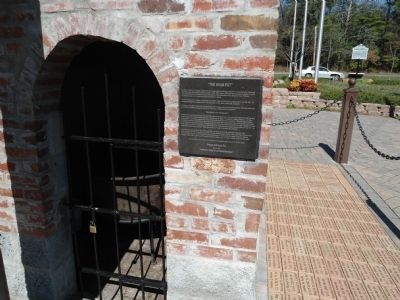
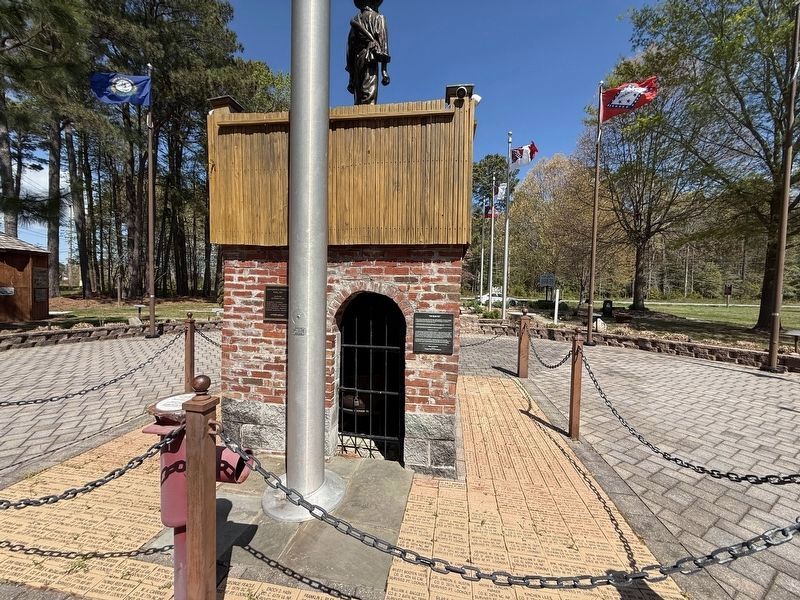
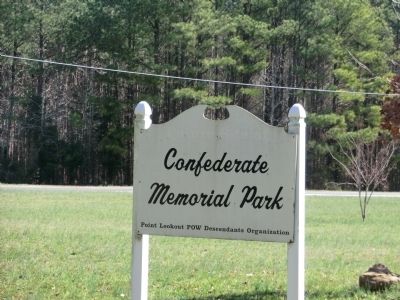
Location. 38° 4.406′ N, 76° 20.46′ W. Marker is in Scotland, Maryland, in St. Mary's County. It can be reached from Point Lookout Road (Maryland Route 5) east of St. Michaels Manor Way, on the right when traveling east. The memorial is located in Confederate Memorial Park. Touch for map. Marker is at or near this postal address: 11625 Point Lookout Rd, Scotland MD 20687, United States of America. Touch for directions.

Regionally, this marker is in Southern Maryland. It is also in the American South, specifically in the Upper South, in the Mid-Atlantic, in the Tidewater, in the Chesapeake Bay Region,
April 11, 2026
3. "The Bean Pot" Marker
Other nearby markers. At least 8 other markers are within walking distance of this marker: Point Lookout Prison Camp (here, next to this marker); Memorial Bricks and Flagpoles (here, next to this marker); Wilbur Wightman Gramling (here, next to this marker); How Yankee Guards Fared at Pt. Lookout (here, next to this marker); Pvt. David E. Holt (a few steps from this marker); Sgt. James T. Wells, Co. A, 2nd S.C. Infantry (a few steps from this marker); Sgt. Peyton P. Maddox / Pvt. W. Robinson (a few steps from this marker); Capt. Robert E. Park (a few steps from this marker). Touch for a list and map of all markers in Scotland.
Photographed by Don Morfe, March 11, 2012
4. The Bean Pot
Photographed by Don Morfe, March 10, 2012
5. "The Bean Pot" Marker is on the other side of this memorial
Photographed by Don Morfe, March 11, 2012
6. Confederate Memorial Park signage
Credits. This page was last revised on April 12, 2026. It was originally submitted on October 13, 2012, by Don Morfe of Baltimore, Maryland. This page has been viewed 905 times since then and 43 times this year. Photos: 1, 2. submitted on October 13, 2012, by Don Morfe of Baltimore, Maryland. 3. submitted on April 12, 2026. 4, 5, 6. submitted on October 13, 2012, by Don Morfe of Baltimore, Maryland. • Craig Swain was the editor who published this page.
