Downtown Harrisburg in Dauphin County, Pennsylvania — The American Northeast (Mid-Atlantic)
The Episcopal Cathedral Church of St. Stephen & Cathedral House
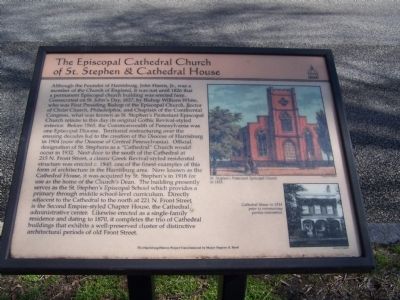
Photographed by Beverly Pfingsten, March 15, 2008
1. The Episcopal Cathedral Church of St. Stephen & Cathedral House Marker
this page online
Top Photo
St. Stephen's Protestant Episcopal Church in 1855.
Bottom Photo
Cathedral House in 1934 prior to entranceway portico restoration.
Erected by The Harrisburg History Project Commissioned by Mayor Stephen R. Reed.
Topics and series. This historical marker is listed in these topic lists: Architecture • Religion & Religious Structures. In addition, it is included in the Pennsylvania, The Harrisburg History Project series list. A significant historical year for this entry is 1826.
Location. 40° 15.626′ N, 76° 53.166′ W. Marker is in Harrisburg, Pennsylvania, in Dauphin County. It is in Downtown Harrisburg. It is at the intersection of
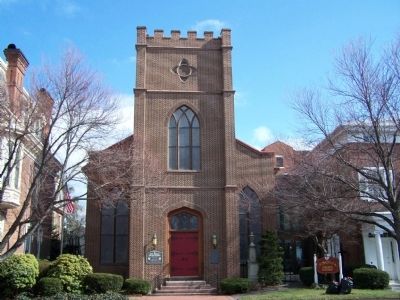
Photographed by Beverly Pfingsten, March 15, 2008
2. St. Stephen's Cathedral Church

Regionally, this marker is in South-Central Pennsylvania, specifically in Pennsylvania Dutch Country, and in the Susquehanna Valley. It is also in the American Northeast and in the Mid-Atlantic. Globally, it is in North America, the Western Hemisphere, the Western World, and the Anglosphere. Historically, it finds itself in what was once the Haudenosaunee (Iroquois) Confederacy and also one of the original Thirteen Colonies.
Other nearby markers. At least 8 other markers are within walking distance of this marker: The Marcus Reno Residence and Governors’ Home (here, next to this marker); Hickok Mansion (about 300 feet away, measured in a direct line); Greetings to Future Harrisburgers (about 300 feet away); Executive Mansion (about 400 feet away); Keystone Hall (about 400 feet away); Riverfront Recaptured (about 400 feet away); The Calder / Olmsted / McCormick Mansion (about 500 feet
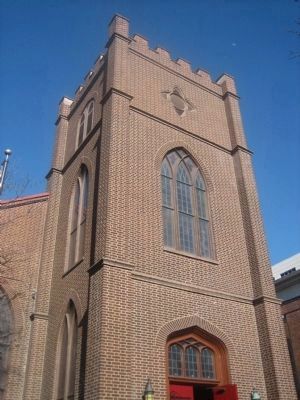
Photographed by John K. Robinson, March 25, 2007
3. Church tower.
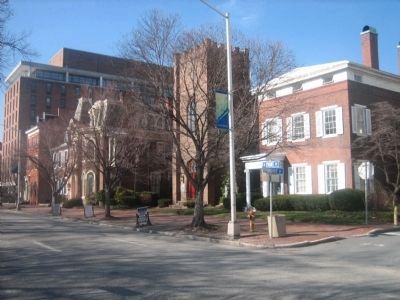
Photographed by John K. Robinson, March 25, 2007
4. The Episcopal Cathedral Church of St. Stephen & Cathedral House seen from the south.
Photographed by John K. Robinson, March 25, 2007
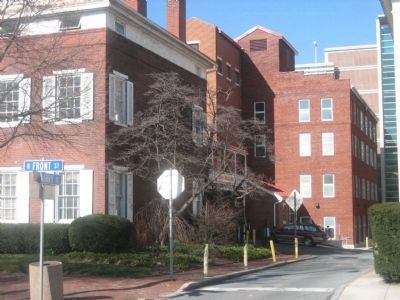
5. Parish House, with school in background
Photographed by John K. Robinson, March 25, 2007
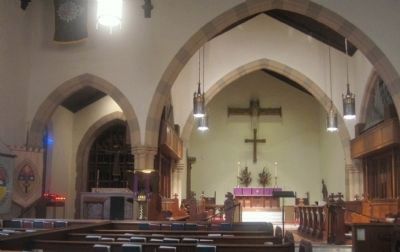
6. Nave of the Episcopal Cathedral Church of St. Stephen
Credits. This page was last revised on December 5, 2019. It was originally submitted on March 17, 2008, by Bill Pfingsten of Bel Air, Maryland. This page has been viewed 2,851 times since then and 55 times this year. Photos: 1, 2. submitted on March 17, 2008, by Bill Pfingsten of Bel Air, Maryland. 3, 4, 5, 6. submitted on April 18, 2010, by John K. Robinson of Harrisburg, Pennsylvania.
