Larkspur in Marin County, California — The American West (Pacific Coastal)
Green Brae Brick Kiln
Photographed by Andrew Ruppenstein, March 24, 2013
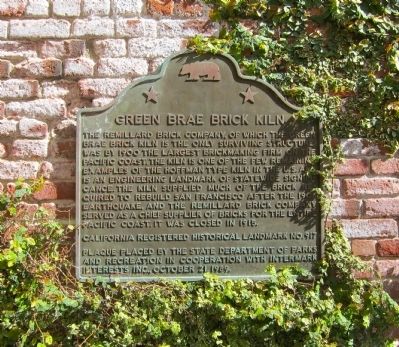
1. Green Brae Brick Kiln Marker
The Remillard Brick Company, of which the Green Brae Brick Kiln is the only surviving structure, was by 1900 the largest brickmaking firm on the Pacific Coast. The kiln is one of the few remaining examples of the Hoffman type kiln in the U.S. and is an engineering landmark of statewide significance. The kiln supplied much of the brick required to rebuild San Francisco after the 1906 Earthquake, and the Remillard Brick Company served as a chief supplier of bricks for the entire Pacific coast. It was closed in 1915.
California Registered Historical Landmark No. 917
Plaque placed by the State Department of Parks and Recreation in cooperation with Intermark Interests Inc., October 21, 1989.
Erected 1989 by California State Department of Parks and Recreation and Intermark Interests, Inc. (Marker Number 917.)
Topics and series. This historical marker is listed in this topic list: Industry & Commerce. In addition, it is included in the California Historical Landmarks series list. A significant historical year for this entry is 1900.
Location. 37° 56.684′ N, 122° 30.339′ W. Marker is in Larkspur, California, in Marin County.
this page online

Regionally, this marker is in the San Francisco Bay Area, in the North Coast, and specifically on the Coast Ranges. It is also on the American Pacific Coast. Globally, it is in North America, on the Ring of Fire, on the Pacific Rim, in the Western Hemisphere, in the Western World, and in the Anglosphere. Historically, it finds itself in what was once New Spain and also Mexico’s Alta California.
Other nearby markers. At least 8 other markers are within 3 miles of this marker, measured as the crow flies: Greenbrae Brickyard Superintendent's Cottage (about 800 feet away, measured in a direct line); Golden Gate Ferry (approx. 0.2 miles away); Sir Francis Drake (approx. 0.2 miles away); The Golden Hind (approx. 0.2 miles away); Richmond-San Rafael Bridge (approx. 1.4 miles away); Mission San Rafael Arcangel (approx. 2.4 miles away); Marin (approx. 2.4 miles away); a different marker
Photographed by Andrew Ruppenstein, March 24, 2013
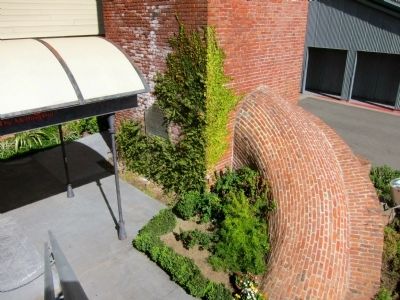
2. Green Brae Brick Kiln Marker - Wide View
The marker is visible here mounted to the chimney, opposite the restaurant entrance.
More about this marker. Note that although the marker indicates that the kiln is the sole remaining structure from the Greenbrae Brickyard, the superintendent's cottage is also extant and located some 800 feet to the northwest of the marker.
Also see . . . History of Brickmaking in California. California Bricks website entry (Submitted on November 15, 2021, by Larry Gertner of New York, New York.)
Photographed by Andrew Ruppenstein, March 24, 2013
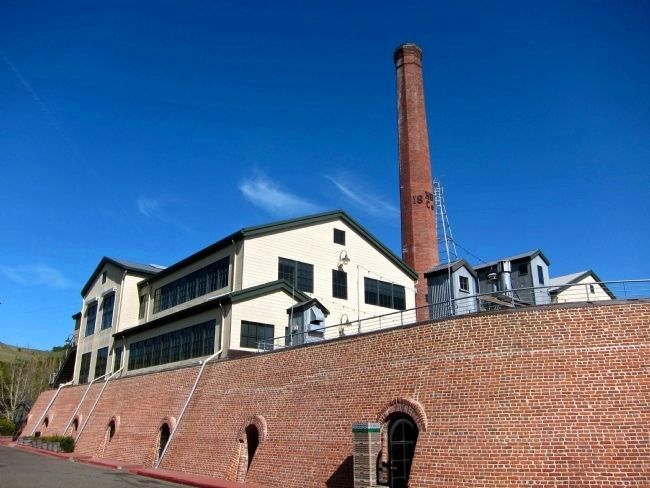
3. GreenBrae Brick Kiln
This partial view of the kiln shows 7 of the 14 arched openings to the kiln. The Wikipedia entry (retrieved 3/29/2013) for Hoffman Kiln provides an explanation for the workings of the kiln, as well as the shape of the building itself: A Hoffmann kiln consists of a main fire passage surrounded on each side by several small rooms. Each room contains a pallet of bricks. In the main fire passage there is a fire wagon, that holds a fire that burns continuously. Each room is fired for a specific time, until the bricks are vitrified properly, and thereafter the fire wagon is rolled to the next room to be fired. Each room is connected to the next room by a passageway carrying hot gases from the fire. In this way, the hottest gases are directed into the room that is currently being fired. Then the gases pass into the adjacent room that is scheduled to be fired next. There the gases preheat the brick. As the gases pass through the kiln circuit, they gradually cool as they transfer heat to the brick as it is preheated and dried.... In addition to the inner opening to the fire passage, each room also has an outside door, through which recently-fired brick is removed, and replaced with wet brick to be dried and then fired in the next firing cycle.
Photographed by Andrew Ruppenstein, March 24, 2013
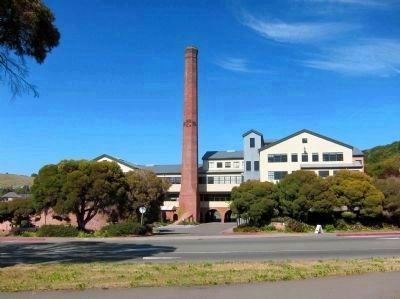
4. GreenBrae Brick Kiln - Looking North Across East Sir Francis Drake Boulevard
Note that only the kiln and chimney are original to the brickyard - the factory-like offices were added in the 1980's.
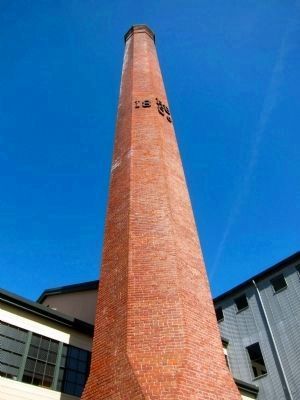
Photographed by Andrew Ruppenstein, March 24, 2013
5. Kiln Chimney
Halfway up is lettering reading "RB Co. 1891".
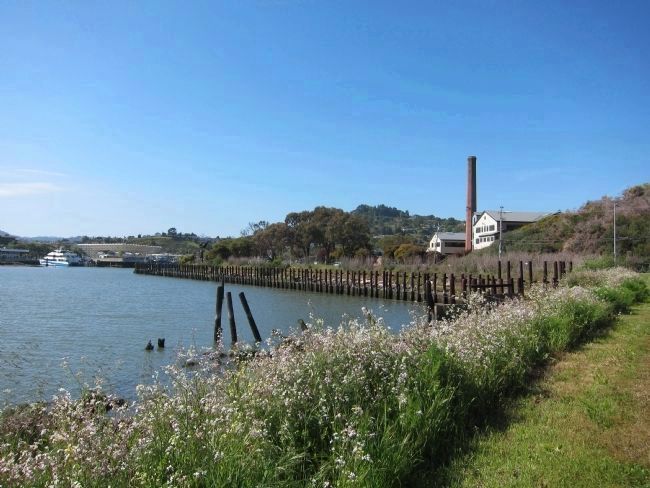
Photographed by Andrew Ruppenstein, March 24, 2013
6. Shoreline of Remillard Park - Looking West
Here the kiln's chimney is visible, as is the area along the shoreline where the brickyard's dock was formerly located. The Larkspur Ferry Terminal is visible in the background.
Credits. This page was last revised on December 9, 2024. It was originally submitted on March 29, 2013, by Andrew Ruppenstein of Lamorinda, California. This page has been viewed 2,431 times since then and 132 times this year. Photos: 1. submitted on March 29, 2013, by Andrew Ruppenstein of Lamorinda, California. 2, 3. submitted on March 30, 2013, by Andrew Ruppenstein of Lamorinda, California. 4, 5, 6. submitted on March 29, 2013, by Andrew Ruppenstein of Lamorinda, California. • Syd Whittle was the editor who published this page.
