
Yamacraw Village in Savannah in Chatham County, Georgia — The American South (South Atlantic)
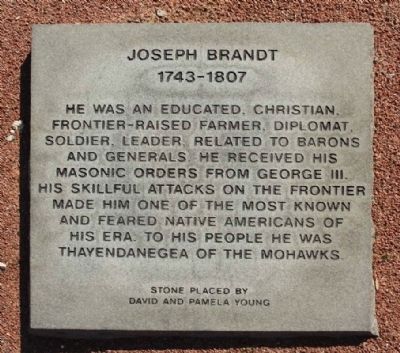
Joseph Brandt
1743 - 1807
Photographed by Mike Stroud, 2013
1. Joseph Brandt Marker
frontier-raised farmer, diplomat,
soldier, leader, related to barons
and generals. He received his
Masonic Orders from George III.
His skillful attacks on the frontier
made him one of the most known
and feared Native Americans of
his era. To his people he was
Thayendanegea of the Mohawks.
Erected by Stone placed by David and Pamela Young.
Topics. This memorial is listed in this topic list: War, US Revolutionary.
Location. 32° 4.552′ N, 81° 6.033′ W. Memorial is in Savannah, Georgia, in Chatham County. It is in Yamacraw Village. It can be reached from Martin Luther King Boulevard (West Broad Street). Located between Louisville Road and West Harris Street (Between Savannah Visitor Center and Savannah Roundhouse Museum, in the Battlefield Memorial Park). Touch for map. Memorial is in this post office area: Savannah GA 31401, United States of America. Touch for directions.

Regionally, this memorial is in the Coastal Plain and on the Georgia Coast and the Golden Isles. It is also in the American South, specifically
this page online
Other nearby markers. At least 8 other markers are within walking distance of this marker: Joel Lane (here, next to this marker); Major General Anthony Wayne (here, next to this marker); Charles Pidcock (here, next to this marker); Lt. Ambrose Gordon (here, next to this marker); Lt. Col John Harris Cruger (here, next to this marker); Col. John Jones (here, next to this marker); Robert Morris (here, next to this marker); Lt. Joseph Lawton (here, next to this marker). Touch for a list and map of all markers in Savannah.
Photographed by Mike Stroud, February 16, 2008
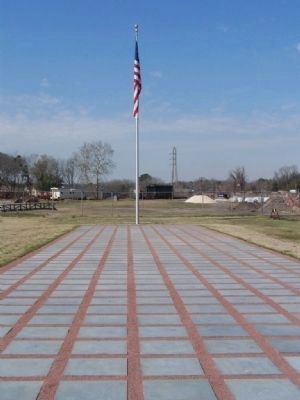
2. Joseph Brandt Marker at the Memorial To The American Revolution
Photographed by Allen C. Browne, December 12, 2017
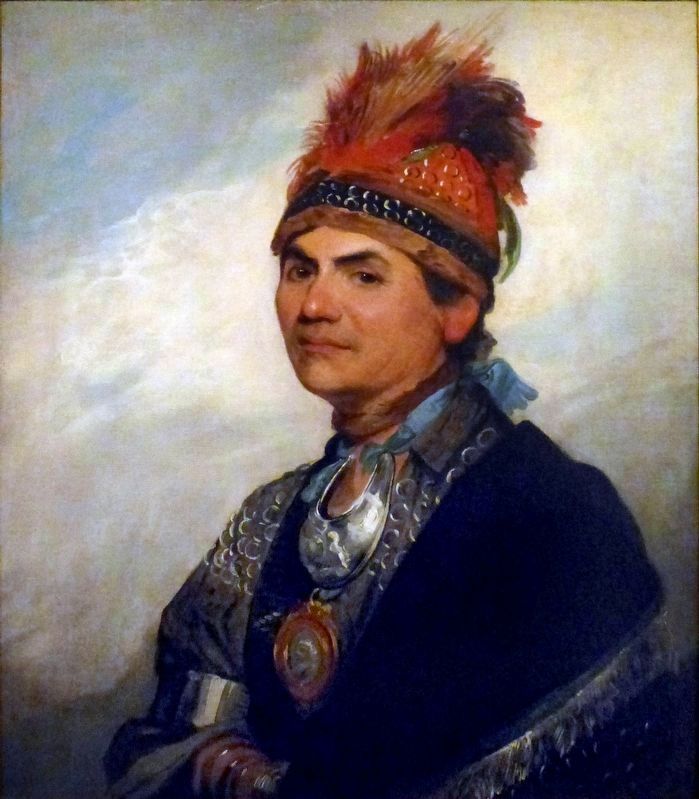
3. Joseph Brandt (Thayendanegea)
This 1786 portrait of Thayendanegea (1743-1807) by Gilbert Stuart hangs in the National Portrait Gallery in Washington, DC.
“Convinced that victory for the American colonists meant disaster for Native people, the Mohawk warrior Thayendanegea (also known as Joseph Brant) led loyalist troops in a number of devastating campaigns against rebel forces during the American Revolutionary War. At the war's conclusion, Brant journeyed to England to remind George III of his promise to compensate the Iroquois Confederacy for their military service and forfeited land. Brant's old friend Hugh Percy, the Duke of Northumberland, who had fought beside him in America, commissioned this imposing likeness from the American artist Gilbert Stuart, who was then based in London. In the portrait, Brant is shown wearing two gifts from the king: a crescent-shaped salver plate (known as a gorget) and a peace medal bearing the monarch’s profile. Brant's diplomatic efforts resulted in the award of 675,000 acres on the Grand River in Ontario, Canada, where he settled more than 1,800 Native American and white Loyalists.” – National Portrait Gallery
“Convinced that victory for the American colonists meant disaster for Native people, the Mohawk warrior Thayendanegea (also known as Joseph Brant) led loyalist troops in a number of devastating campaigns against rebel forces during the American Revolutionary War. At the war's conclusion, Brant journeyed to England to remind George III of his promise to compensate the Iroquois Confederacy for their military service and forfeited land. Brant's old friend Hugh Percy, the Duke of Northumberland, who had fought beside him in America, commissioned this imposing likeness from the American artist Gilbert Stuart, who was then based in London. In the portrait, Brant is shown wearing two gifts from the king: a crescent-shaped salver plate (known as a gorget) and a peace medal bearing the monarch’s profile. Brant's diplomatic efforts resulted in the award of 675,000 acres on the Grand River in Ontario, Canada, where he settled more than 1,800 Native American and white Loyalists.” – National Portrait Gallery
Credits. This page was last revised on February 8, 2023. It was originally submitted on April 21, 2013, by Mike Stroud of Bluffton, South Carolina. This page has been viewed 813 times since then and 30 times this year. Photos: 1. submitted on April 21, 2013, by Mike Stroud of Bluffton, South Carolina. 2. submitted on March 26, 2009, by Mike Stroud of Bluffton, South Carolina. 3. submitted on December 24, 2017, by Allen C. Browne of Silver Spring, Maryland.
