Greenville in Pitt County, North Carolina — The American South (South Atlantic)
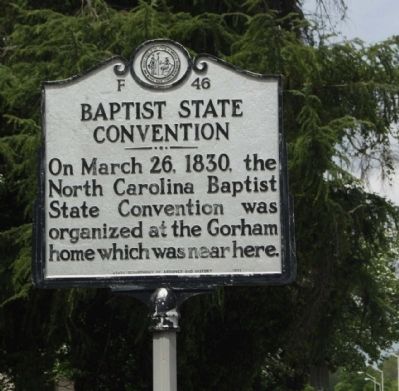
Baptist State Convention
Photographed by Mike Stroud, April 19, 2013
1. Baptist State Convention Marker
Erected 1971 by Archives and Highway Departments. (Marker Number F-46.)
Topics and series. This historical marker is listed in this topic list: Religion & Religious Structures. In addition, it is included in the North Carolina Division of Archives and History series list. A significant historical month for this entry is March 1850.
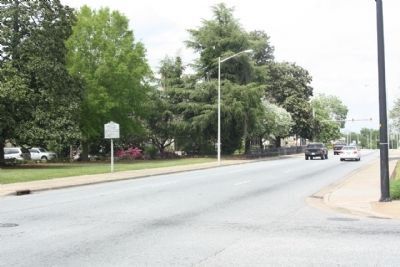
Location. 35° 36.774′ N, 77° 22.493′ W. Marker is in Greenville, North Carolina, in Pitt County. It is on South Green Street (State Highway 1531) near West 4th Street, on the left when traveling north. Touch for map. Marker is in this post office area: Greenville NC 27834, United States of America. Touch for directions.

Regionally, this marker is in North Carolina’s Coastal Plain. It is also in the American South, specifically in the Upper South, and on the Eastern Seaboard. Globally, it is in the North Atlantic Region, North America, the Western Hemisphere, the Western World, and the Anglosphere. Historically, it finds itself in what was once the territory of the Mississippian
this page online
Other nearby markers. At least 8 other markers are within walking distance of this marker: In Patriotic Commemoration (about 500 feet away, measured in a direct line); Thomas J. Jarvis (about 600 feet away); Robert Lee Humber (about 700 feet away); Arts & Culture (about 700 feet away); Early Black Health Professionals (approx. 0.2 miles away); a different marker also named Thomas J. Jarvis (approx. 0.2 miles away); Neighborhood Unity and Community Pride (approx. 0.2 miles away); Sycamore Hill Missionary Baptist Church (approx. 0.2 miles away). Touch for a list and map of all markers in Greenville.
Regarding Baptist State Convention. The Baptist State Convention of North Carolina was founded on March 26, 1830, at the Greenville home of A. I. Gorham. The organization had its roots in the North Carolina Baptist Missionary Society, which was formed in 1811 as a “General Meeting” where Baptists could plan missionary work. The Baptist Missionary Society came to be known as the Benevolent Society. Prior to the state
Photographed by Mike Stroud, April 19, 2013
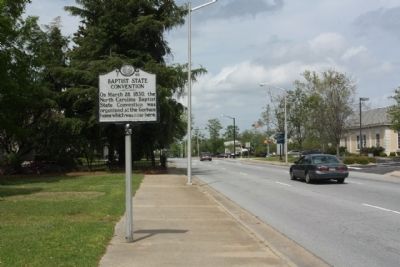
2. Baptist State Convention Marker
Today the Baptist State Convention offers an outlet for cooperative missionary work as well as guidance to church leaders and administrative staff. Resources include instruction and guidelines for general operations and advice for the churches quests “to develop and sustain relevant ministries for the 21st century.” The state convention assists groups in forming new Baptist congregations in the state, as well. The Baptist State Convention operates educational facilities, children’s homes, retirement homes, and a credit union, among missionary and support programs. The home office for
Photographed by Mike Stroud, April 19, 2013
3. Baptist State Convention Marker seen looking north along South Green Street near West 4th Street
Credits. This page was last revised on June 22, 2021. It was originally submitted on May 16, 2013, by Mike Stroud of Bluffton, South Carolina. This page has been viewed 861 times since then and 26 times this year. Photos: 1, 2, 3. submitted on May 16, 2013, by Mike Stroud of Bluffton, South Carolina.
