Hilton Head Island in Beaufort County, South Carolina — The American South (South Atlantic)
Fort Howell - 1864
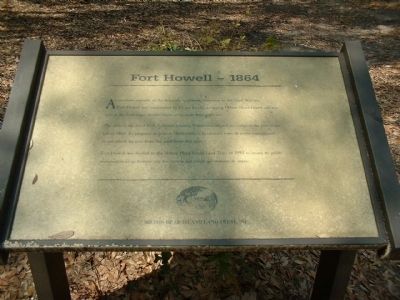
Photographed by Mike Stroud, March 2008
1. Fort Howell Marker
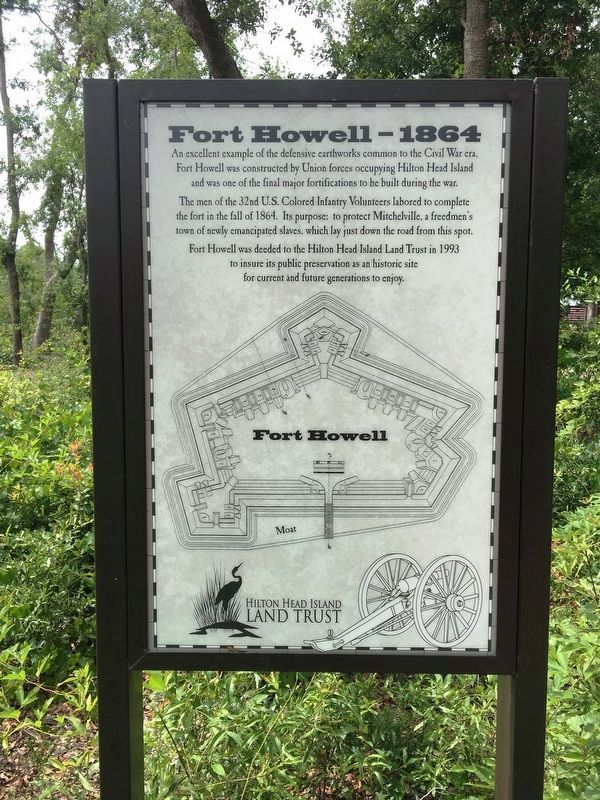
An excellent example of the defensive earthworks common to the civil War era, Fort Howell was constructed by Union Forces occupying Hilton Head Island and was one of the final fortifications to be built during the war. The men of the 32nd U.S. Colored Infantry Volunteers labored to complete the fort in the fall of 1864. Its purpose to protect Mitchelville, a freedman's town of newly emancipated slaves, which lay just down the road from this spot.
Fort Howell was deeded to the Hilton Head Island Land Trust in 1993 to insure its public preservation as an historic site for current and future generations to enjoy.
Erected 1993 by Hilton Head Island Trust, Inc.
Topics. This historical marker is listed in these topic lists: African Americans • Forts and Castles • War, US Civil. A significant historical year for this entry is 1864.
Location. 32° 14.056′ N, 80° 41.526′ W. Marker is on Hilton Head Island, South Carolina, in Beaufort County. It is at the intersection of Beach City Road and Dillon Road, on the left when traveling north on Beach City Road. Located near a driveway located Approx 200 feet south of Dillon
this page online

Regionally, this marker is in the Lowcountry and on the Sea Islands. It is also in the American South, specifically in the Deep South, and on the Eastern Seaboard. Globally, it is in the North Atlantic Region, North America, the Western Hemisphere, the Western World, and the Anglosphere. Historically, it finds itself in what was once New Spain, the territory of the Mississippian Culture, one of the original Thirteen Colonies, one of the Confederate States of America, and the Antebellum South.
Other nearby markers. At least 8 other markers are within walking distance of this marker: Fort Howell (here, next to this marker); Mitchelville Site (within shouting distance of this marker); St. James Baptist Church (within shouting distance of this marker); Cherry Hill School (about 300 feet away, measured in a direct line); Forts of the Civil War Era (approx. 0.2 miles away); General Howell / Captain Suter (approx. 0.2 miles away); The Troops that Built Fort Howell / Camp Baird (approx.
Photographed by Mike Stroud, 2008
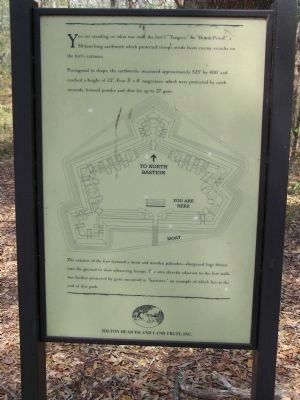
2. Fort Howell "Traverse"
You are standing on what was the fort's "Traverse," or " Bomb-Proof," a 50 foot long earthwork which protected troops inside from enemy assults on the forts entrance.
Pentagonal in shape, the earthworks measured approximenately 525' by 400' and reached a height of 23'. Four 5' x 8' magazines, which were protected by earth mounds, housed powder and shot for up to 27 guns.
(Lower text) The exterior of the fort featured a moat and wooden palisades - sharpened logs driven into the ground to slow advancing troops. The area directly adjacent to the fort walls was further protected by guns mounted in " bastions," an example of which at the end of this path.
Also see . . .
1. Fort Howell, named in honor of Brigadier General Joshua B. Howell. Wikipedia entry (Submitted on April 1, 2008, by Mike Stroud of Bluffton, South Carolina.)
2. Union Regimental Histories United States Colored Troops Infantry. (Submitted on April 1, 2008, by Mike Stroud of Bluffton, South Carolina.)
Photographed by Brandon D Cross, June 12, 2017
3. Fort Howell - 1864 Marker
The original horizontal marker has been replaced by this vertical version.
Photographed by Brandon D Cross, June 12, 2017
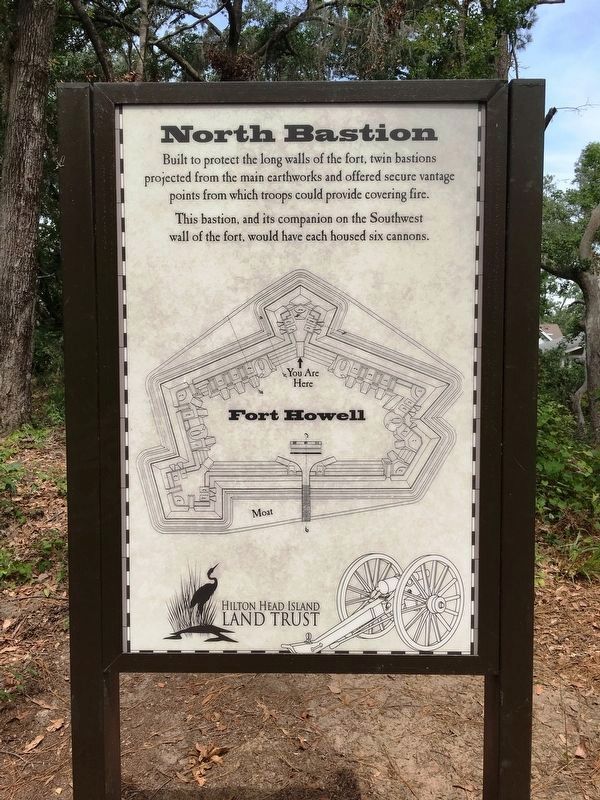
4. North Bastion Marker
The original horizontal marker has been replaced by this vertical version.
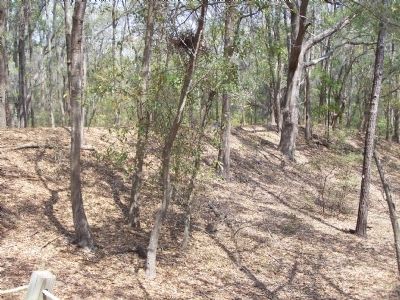
Photographed by Mike Stroud, 2008
5. The Left ( N) moat area , as seen today
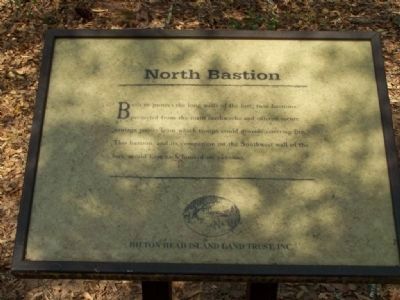
Photographed by Mike Stroud, 2008
6. The North Bastion
North Bastion
Built to protect the long walls of the fort, twin bastions projected from the main earthworks and offered secure vantage points from which troops could provide covering fire.
This bastion and its companion on the Southwest wall of the fort would have each housed six cannons.
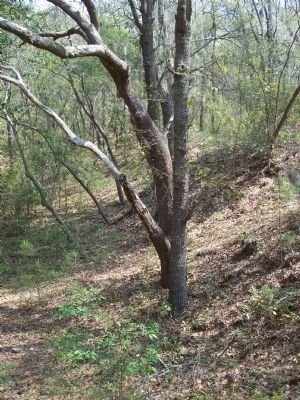
Photographed by Mike Stroud, March 2008
7. Looking Northeast from the North Bastion today
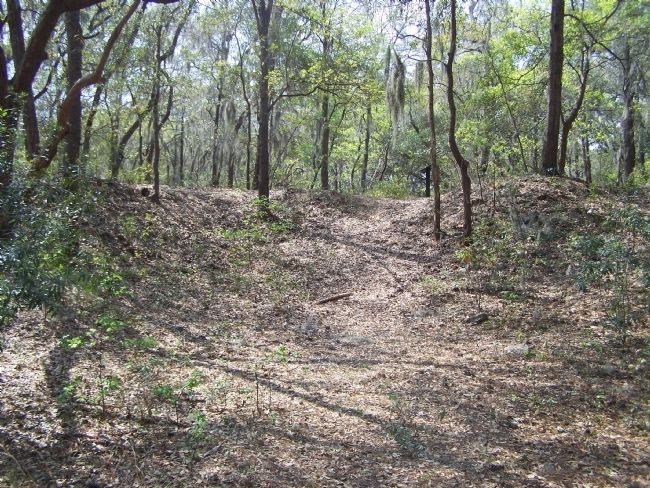
Photographed by Mike Stroud, 2008
8. Enemy's view of the North Bastion locale
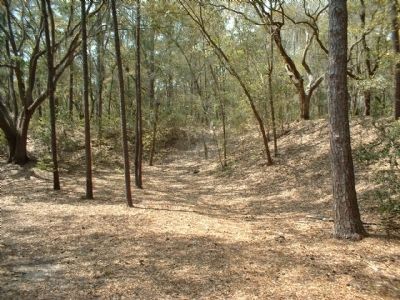
Photographed by Mike Stroud, 2008
9. Left (S) moat area as seen today
Credits. This page was last revised on November 22, 2025. It was originally submitted on April 1, 2008, by Mike Stroud of Bluffton, South Carolina. This page has been viewed 31,860 times since then and 479 times this year. Photos: 1, 2. submitted on April 1, 2008, by Mike Stroud of Bluffton, South Carolina. 3, 4. submitted on June 21, 2017, by Brandon D Cross of Flagler Beach, Florida. 5, 6, 7, 8, 9. submitted on April 1, 2008, by Mike Stroud of Bluffton, South Carolina. • Craig Swain was the editor who published this page.
