Near Avalon in Los Angeles County, California — The American West (Pacific Coastal)
Wrigley Memorial
Photographed by Denise Boose, August 17, 2013
1. Wrigley Memorial Marker panel 1
There are five panels at the memorial. The first panel is in front of the memorial to the right. There is a duplicate panel located at the entrance, left of the walkway:
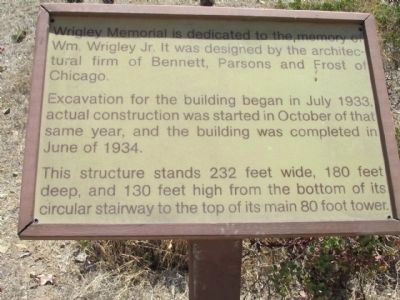
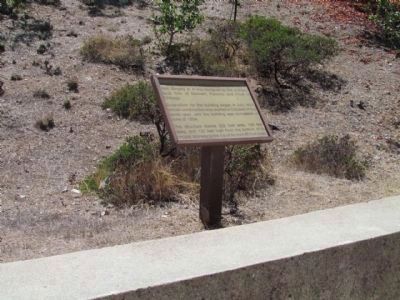
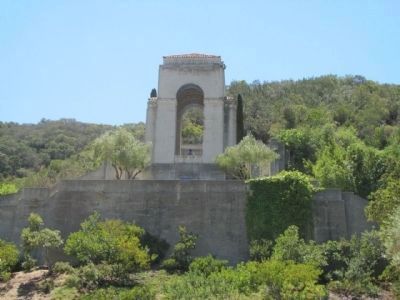
Wrigley Memorial is dedicated to the memory of Wm. Wrigley Jr. It was designed by the architectural firm of Bennett, Parsons and Frost of Chicago.
Excavation for the building began in July 1933, actual construction was started in October of that same year, and the building was completed in June of 1934.
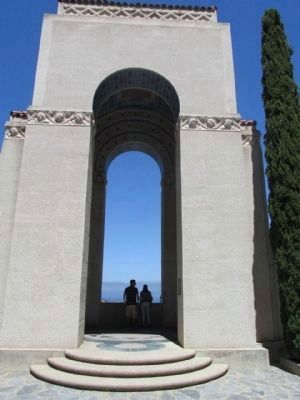
This structure stands 232 feet wide, 180 feet deep, and 130 feet high from the bottom of its circular stairway to the top of its main 80 foot tower.
Second panel on the stairway to the right:
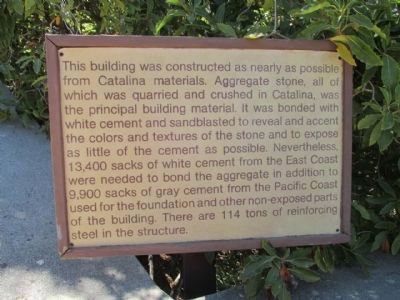
This building was constructed as nearly as possible from Catalina materials. Aggregate stone, all of which was quarried and crushed in Catalina, was the principal building material. It was bonded with white cement and sandblasted to reveal and accent the colors and textures of the stone and to expose as little of the cement as possible. Nevertheless, 13,400 sacks of white cement from the East Coast were needed to bond the aggregate in addition to 9,900
this page online
Third panel at the entrance of the left walkway:
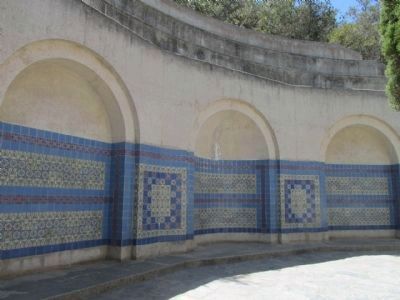
The arches and red tile roof of this building reflect the Spanish influence that dominated the architecture of Early California. To help retain the Early California look in Catalina, Wm. Wrigley Jr. established a tile plant in Catalina which subsequently produced much beautiful tile, including all the red roof tiles and all the colorful hand-made glazed tiles used for decorative effects in this building.
Fourth panel located to the left of the bronze doors:
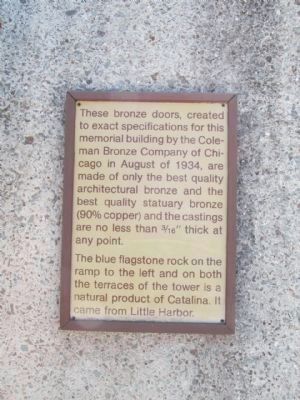
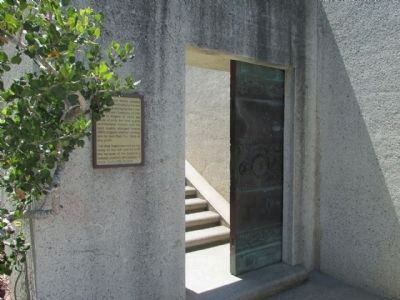
These bronze doors, created to exact specifications for this memorial building by the Coleman Bronze Company of Chicago in August of 1934, are made of only the best quality architectural bronze and the best quality statuary bronze (90% copper) and the castings are no less than 3/16" thick at any point.
The blue flagstone rock on the ramp to the left and on both the terraces of the tower is a natural product of Catalina. It came from Little Harbor.
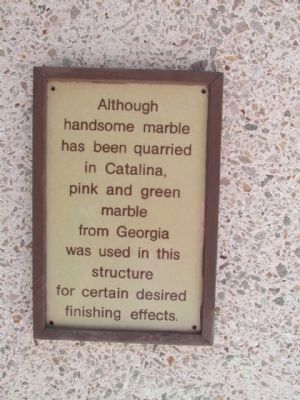
Fifth panel located on the inside of the arches:
Although
Photographed by Denise Boose, August 17, 2013
2. Wrigley Memorial Marker panel 1
Erected by Wrigley Memorial Gardens.
Topics. This historical marker and memorial is listed in this topic list: Architecture. A significant historical month for this entry is June 1934.
Location. 33° 19.428′ N, 118° 20.518′ W. Marker is near Avalon, California, in Los Angeles County. It can be reached from Avalon Canyon Road, on the left when traveling south. Touch for map. Marker is at or near this postal address: 125 Claressa Road, Avalon CA 90704, United States of America. Touch for directions.

Regionally, this marker and memorial is in Greater Los Angeles and in the Transverse Ranges. It is also on the American Pacific Coast. Globally, it is in North America, on the Ring of Fire, on the Pacific Rim, in the Western Hemisphere, in the Western World, and in the Anglosphere. Historically, it finds itself in what was once New Spain and also Mexico’s Alta California.
Other nearby markers. At least 8 other markers are within 2 miles of this marker, measured as the crow flies: Wrigley Field in Los Angeles
Photographed by Denise Boose, August 17, 2013
3. Wrigley Memorial Marker panel 1
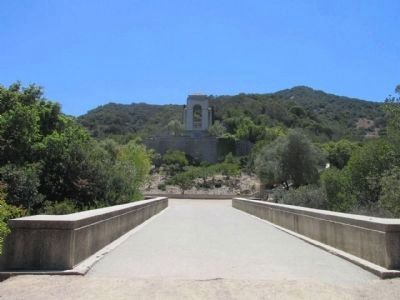
There are two of these plaques, one in front and another to the left on the walkway.
Photographed by Denise Boose, August 17, 2013
4. Wrigley Memorial - Panel #2
Located to the right on the stairway.
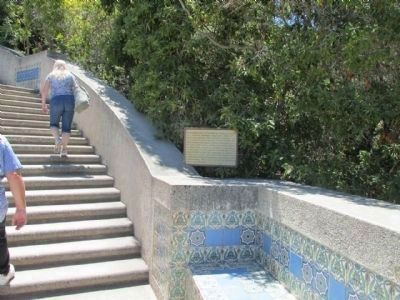
Photographed by Denise Boose, August 17, 2013
5. Wrigley Memorial - Panel #2
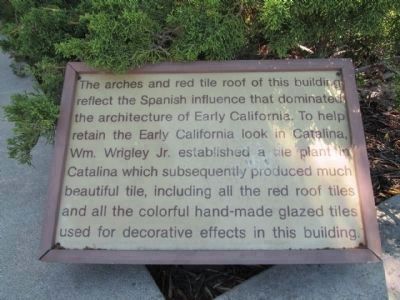
Photographed by Denise Boose, August 17, 2013
6. Wrigley Memorial - Panel #3
Located at the entrance on the left walkway. You can see this to the left in photo 3.
Photographed by Denise Boose, August 17, 2013
7. Wrigley Memorial - Panel #4
Located to the left of the bronze doors.
Photographed by Denise Boose, August 17, 2013
8. Wrigley Memorial - Panel #4 and Bronze Doors
Photographed by Denise Boose, August 17, 2013
9. Wrigley Memorial - Panel #5
Located on the inside of the arches.
Photographed by Denise Boose, August 17, 2013
10. Wrigley Memorial Arches
Photographed by Denise Boose, August 17, 2013
11. Wrigley Memorial
Catalina Tile, at the top by the arches.
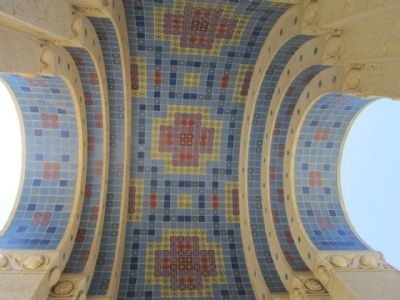
Photographed by Denise Boose, August 17, 2013
12. Wrigley Memorial
Catalina Tile inside the arches.
Photographed by Denise Boose, August 17, 2013
13. Wrigley Memorial
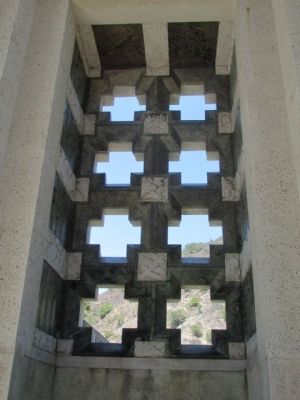
Tile work lattice inside the arches.
Photographed by Denise Boose
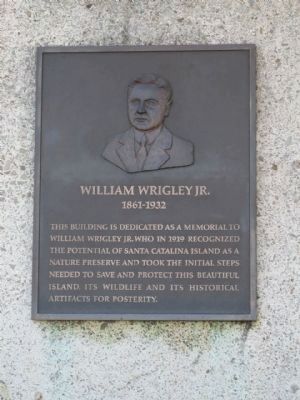
14. William Wrigley Jr. 1861 - 1932
This building is dedicated as a memorial to William Wrigley Jr. who in 1919 recognized the potential of Santa Catalina Island as a nature preserve and took the initial steps needed to save and protect this beautiful island, its wildlife and its historical artifacts for posterity.
Photographed by Denise Boose
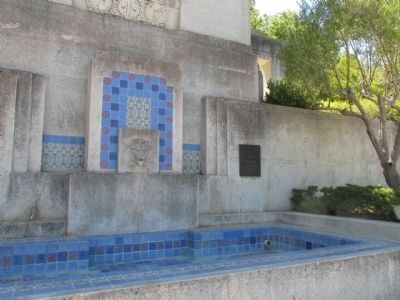
15. William Wrigley Jr. Dedication Plaque and Tile Work
Photographed by Denise Boose
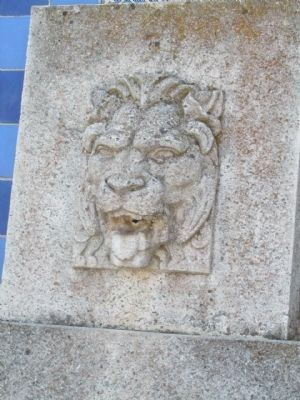
16. Relief Detail
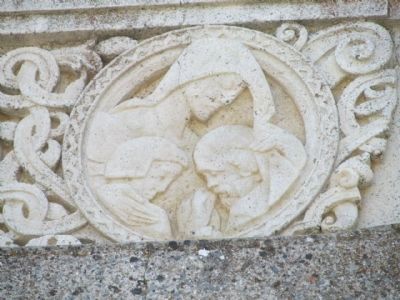
Photographed by Denise Boose
17. Relief Detail
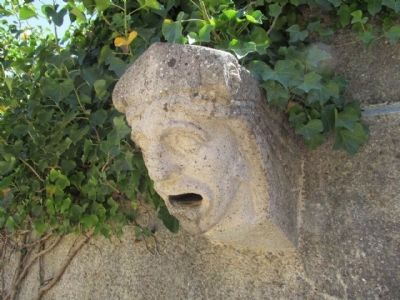
Photographed by Denise Boose, August 17, 2013
18. Relief Detail
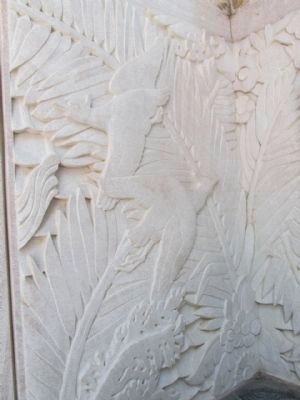
Photographed by Denise Boose, August 17, 2013
19. Relief Detail
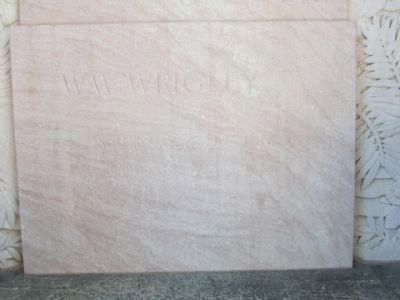
Photographed by Denise Boose
20. William Wrigley Jr. Marble Plaque Inside the Arches
WM Wrigley Jr., September 30, 1861 - January 26, 1932
Photographed by Denise Boose, August 17, 2013
21. Wrigley Memorial
Photographed by Denise Boose
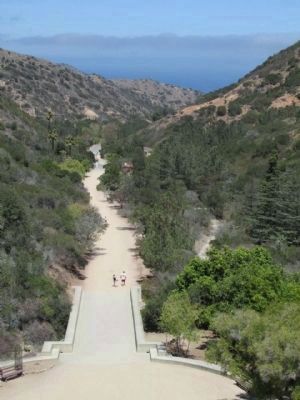
22. Pathway to the Memorial
Credits. This page was last revised on January 30, 2023. It was originally submitted on October 6, 2013, by Denise Boose of Tehachapi, California. This page has been viewed 1,108 times since then and 53 times this year. Photos: 1, 2, 3, 4, 5, 6, 7, 8, 9, 10, 11, 12, 13, 14, 15, 16, 17, 18, 19, 20, 21, 22. submitted on October 6, 2013, by Denise Boose of Tehachapi, California. • Syd Whittle was the editor who published this page.
