Jekyll Island in Glynn County, Georgia — The American South (South Atlantic)
Up In Smoke
Photographed by Cosmos Mariner, March 12, 2014
1. Up In Smoke Marker
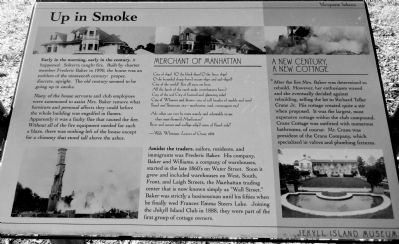
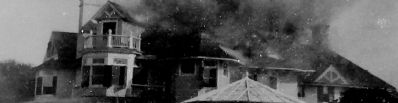
Early in the morning, early in the century, it happened: Solterra caught fire. Built by charter member Frederick Baker in 1890, the house was an emblem of the nineteenth century: proper, discrete, upright. The old century seemed to be going up in smoke.
Many of the house servants and club employees were summoned to assist Mrs. Baker remove what furniture and personal affects they could before the whole building was engulfed in flames.
Apparently it was a faulty flue that caused the fire. Without all of the fire equipment needed for such a blaze, there was nothing left of the house except for a chimney that stood tall above the ashes.
Merchant of Manhattan
City of ships! (O the black ships! O the fierce ships!
O the beautiful sharp-bow’d steam-ships and sail-ships!)
City of the world! (for all races are here,
All the lands of the earth make contributions here;)
City of the sea! City of hurried and glittering tides!
City of Wharves and shores – city of tall facades of marble and iron!
Proud and Passionate city – mettlesome, mad, extravagant city!
Ah, what can ever be more stately and admirable
this page online
than mast-hemm’d Manhattan?
River and sunset and scallop-edg’d wave of flood-tide?
—Walt Whitman, Leaves of Grass,1892
Amidst the traders, sailors, residents, and immigrants was Frederic Baker. His company, Baker and Williams, a company of warehouses, started in the late 1860’s on Water Street. Soon it grew and included warehouses on West, South, Front, and Laigh Streets, the Manhattan trading center that is now known simply as “Wall Street.” Baker was strictly a businessman until his fifties when he finally wed Frances Emma Steers Lake. Joining the Jekyll Island Club in 1888, they were part of the first group of cottage owners.
A new century, a new cottage
After the fire Mrs. Baker was determined to rebuild. However, her enthusiasm waned and she eventually decided against rebuilding, selling the lot to Richard Teller Crane Jr. His cottage created quite a stir when proposed. It was the largest, most expensive cottage within the club compound. Crane Cottage was outfitted with numerous bathrooms, of course: Mr. Crane was the president of the Crane Company, which specialized in valves and plumbing fixtures.
Erected by Jekyll
Photographed by Cosmos Mariner, March 12, 2014
2. Up In Smoke Marker (fire detail)
Topics. This historical marker is listed in these topic lists: Architecture • Arts, Letters, Music • Disasters • Industry & Commerce. A significant historical year for this entry is 1890.
Location. 31° 3.603′ N, 81° 25.335′ W. Marker is on Jekyll Island, Georgia, in Glynn County. It can be reached from the intersection of Old Plantation Road and Hopkins Avenue, on the right when traveling south. Marker is located at the south end of the Crane Cottage garden, just beyond the fountain, on the walkway to the Jekyll Island Club. Touch for map. Marker is in this post office area: Jekyll Island GA 31527, United States of America. Touch for directions.

Regionally, this marker is on the Coastal Plain, on the Georgia Coast and the Golden Isles, and on the Sea Islands. It is also in the American South, specifically in the Deep South, and on the Eastern Seaboard. Globally, it is in the North Atlantic Region, North America, the Western Hemisphere, the Western World, and the Anglosphere. Historically, it finds itself in what was once New Spain, the territory of the Mississippian Culture, one of the original
Photographed by Cosmos Mariner, March 12, 2014
3. Crane Cottage (entrance)
Other nearby markers. At least 8 other markers are within walking distance of this marker: Plantation Oak (about 400 feet away, measured in a direct line); Cherokee Cottage (about 400 feet away); Preserving the Legacy (about 400 feet away); Brunswick Across the Sound (about 500 feet away); The Club Wharf (about 500 feet away); The Clubhouse (about 500 feet away); The Active Life (about 500 feet away); Fairbank Cottage Site (about 600 feet away). Touch for a list and map of all markers in Jekyll Island.
Other markers no longer nearby. Arriving on This Island (was about 500 feet away but has been replaced with another marker now near it); Evolution of Elegance (was about 500 feet away but has been replaced with another marker now near it).
Also see . . . Lost Jekyll. Jekyll Island Authority website entry (Submitted on February 17, 2022, by Larry Gertner of New York, New York.)
Photographed by Cosmos Mariner, March 12, 2014
4. Crane Cottage (placard at entrance door)
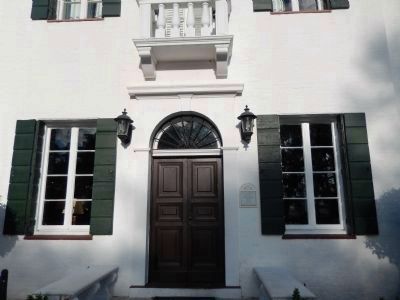
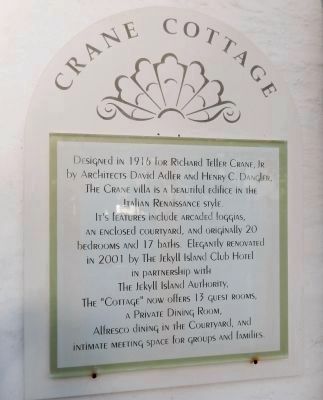
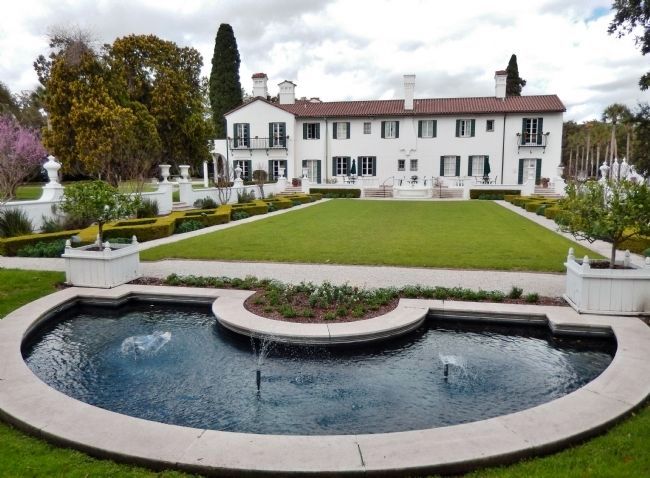
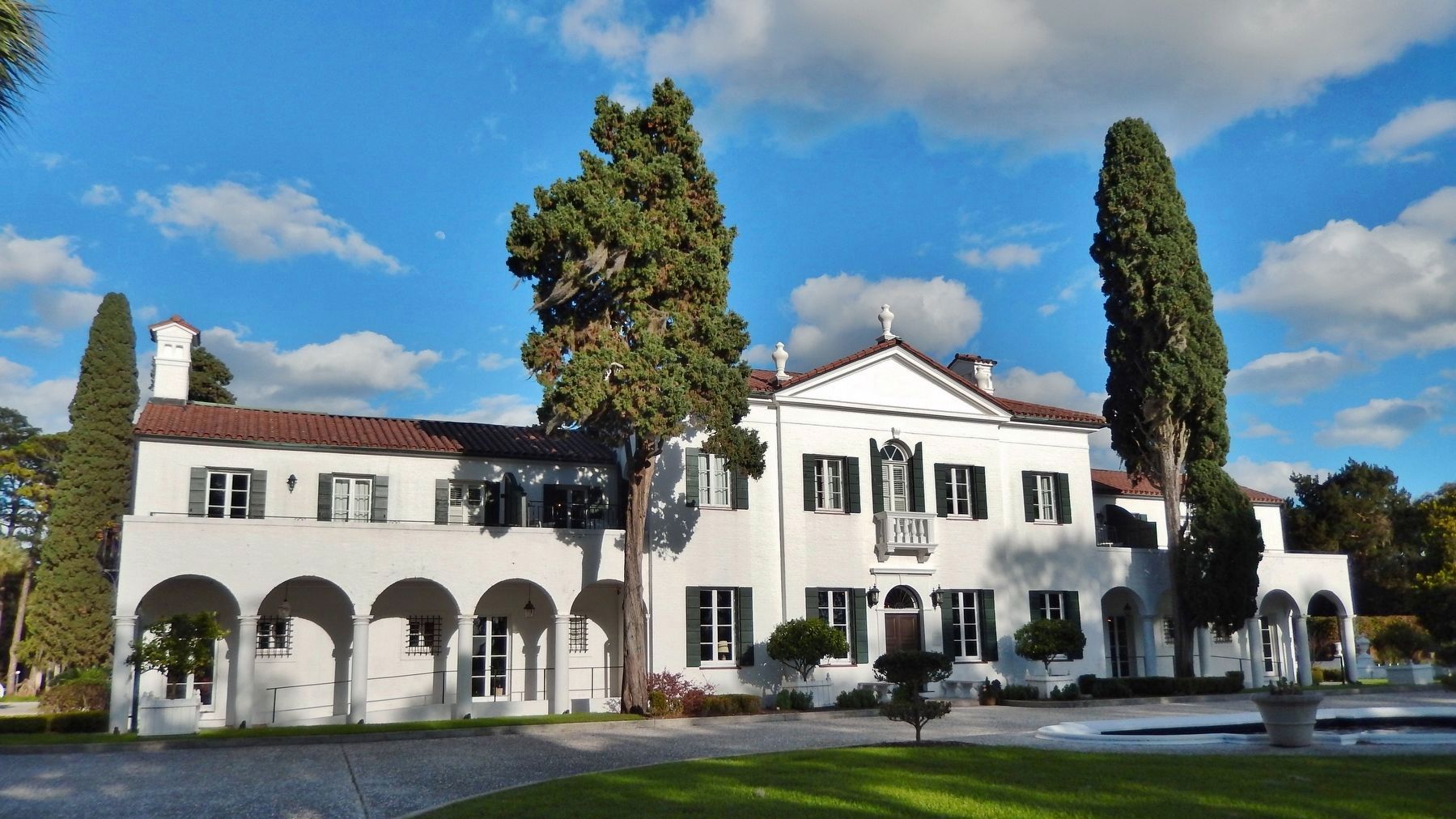
Designed in 1916 for Richard Teller Crane, Jr. by architects David Adler and Henry C. Dangler, the Crane Villa is a beautiful edifice in the Italian Renaissance Style.
Its features include arcaded loggias, an enclosed courtyard, and originally 20 bedrooms and 17 baths. Elegantly renovated in 2001 by the Jekyll Island Club Hotel in partnership with the Jekyll Island Authority, the “Cottage” now offers 13 guest rooms, a private dining room, alfresco dining in the courtyard, and intimate meeting space for groups and families.
Its features include arcaded loggias, an enclosed courtyard, and originally 20 bedrooms and 17 baths. Elegantly renovated in 2001 by the Jekyll Island Club Hotel in partnership with the Jekyll Island Authority, the “Cottage” now offers 13 guest rooms, a private dining room, alfresco dining in the courtyard, and intimate meeting space for groups and families.
Photographed by Cosmos Mariner, March 12, 2014
5. Crane Cottage (south side view from fountain)
View looking north toward Crane Cottage across the fountain and gardens. This image is taken from near the Up In Smoke marker.
Photographed by Cosmos Mariner, March 20, 2013
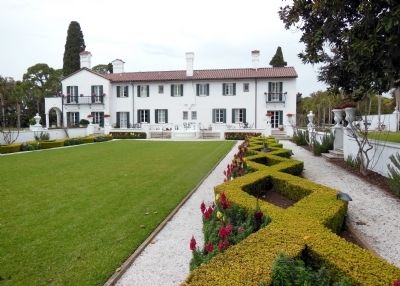
6. Crane Cottage (south garden view)
Photographed by Cosmos Mariner, March 12, 2014
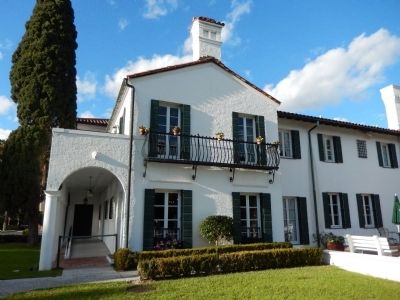
7. Crane Cottage (south west corner)
Photographed by Cosmos Mariner, March 12, 2014
8. Crane Cottage (front view)
Credits. This page was last revised on February 17, 2022. It was originally submitted on March 30, 2014, by Cosmos Mariner of Cape Canaveral, Florida. This page has been viewed 947 times since then and 24 times this year. Photos: 1, 2, 3, 4, 5, 6, 7. submitted on March 30, 2014, by Cosmos Mariner of Cape Canaveral, Florida. 8. submitted on March 21, 2019, by Cosmos Mariner of Cape Canaveral, Florida. • Bernard Fisher was the editor who published this page.
