
Dyea in Skagway, Alaska — Northwest (North America)
Skagway and White Pass
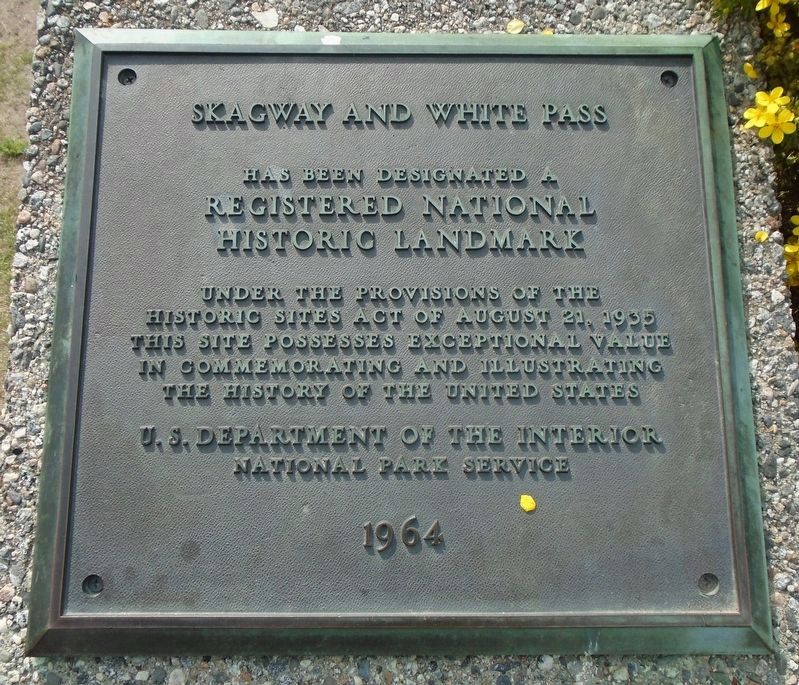
Photographed by William Fischer, Jr., August 24, 2024
1. Skagway and White Pass NHL Marker
Registered National
Historic Landmark
Under the provisions of the Historic Sites Act of August 24, 1935, this site possesses exceptional value in commemorating and illustrating the history of the United States
Erected 1964 by U.S. Department of the Interior, National Park Service.
Topics and series. This historical marker is listed in these topic lists: Notable Places • Railroads & Streetcars. In addition, it is included in the National Historic Landmarks series list. A significant historical year for this entry is 1935.
Location. 59° 27.194′ N, 135° 19.153′ W. Marker is in Skagway, Alaska. It is in Dyea. It can be reached from 2nd Street. Marker is on the edge of the Centennial Plaza. Touch for map. Marker is at or near this postal address: 291 2nd Street, Skagway AK 99840, United States of America. Touch for directions.

Regionally, this marker is in Southeast Alaska, in Tlingit and Haida & Tsimshian Region. It is also on the American Pacific Coast. Globally, it is in North America, the Inside Passage, the Pacific Rim, the Western Hemisphere, the Western World, and the Anglosphere.
this page online
Other nearby markers. At least 8 other markers are within walking distance of this marker: Events Leading to the Shipwreck (here, next to this marker); Plowing Ahead (here, next to this marker); SS Princess Sophia Memorial (here, next to this marker); Skagway Centennial Statue (a few steps from this marker); Three Thousand Pack Animals (a few steps from this marker); Inspector Charles Constantine and Staff Sergeant Charles Brown (within shouting distance of this marker); Avenue of Mountain Ash Trees (within shouting distance of this marker); How far would you go to fulfill a dream? (within shouting distance of this marker). Touch for a list and map of all markers in Skagway.
More about this marker. At some point, the marker was slightly moved to a new location on the plaza, with a new mount. The original location was 59° 27.183′ N, 135° 19.161′ W.
Regarding Skagway and White Pass. In 1896, gold was found in the Klondike region of Canada's Yukon Territory. Beginning in the summer of 1897, thousands of hopeful miners poured into the new town and
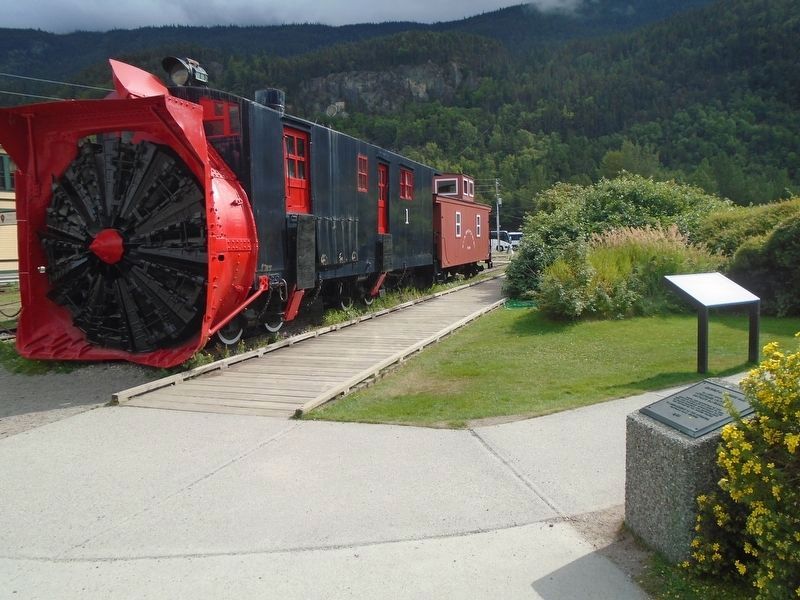
Photographed by William Fischer, Jr., August 24, 2024
2. Skagway and White Pass NHL Marker
Related markers. Click here for a list of markers that are related to this marker.
Also see . . .
1. National Park Service website for the Klondike Gold Rush. Skagway, is at the head of the White Pass Trail. (Submitted on January 29, 2008, by Mike Stroud of Bluffton, South Carolina.)
2. Wikipedia entry for Skagway, Alaska. Skagway has a historic district of about 100 buildings from the gold rush era. It receives about three-quarters of a million tourists annually, most of whom come on cruise ships. The White Pass and Yukon Route still operates its narrow gauge train around Skagway during the summer months primarily for tourists. (Submitted on January 29, 2008, by Mike Stroud of Bluffton, South Carolina.)
3. Municipality of Skagway. Skagway was known as
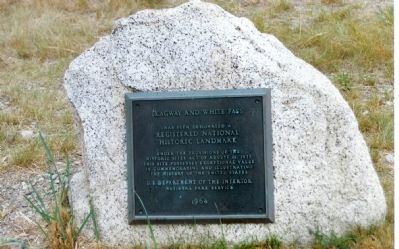
Photographed by Mike Stroud, July 4, 1995
3. Skagway and White Pass Marker
Additional commentary.
1. Skagway, Alaska and Harpers Ferry, West Virginia
Both share the distinction of the entire town being Historic Towns. Note To Editor only visible by Contributor and editor
— Submitted January 29, 2008, by Mike Stroud of Bluffton, South Carolina.
Additional keywords. Klondike Gold Rush National Historic District; WP&YR railway; Dead Horse Gulch; Tagish Lake; Carcross; Yukon River
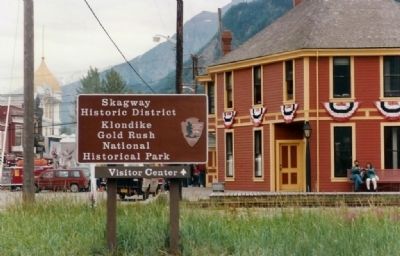
Photographed by Mike Stroud, July 4, 1995
4. View into downtown Skagway from the Centennial Plaza
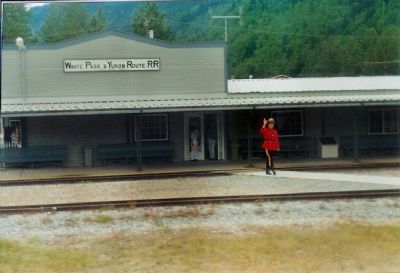
Photographed by Mike Stroud, July 4, 1995
5. White Pass and Yukon Route
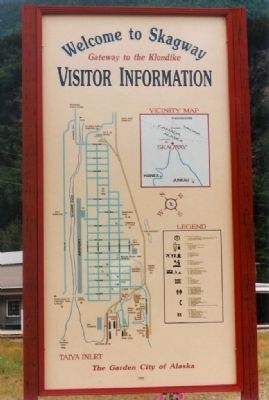
Photographed by Mike Stroud, July 4, 1995
6. Helpful map of Skagway
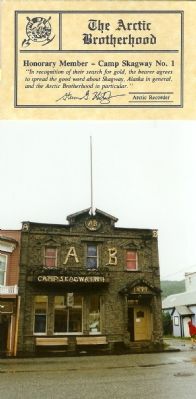
Photographed by Mike Stroud, September 1996
7. Camp Skagway No. 1 and The Artic Brotherhood
Skagway's most famous building, perhaps, is the two-story Arctic Brotherhood Hall. This driftwood-decorated frame building was the home of a fraternal group founded by gold seekers on their way to the Klondike. The building of "Camp Skagway No. 1" was erected in 1899, and the facade was put up the next year. -+-
"Currently gives a brief history of Skagway...in 1996
was a bit of a cute musical skit"... ms
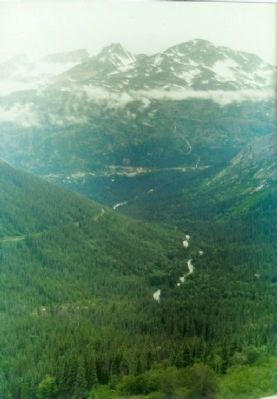
Photographed by Mike Stroud, July 4, 1995
8. Up into the pass , towards the Klondike
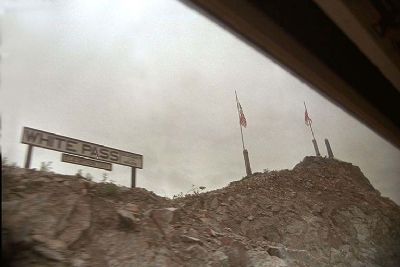
Photographed by Mike Stroud, July 4, 1995
9. At White Pass
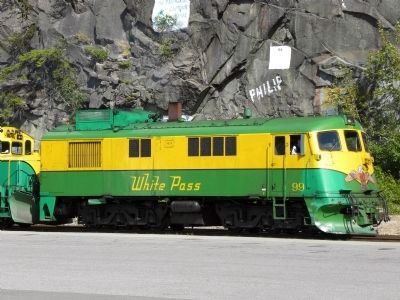
Photographed by Bill Walker, June 23, 2009
10. Skagway and White Pass RR
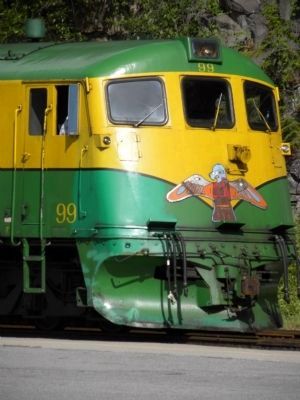
Photographed by Bill Walker, June 23, 2009
11. Skagway and White Pass RR
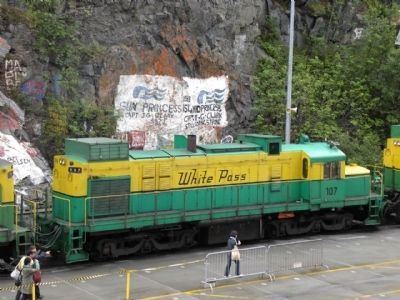
Photographed by Bill Walker, June 23, 2009
12. Skagway and White Pass RR
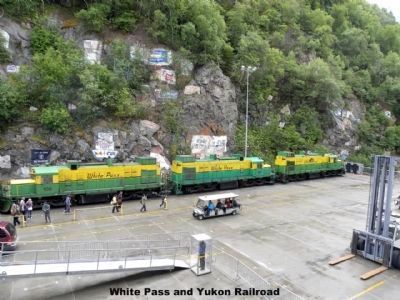
Photographed by Bill Walker, June 23, 2009
13. Skagway and White Pass RR locomotives
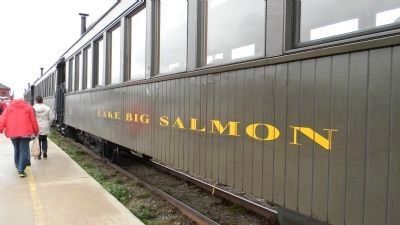
Photographed by Richard E. Miller, September 17, 2013
14. Vintage S&WP RR passenger coaches at Skagway, loading for excursion to the Yukon
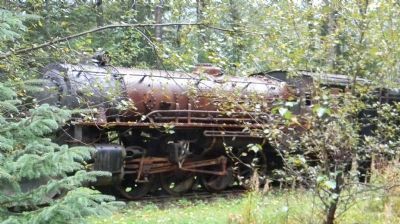
Photographed by Richard E. Miller, September 17, 2013
15. Retired Skagway and White Pass RR steam engine, side-tracked in woods near the terminal
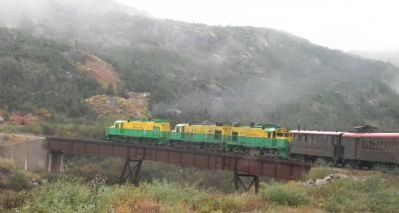
Photographed by Richard E. Miller, September 17, 2013
16. S&WP RR excursion train, north of Skagway,
Photographed by Richard E. Miller, September 17, 2013
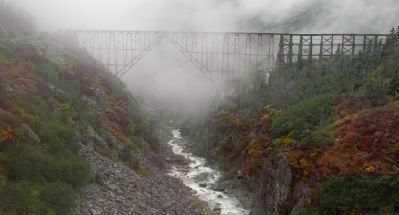
17. "Steel Bridge" (the world's tallest cantilever bridge when built in 1901) - north of
Photographed by Richard E. Miller, September 17, 2013
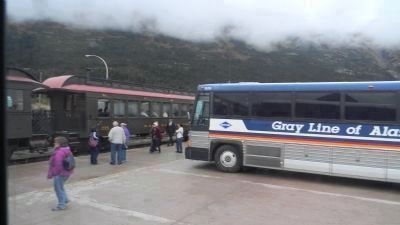
18. Skagway and White Pass RR excursion - passenger transfer to buses at Yukon border
Credits. This page was last revised on September 29, 2024. It was originally submitted on January 29, 2008, by Mike Stroud of Bluffton, South Carolina. This page has been viewed 3,740 times since then and 32 times this year. Last updated on April 5, 2014, by Barry Swackhamer of Brentwood, California. Photos: 1, 2. submitted on September 29, 2024, by William Fischer, Jr. of Reynoldsburg, Ohio. 3, 4, 5, 6, 7, 8, 9. submitted on January 29, 2008, by Mike Stroud of Bluffton, South Carolina. 10, 11, 12, 13. submitted on August 3, 2009, by Mike Stroud of Bluffton, South Carolina. 14. submitted on October 9, 2013, by Richard E. Miller of Oxon Hill, Maryland. 15. submitted on October 8, 2013, by Richard E. Miller of Oxon Hill, Maryland. 16, 17. submitted on October 9, 2013, by Richard E. Miller of Oxon Hill, Maryland. 18. submitted on October 10, 2013, by Richard E. Miller of Oxon Hill, Maryland. • Syd Whittle was the editor who published this page.
