Near Tropic in Garfield County, Utah — The American Mountains (Southwest)
Loseeville
Photographed by Bill Kirchner, June 13, 2014
1. Loseeville Marker
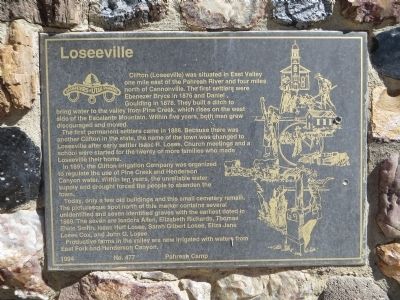
Clifton (Loseeville) was situated in East Valley one mile east of the Pahreah River and four miles North of Cannonville. The first settlers were Ebenezer Bryce in 1876 and Daniel Goulding in 1878. They built a ditch to bring water to the valley from Pine Creek which rises on the west side of the Escalante Mountain. Within five years both men grew discouraged and moved.
The first permanent settlers came in 1886. Because there was another Clifton in the state, the name of the town was changed to Loseeville after early settler Isaac H. Losee. Church meetings and a school were started for the twenty or more families who made Loseeville their home.
In 1891, the Clifton Irrigation Company was organized to regulate the use of Pine Creek and Henderson Canyon water. Within ten years the unreliable water supply and drought forced the people to abandon the town.
Today, only a few old buildings and this small cemetery remain. The picturesque spot north of this marker contains several unidentified and seven identified graves with the earliest dated in 1889 the seven are: Isadora Allen, Elizabeth Richards, Thomas Elwin Smith,
this page online
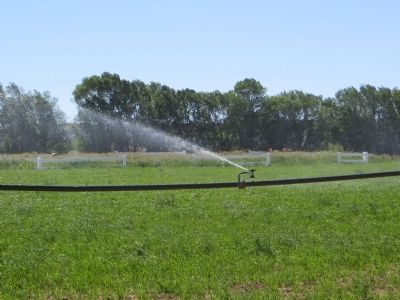
Productive farms in the valley are now irrigated with water from East Fork and Henderson Canyon.
Erected 1994 by Pahreah Camp, Daughters of Utah Pioneers. (Marker Number 477.)
Topics and series. This historical marker is listed in this topic list: Settlements & Settlers. In addition, it is included in the Daughters of Utah Pioneers series list. A significant historical year for this entry is 1876.
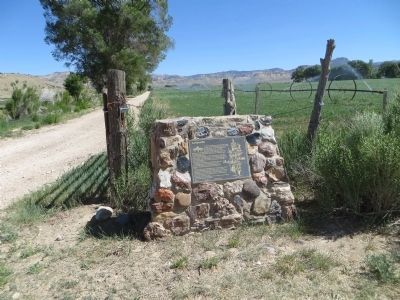
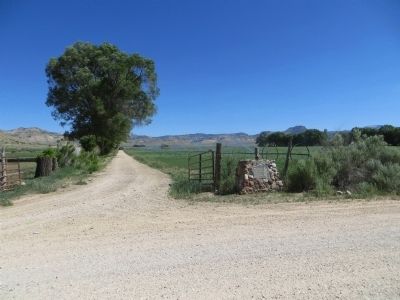
Location. 37° 37.367′ N, 112° 2.836′ W. Marker is near Tropic, Utah, in Garfield County. It is on East Center Street 2.2 miles east of Main Street, on the left when traveling east. Touch for map. Marker is in this post office area: Tropic UT 84776, United States of America. Touch for directions.

Regionally, this marker is in Canyon Country and specifically in Color Country. It is also in the American Mountain West, on the Colorado Plateau, and at the Four Corners. Globally, it is in North America, the Western Hemisphere, the Western World, and the Anglosphere. Historically, it finds itself in what was once New Spain and also Mexico’s Alta California.

Photographed by Bill Kirchner, June 13, 2014
2. Loseeville Marker
Other nearby markers. At least 8 other markers are within 4 miles of this marker, measured as the crow flies: Tropic Pioneers (approx. 2.1 miles away); Who Were the Settlers? (approx. 3.9 miles away); A Glass of Water Was a Load of Work (approx. 3.9 miles away); Working for Water (approx. 3.9 miles away); A Life in the Land (approx. 3.9 miles away); One Land, Different Peoples (approx. 3.9 miles away); A Tough Row to Hoe (approx. 3.9 miles away); Water Willow People (approx. 3.9 miles away).
Photographed by Bill Kirchner, June 13, 2014
3. Loseeville Marker
Photographed by Bill Kirchner, June 13, 2014
4. Loseeville Cemetery
Credits. This page was last revised on December 30, 2024. It was originally submitted on June 23, 2014, by Bill Kirchner of Tucson, Arizona. This page has been viewed 1,446 times since then and 55 times this year. Photos: 1, 2, 3, 4. submitted on June 23, 2014, by Bill Kirchner of Tucson, Arizona. • Syd Whittle was the editor who published this page.
