Eastville in Northampton County, Virginia — The American South (Mid-Atlantic)
Northampton County Court Green
Photographed by Beverly Pfingsten, April 20, 2008
1. Northampton County Court Green Marker
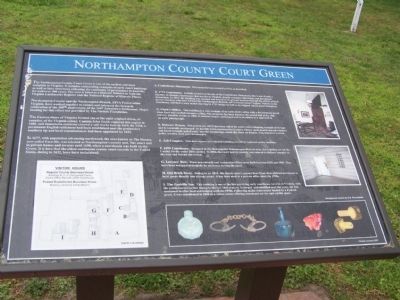
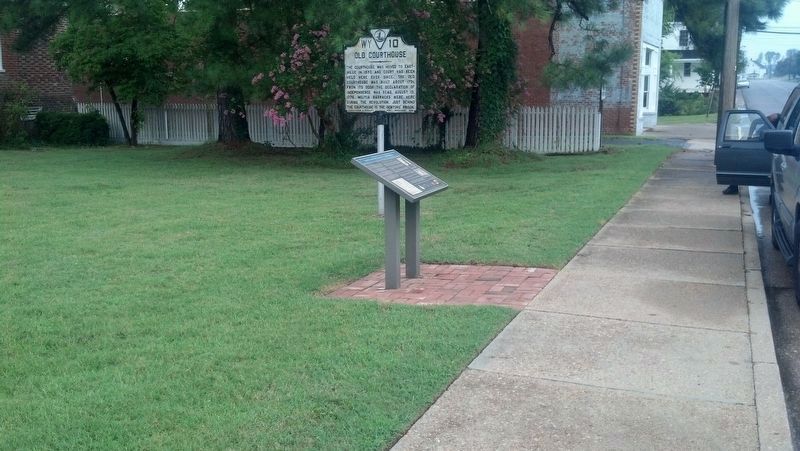
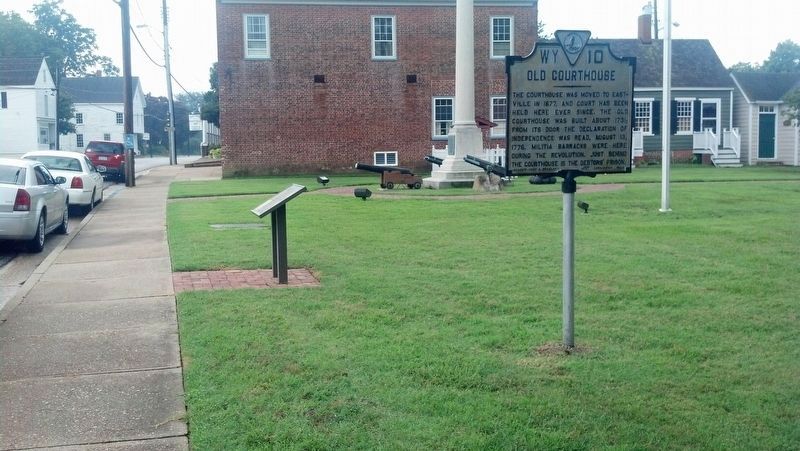
The Northampton County Court Green is one of the earliest and most complete in Virginia. It includes outstanding examples of early court buildings as well as later structures reflecting the continuity of government in Eastville for well over 300 years. The area is listed as a Historic District on both the Virginia Landmarks Register and the National Register of Historic Places.
Northampton County and the Northampton Branch, APVA Preservation Virginia, have worked together to restore and interpret the Green in celebration of the 400th anniversary of the 1607 Jamestown Settlement. Major funding for this effort was provided by the Norfolk Foundation.
The Eastern Shore of Virginia formed one of the eight original shires, or counties, of the Virginia colony. Captain John Smith explored this region in 1608, and Jamestown residents created a salt works here in 1614. By 1620, a permanent English settlement had been established near the peninsula's southern tip and local commissioners had been appointed by 1632.
In 1677, with population advancing northward, the area known as the Hornes, now called Eastville, was selected
this page online
[Insert with visiting hours and diagram:]
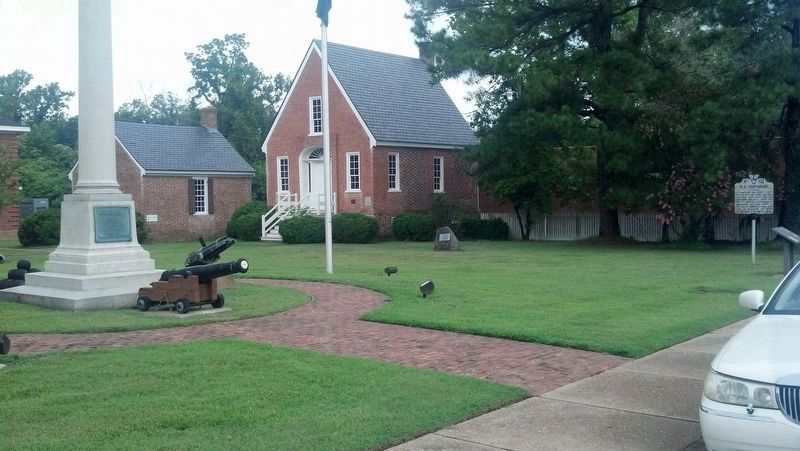
A. Confederate Monument. The memorial was created in 1913, as inscribed.
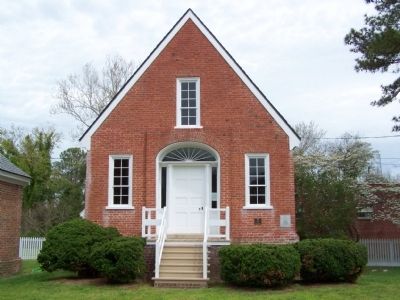
B. 1731 Courthouse. Initially located on the site of the Confederate Monument, this is one of only a handful of colonial courthouses that survive in Virginia, despite extensive alterations and threatened demolition. In 1913, the building was rescued and moved to its present location through the efforts of local preservationists who later formed the Northampton Branch, APVA Preservation Virginia. Visitors to the courthouse will find a scale model showing its 1731 design as well as an original raised-panel bookpress.
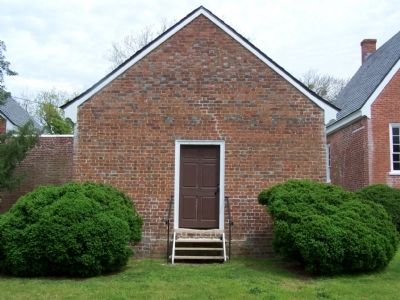
C. Clerk's Office. This building is a rare example of an early clerk's office with a fire-resistant paved stone floor and vaulted masonry ceiling. The structure has been dated to the second half of the 18th century, possibly as late as 1800. It remains largelyunchanged and is furnished as it appeared in an early photograph.Photographed by Michael C. Wilcox, July 17, 20132. Northampton County Court Green Marker
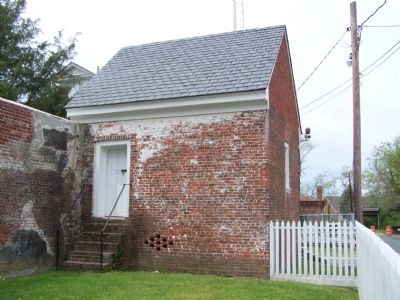
D. Debtors' Prison. This prison (ca. 1815) has been called the state's best remaining example of its type and is essentially unchanged. Its durable brick construction features a heavy door, double-barred windows and hand-wrought spiked nails. Interior furnishings, much like those on display, were limited to a straw pallet, wooden stool and chamberpot.
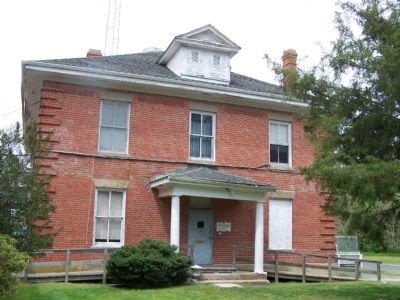
E. Jail Complex. This four-square neo-colonial building (ca. 1913) replaced earlier facilities.
F. 1899 Courthouse. Designed in the then-popular Romanesque Revival style, this building served the County for the entire 20th century. In 2006, the court and its records were moved to the new complex to the west and behind this Green.
G. Lawyers' Row. These neo-colonial and vernacular offices were built between 1820 and 1985. They have been occupied principally by attorneys serving the court.
H. Old Brick Store. Dating to ca 1810, this classic store's second floor front door allowed merchants to hoist goods directly into storage areas. It has been used as a private office since the 1990's.
I. The Eastville Inn. This buildingis one of the few surviving early courthouse taverns in Virginia, with the southernmost section dating to the late 18th century. Enlarged and modified over the years, the Inn continued to offer food and lodging until the 1950's. Following major renovations funded by a Federal grant, it was rededicated in 2000 as a visitor center offering restaurant service and exhibit space.Photographed by Michael C. Wilcox, July 17, 20133. Northampton County Court Green Marker
Erected 2007.
Topics. This historical marker is listed in these topic lists: Colonial Era • Government & Politics • Industry & Commerce • Notable Buildings • Notable Places • Settlements & Settlers. A significant historical year for this entry is 1607.
Location. This marker has been replaced by another marker nearby. It was located near 37° 21.203′ N, 75° 56.765′ W. Marker was in Eastville, Virginia, in Northampton County. It was at the intersection of Courthouse Road (Business U.S. 13) and Willow Oak Road, on the left when traveling north on Courthouse Road. Touch for map. Marker was in this post office area: Eastville VA 23347, United States of America. Touch for directions.

Regionally, this marker was on the Eastern Shore. It
Photographed by Michael C. Wilcox, July 17, 2013
4. Northampton County Court Green Marker
Other nearby markers. At least 8 other markers are within walking distance of this location: A different marker also named Northampton County Court Green (here, next to this marker); Confederate Monument - Eastville, VA (here, next to this marker); Gingaskin Indian Reservation (a few steps from this marker); Old Courthouse (a few steps from this marker); Northampton County Veteran's Memorial (a few steps from this marker); Debdeavon (a few steps from this marker); Historic Northampton County Court Bell (a few steps from this marker); Eastville Inn (within shouting distance of this marker). Touch for a list and map of all markers in Eastville.
Another marker is
Photographed by Beverly Pfingsten, April 20, 2008
5. Old Courthouse
Photographed by Beverly Pfingsten, April 20, 2008
6. Debtors' Prison
Photographed by Beverly Pfingsten, April 20, 2008
7. Clerk's Office
Photographed by Beverly Pfingsten, April 20, 2008
8. County Jail
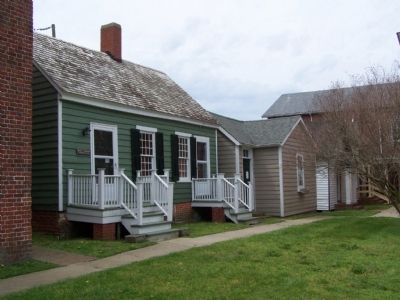
Photographed by Beverly Pfingsten, April 20, 2008
9. Lawyers' Row
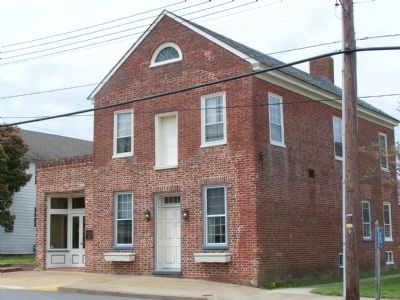
Photographed by Beverly Pfingsten, April 20, 2008
10. Old Store
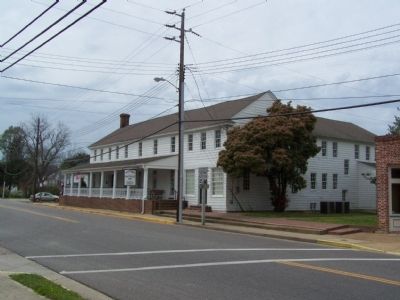
Photographed by Beverly Pfingsten, April 20, 2008
11. Eastville Inn

Photographed by Beverly Pfingsten, April 20, 2008
12. Second Courthouse with Confederate Monument
Credits. This page was last revised on June 7, 2026. It was originally submitted on May 4, 2008, by Bill Pfingsten of Bel Air, Maryland. This page has been viewed 2,758 times since then and 31 times this year. Photos: 1. submitted on May 4, 2008, by Bill Pfingsten of Bel Air, Maryland. 2, 3, 4. submitted on October 11, 2016, by Michael C. Wilcox of Winston-Salem, North Carolina. 5, 6, 7, 8, 9, 10, 11, 12. submitted on May 4, 2008, by Bill Pfingsten of Bel Air, Maryland.
