Concord in Merrimack County, New Hampshire — The American Northeast (New England)
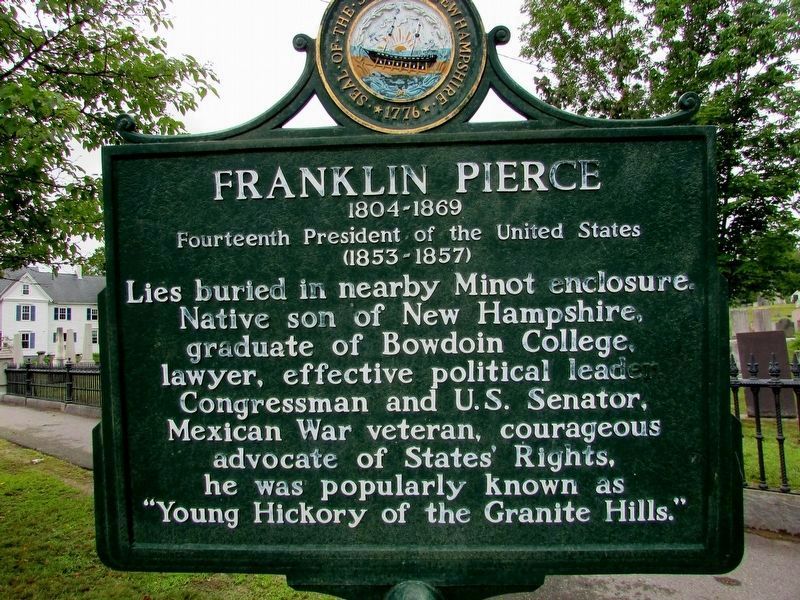
Franklin Pierce
1804 – 1869
| — | Fourteenth President of the United States (1853 – 1857) | — |
Photographed by Bill Coughlin, July 13, 2017
1. Franklin Pierce Marker
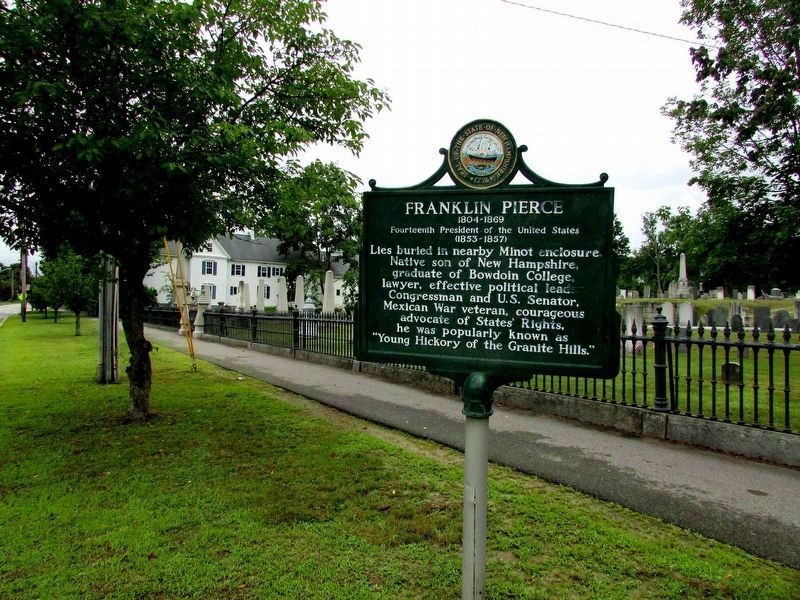
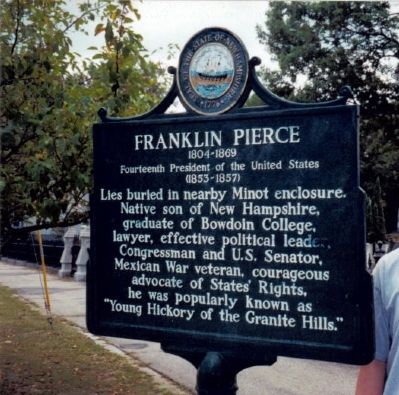
Lies buried in nearby Minot enclosure. Native son of New Hampshire, graduate of Bowdoin College, lawyer, effective political leader, Congressman and U.S. Senator, Mexican War veteran, courageous advocate of States’ Rights, he was popularly known as “Young Hickory of the Granite Hills.”
Erected by New Hampshire Division of Historical Resources. (Marker Number 080.)
Topics and series. This historical marker is listed in these topic lists: Cemeteries & Burial Sites • Government & Politics • War, Mexican-American. In addition, it is included in the Former U.S. Presidents: #14 Franklin Pierce, and the New Hampshire Historical Highway Markers series lists.
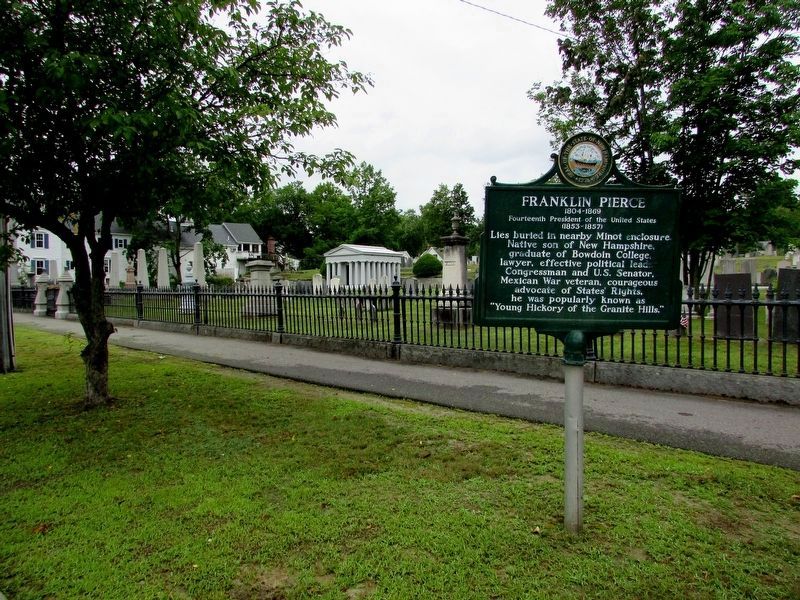
Location. 43° 12.893′ N, 71° 32.611′ W. Marker is in Concord, New Hampshire, in Merrimack County. It is on N State Street, on the left when traveling north. Marker is at the entrance to the Old North Cemetery. Touch for map. Marker is in this post office area: Concord NH 03301, United States of America. Touch for directions.

Regionally, this marker is in the American Northeast and in New England. Globally,
this page online
Other nearby markers. At least 8 other markers are within walking distance of this marker: Walker School 1915 (about 300 feet away, measured in a direct line); Walker School (about 500 feet away); Ratification of the Federal Constitution (about 500 feet away); New Hampshire’s First Meeting House (about 500 feet away); Site of House (about 700 feet away); First Session of the Legislature at Concord (about 700 feet away); The First Garrison in Concord (about 700 feet away); The Pierce Manse (about 800 feet away). Touch for a list and map of all markers in Concord.
Photographed by Bill Coughlin, July 13, 2017
2. Franklin Pierce Marker
Photographed by Bill Coughlin, July 13, 2017
3. Marker at the Old North Cemetery
Photographed by Bill Coughlin, September 4, 2004
4. Franklin Pierce Marker
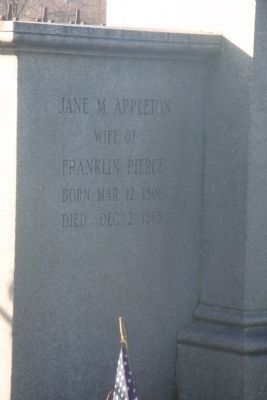
Photographed by Pat Filippone, November 26, 2010
5. Franklin Pierce Marker
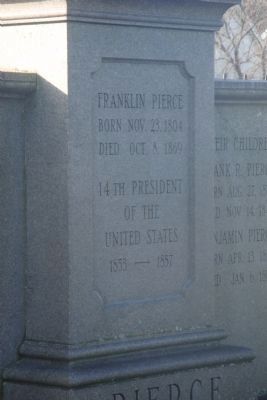
Photographed by Pat Filippone, November 26, 2010
6. Franklin Pierce Marker
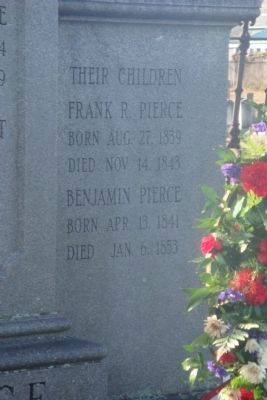
Photographed by Pat Filippone, November 26, 2010
7. Franklin Pierce Marker
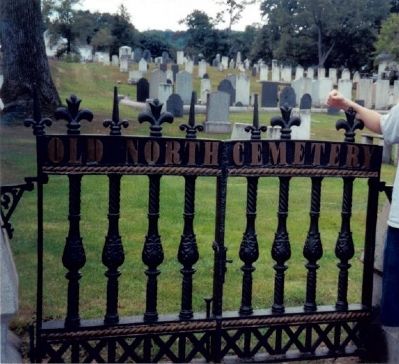
Photographed by Bill Coughlin, September 4, 2004
8. Old North Cemetery
President Franklin Pierce is laid to rest in this cemetery. This photo was taken from near the marker.
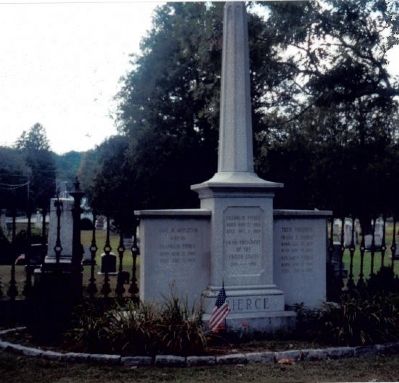
Photographed by Bill Coughlin, September 4, 2004
9. Grave of Franklin Pierce
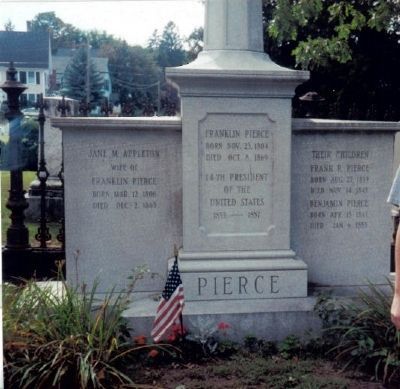
Photographed by Bill Coughlin, September 4, 2004
10. Closeup of Pierce's Gravestone
President Pierce, his wife and children are buried at this site.
Photographed by Allen C. Browne, August 9, 2015
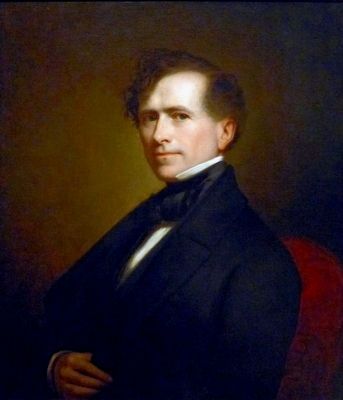
11. Franklin Pierce
This 1853 Portrait of Franklin Pierce by George A. P. Healy hangs in the National Portrait Gallery in Washington. DC.
“In 1852, Franklin Pierce seemed to his fellow Democrats to be an ideal choice for the presidency. A northerner with southern sympathies, Pierce could seemingly engender credibility in both regions in a year marked by continuing debate over slavery. But his willingness to listen to proslavery extremists served the country poorly once he was in office. The most obvious case in point was his approval of the Kansas-Nebraska Act in 1854, which allowed slaveholders to settle in an area once closed to slavery. The result was armed violence in Kansas and an escalation in hostilities between North and South. Northerners could not find words harsh enough to describe him: Ralph Waldo Emerson, for example, accused him of ’imbecility.’
George P. A. Healy derived the original version of this image from sittings that took place in Boston in November 1852, shortly after Pierce's election was confirmed. At the same time, Healy was painting for Pierce a likeness of the president-elect's campaign biographer and longtime friend Nathaniel Hawthorne.” — National Portrait Gallery
“In 1852, Franklin Pierce seemed to his fellow Democrats to be an ideal choice for the presidency. A northerner with southern sympathies, Pierce could seemingly engender credibility in both regions in a year marked by continuing debate over slavery. But his willingness to listen to proslavery extremists served the country poorly once he was in office. The most obvious case in point was his approval of the Kansas-Nebraska Act in 1854, which allowed slaveholders to settle in an area once closed to slavery. The result was armed violence in Kansas and an escalation in hostilities between North and South. Northerners could not find words harsh enough to describe him: Ralph Waldo Emerson, for example, accused him of ’imbecility.’
George P. A. Healy derived the original version of this image from sittings that took place in Boston in November 1852, shortly after Pierce's election was confirmed. At the same time, Healy was painting for Pierce a likeness of the president-elect's campaign biographer and longtime friend Nathaniel Hawthorne.” — National Portrait Gallery
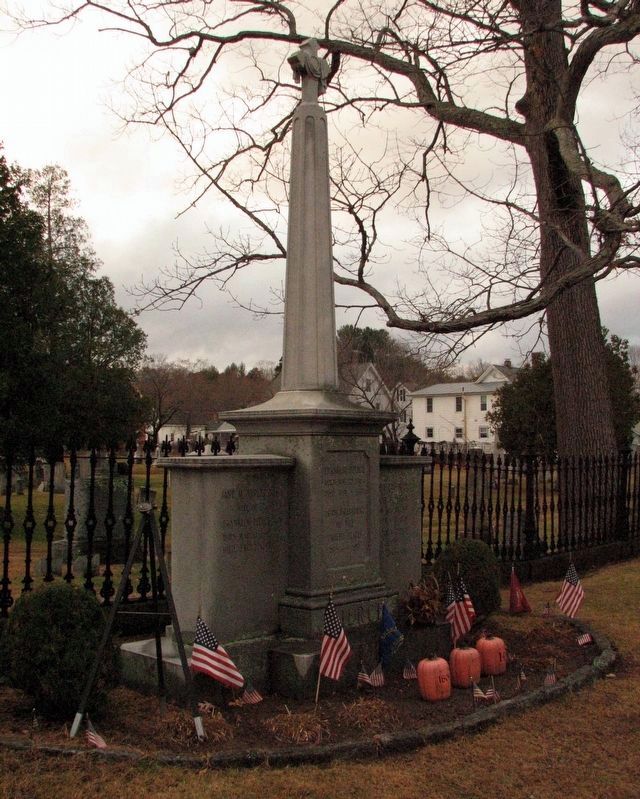
Photographed by Marc Posner, November 25, 2014
12. Franklin Pierce Memorial with Pumpkins
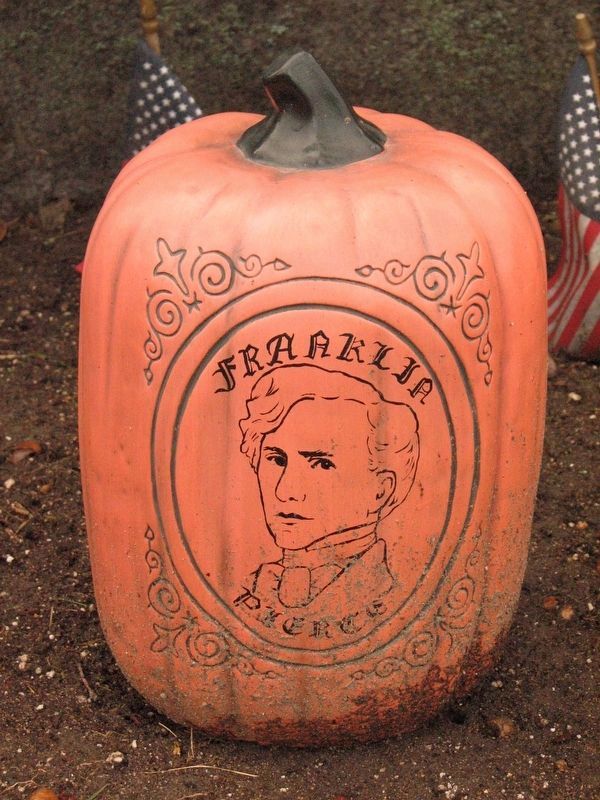
Photographed by Marc Posner, November 25, 2014
13. Franklin Pierce pumpkin
Credits. This page was last revised on March 10, 2026. It was originally submitted on July 29, 2009, by Bill Coughlin of Woodland Park, New Jersey. This page has been viewed 3,753 times since then and 124 times this year. Last updated on October 8, 2014, by Kevin Craft of Bedford, Quebec. Photos: 1, 2, 3. submitted on July 13, 2017, by Bill Coughlin of Woodland Park, New Jersey. 4. submitted on July 29, 2009, by Bill Coughlin of Woodland Park, New Jersey. 5, 6, 7. submitted on May 24, 2015, by Pat Filippone of Stockton, California. 8, 9, 10. submitted on July 29, 2009, by Bill Coughlin of Woodland Park, New Jersey. 11. submitted on September 19, 2015, by Allen C. Browne of Silver Spring, Maryland. 12, 13. submitted on April 16, 2024, by Marc Posner of Somerville, Massachusetts. • Bill Pfingsten was the editor who published this page.
