Bladensburg in Prince George's County, Maryland — The American Northeast (Mid-Atlantic)
Undaunted In Battle
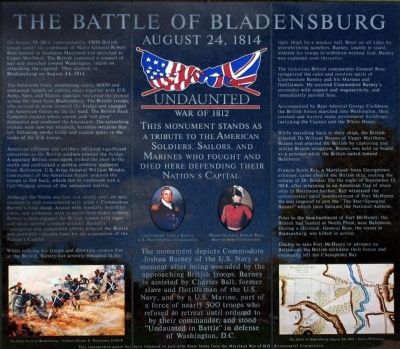
The Battle of Bladensburg
| — | August 24, 1814 | — |
Photographed by Allen C. Browne, October 18, 2014
1. Undaunted In Battle Marker
War of 1812
This Monument Stands as
A Tribute to the American
Soldiers, Sailors, and
Marines who fought and
Died here defending their
Nation's Capital
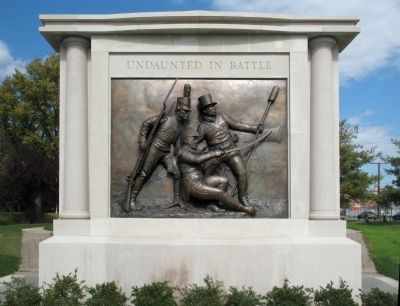
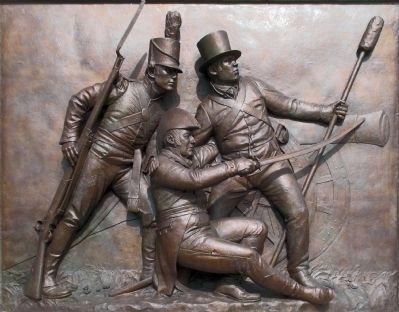
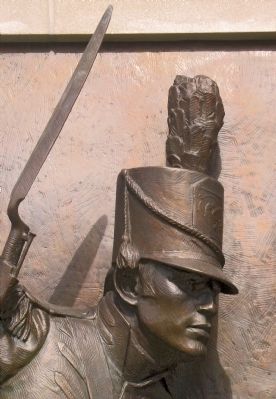
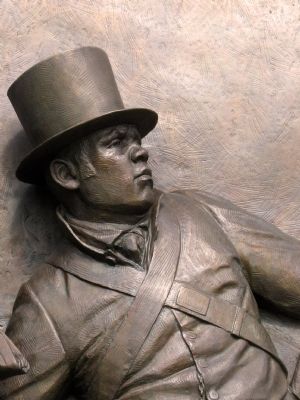
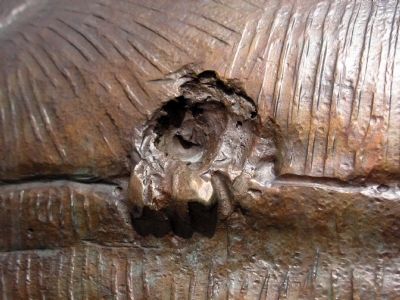
This monument depicts Commodore Joshua Barney of the U.S. Navy a moment after being wounded by approaching British troops. Barney is assisted by Charles Ball, former slave and flotillaman of the U.S. Navy, and by a U.S. Marine, part of a force of nearly 500 troops who refused to retreat until ordered to by their commander, and stood "Undaunted in Battle" in defense of Washington, D.C.
On August 19, 1814, Approximately 4500 British troops under the command of Major General Robert Ross landed in Southern Maryland and marched to Upper Marlboro. The British convened a council of war and marched toward Washington, intent on attacking the capital. They arrived in Bladensburg on August 24, 1814.
The American force, numbering nearly 6000 and composed largely of militia units together with U.S. Army, Navy, and Marine regulars, occupied the ground across the river from Bladensburg. The British troops, who arrived at noon, crossed the bridge and engaged the American
this page online
American riflemen and artillery inflicted significant causalities as the British soldiers crossed the bridge. A separate British contingent forded the river to the north and outflanked a militia artillery regiment from Baltimore. U.S. Army General William Winder, commander of the American forces, ordered the troops to fall back, which led to confusion and a full-fledged retreat of the untrained militia.
Although the battle was lost and nearly over, an epic moment is still remembered with pride — Commodore Barney's final stand. Armed with muskets, boarding pikes, and cutlasses, with support from heavy cannon, Barney's men engaged the British troops with vigor and made several counter-attacks. Barney's courageous an undaunted efforts delayed the British and provided valuable time for the evacuation of the Nation's Capital.
While rallying his troops and directing
Photographed by Allen C. Browne, October 18, 2014
2. Undaunted In Battle Monument
The victorious British commander General Ross recognized the valor and resolute spirit of Commodore Barney and his Marines and flotillamen. He received Commodore Barney's surrender with respect and magnanimity, and immediately paroled him.
Accompanied by Rear Admiral George Cockburn, the British forces marched into Washington, then torched and burned many government buildings, including the Capitol and the White House.
While marching back to their ships, the British arrested Dr. William Beanes of Upper Marlboro. Beanes had angered the British by capturing and jailing British stragglers. Beanes was held on board as a prisoner while the British sailed toward Baltimore.
Francis Scott Key, a Maryland-born Georgetown attorney, came aboard the British ship, seeking the release of Dr. Beanes. On the night of September 13, 1814, after returning to an American flag of truce ship in Baltimore harbor.
Photographed by Allen C. Browne, October 18, 2014
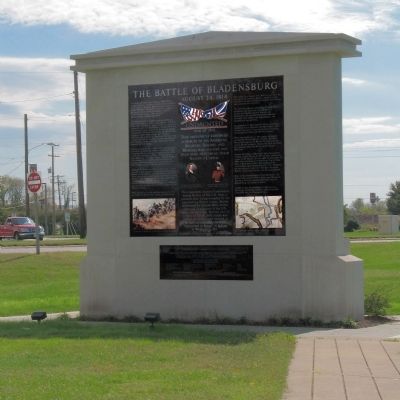
3. Undaunted In Battle Marker
Prior to the bombardment of Fort McHenry, the British had landed at North Point, near Baltimore. During a skirmish, General Ross, the victor at Bladensburg, was killed in action.
Unable to take Fort McHenry or advance on Baltimore, the British withdrew their forces and eventually left the Chesapeake Bay.
This interpretive panel has been financed in part with State funds from the Maryland War of 1812 Bicentennial Commission.
Erected 2014 by Aman Trust.
Topics. This historical marker is listed in this topic list: War of 1812. A significant historical date for this entry is September 13, 2000.
Location. 38° 56.411′ N, 76° 56.469′ W. Marker is in Bladensburg, Maryland, in Prince George's County. It can be reached from the intersection of Bladenburg Road (U.S. 450) and Baltimore Avenue (U.S. 1) when traveling west. This interpretive panel is on the back of the Bladensburg Battle monument in Balloon Park. Touch for map. Marker is in this post office area: Bladensburg MD 20710, United States
Photographed by Allen C. Browne, October 18, 2014
4. Undaunted In Battle
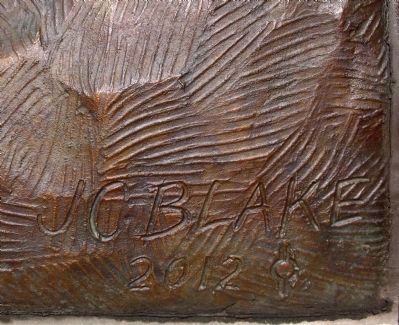
This Sculpture by local artist Joanna Blake depicts Joshua Barney at the moment of his wounding accompanied by flotillaman Charles Ball and a Marine. Myron Peterson posed for Barney; Robert Stuart portrayed Charles Ball and Gunnery Sergeant Tom Williams posed as the Marine.

Regionally, this marker is in the Washington Metropolitan Area. It is also in the American South, specifically in the Upper South, in the Mid-Atlantic, and on the Eastern Seaboard. Globally, it is in the North Atlantic Region, North America, the Western Hemisphere, the Western World, and the Anglosphere. Historically, it finds itself in what was once one of the original Thirteen Colonies and also the Antebellum South.
Other nearby markers. At least 8 other markers are within walking distance of this marker: The Road to the Capital (within shouting distance of this marker); Bladensburg Monuments (about 300 feet away, measured in a direct line); British Advance (about 300 feet away); Peace Cross (about 300 feet away); George Washington House (about 300 feet away); Veterans Memorial (about 400 feet away); World War II Honor Roll (about 400 feet away); Indian Queen Tavern (about 400 feet away). Touch for a list and map of all markers in Bladensburg.
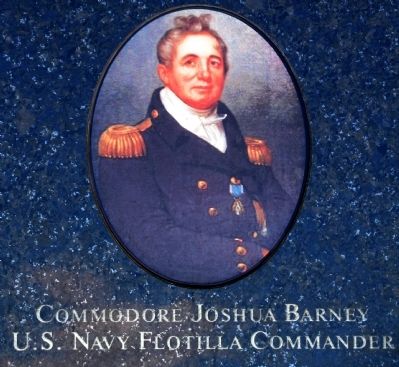
Photographed by Allen C. Browne, October 18, 2014
5. Commodore Joshua Barney
U.S. Navy Fotilla Commander
U.S. Navy Fotilla Commander
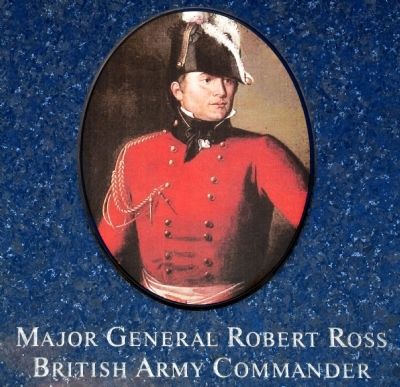
Photographed by Allen C. Browne, October 18, 2014
6. Major General Robert Ross
British Army Commander
British Army Commander

Photographed by Allen C. Browne, October 18, 2014
7. The Final Stand at Bladensburg
– Colonel Charles H. Waterhouse USMCR
– Colonel Charles H. Waterhouse USMCR
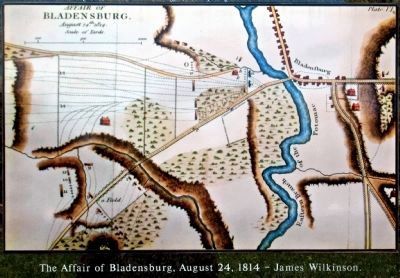
Photographed by Allen C. Browne, October 18, 2014
8. The Affair of Bladensburg, August 24, 1814
– James Wilkinson.
– James Wilkinson.
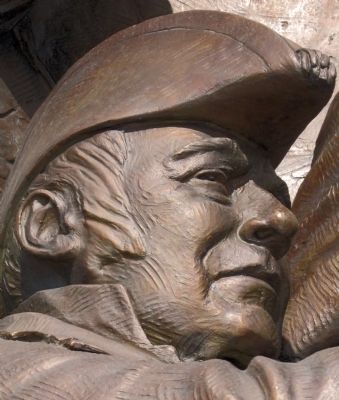
Photographed by Allen C. Browne, October 18, 2014
9. Joshua Barney
Photographed by Allen C. Browne, October 18, 2014
10. A Marine
Photographed by Allen C. Browne, October 18, 2014
11. Charles Ball
Photographed by Allen C. Browne, October 18, 2014
12. Barney's Wound
Photographed by Allen C. Browne, October 18, 2014
13. J.C. Blake 2012
Joanna Campbell Blake's signature on the "Undaunted in Battle" sculpture
Credits. This page was last revised on June 16, 2016. It was originally submitted on October 20, 2014, by Allen C. Browne of Silver Spring, Maryland. This page has been viewed 2,064 times since then and 144 times this year. Photos: 1, 2, 3, 4, 5, 6, 7, 8, 9, 10, 11, 12, 13. submitted on October 20, 2014, by Allen C. Browne of Silver Spring, Maryland. • Bill Pfingsten was the editor who published this page.
