Moran in Shackelford County, Texas — The American South (West South Central)
Moran
Photographed by Duane Hall, December 29, 2014
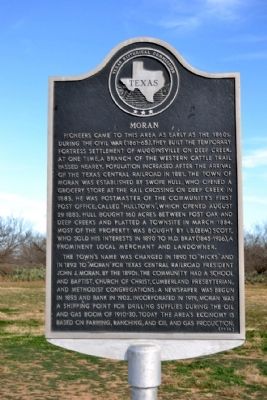
1. Moran Marker
Pioneers came to this area as early as the 1860s. During the Civil War (1861-65), they built the temporary fortress settlement of Mugginsville on Deep Creek. At one time, a branch of the Western Cattle Trail passed nearby. Population increased after the arrival of the Texas Central Railroad in 1881. The town of Moran was established by Swope Hull, who opened a grocery store at the rail crossing on Deep Creek in 1883. He was postmaster of the community’s first post office, called “Hulltown”, which opened August 29, 1883. Hull bought 160 acres between Post Oak and Deep Creeks and platted a townsite in March 1884. Most of the property was bought by I.B. (Bem) Scott, who sold his interests in 1890 to M.D. Bray (1845-1926), a prominent local merchant and landowner.
The town’s name was changed in 1890 to “Hicks” and in 1892 to “Moran” for Texas Central Railroad president John J. Moran. By the 1890s, the community had a school and Baptist, Church of Christ, Cumberland Presbyterian, and Methodist congregations. A newspaper was begun in 1895 and bank in 1902. Incorporated in 1919, Moran was a shipping point for drilling supplies during the oil and gas boom of 1910-30. Today the area’s economy is based on farming, ranching, and oil and gas production.
Erected 1976 by Texas Historical Commission. (Marker Number 3468.)
Topics. This historical marker is listed in these topic lists: Railroads & Streetcars • Settlements & Settlers. A significant historical month for this entry is March 1884.
Location. 32° 32.881′ N, 99° 9.827′ W. Marker is in Moran, Texas, in Shackelford County. It is on State Highway 6 south of Post Oak Avenue (Farm to Market Road 576), on the right when traveling north. Touch for map. Marker is in this post office area: Moran TX 76464, United States of America. Touch for directions.

Regionally,
this page online
Other nearby markers. At least 8 other markers are within 13 miles of this marker, measured as the crow flies: Cottle No. 1 (here, next to this marker); Granville E. Waters (approx. 1.4 miles away); Moran Cemetery (approx. 1.4 miles away); Moran Church of Christ (approx. 1.4 miles away); Ibex (approx. 9½ miles away); Dothan Cemetery (approx. 11 miles away); Hittson Ranch Headquarters on Battle Creek (approx. 11½ miles away); Military Telegraph Line (approx. 12.9 miles away). Touch for a list and map of all markers in Moran.
Another marker is no longer nearby. Burkett Pecan Tree (was approx. 11.8 miles away but has been confirmed missing).
Also see . . .
1. Moran, TX. From the Texas State Historical Association’s “Handbook of Texas Online”. (Submitted on January 3, 2015.)
2. Western Trail.
Photographed by Duane Hall, December 29, 2014
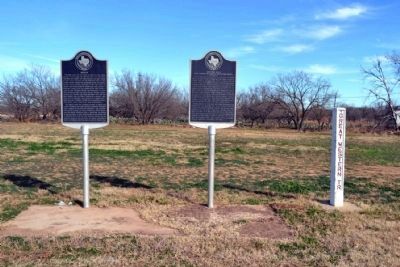
2. Moran and Cottle No. 1 Markers
Photographed by Duane Hall, December 29, 2014
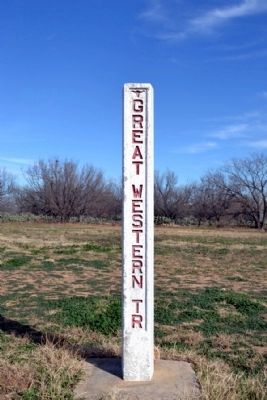
3. Western Cattle Trail Marker
Photographed by Duane Hall, December 29, 2014
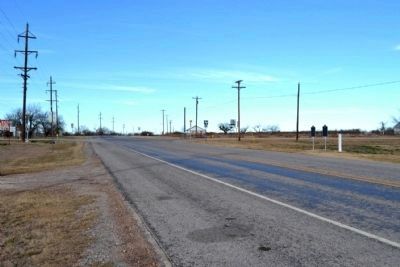
4. View to North Towards Intersection of State Highway 6 and Farm to Market Road 576
Photographed by Duane Hall, December 29, 2014
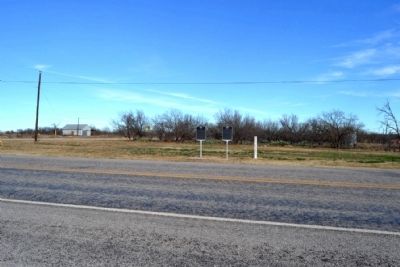
5. View to East Across State Highway 6
Photographed by Duane Hall, December 29, 2014
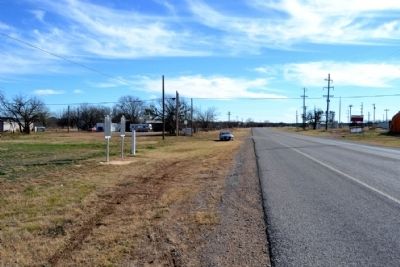
6. View to South Along State Highway 6
Credits. This page was last revised on December 3, 2024. It was originally submitted on January 3, 2015, by Duane Hall of Abilene, Texas. This page has been viewed 1,299 times since then and 68 times this year. Photos: 1, 2, 3, 4, 5, 6. submitted on January 3, 2015, by Duane Hall of Abilene, Texas.
