Monterey in Monterey County, California — The American West (Pacific Coastal)
Custom House
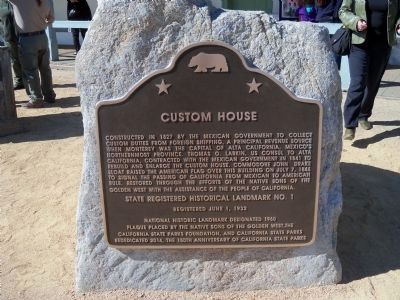
Photographed by James King, October 5, 2014
1. Custom House Marker
State Registered Historical Landmark No. 1, registered June 1, 1932.
National Historic Landmark designated 1960.
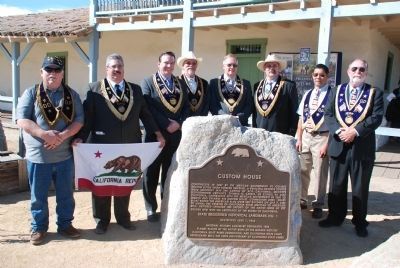
Erected 2014 by Native Sons of the Golden West, and California State Parks. (Marker Number 1.)
Topics and series. This historical marker is listed in these topic lists: Architecture • Government & Politics • Industry & Commerce. In addition, it is included in the California Historical Landmarks, the National Historic Landmarks, and the Native Sons/Daughters of the Golden West series lists. A significant historical date for this entry is June 1, 1933.
Location. 36° 36.205′ N,
this page online

Regionally, this marker is on the Central Coast and specifically on the Coast Ranges. It is also on the American Pacific Coast. Globally, it is in North America, on the Ring of Fire, on the Pacific Rim, in the Western Hemisphere, in the Western World, and in the Anglosphere. Historically, it finds itself in what was once New Spain and also Mexico’s Alta California.
Other nearby markers. At least 8 other markers are within walking distance of this marker: Site of Original Flagstaff (a few steps from this marker); a different marker also named The Custom House (a few steps from this marker); Sloat's Landing (a few steps from this marker); Monterey Custom House (within shouting distance of this marker); Old Fisherman's Wharf (within shouting distance of this marker); a different
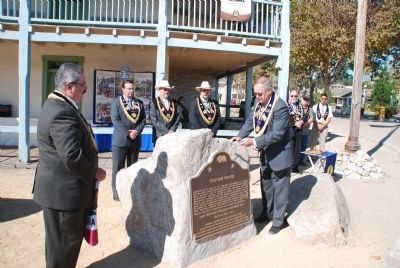
Photographed by Patricia Clark-Gray, October 5, 2014
2. Sealing the Plaque
Past Grand President Barney Noel places ceremonial mortar seal onto the plaque.
Another marker is no longer nearby. Custom House (was within shouting distance of this marker but has been replaced with another marker now near it).
Regarding Custom House. Plaque Rededication/Ribbon Cutting Remarks by Amy H. Crain, State Historian II, Office of Historic Preservation, California State Parks, Sunday October 5, 2014:
The California Historical Landmarks Program is the oldest of California’s three registration programs, created in 1931. The very first Landmark, the Custom House, was registered in 1932. The State Historical Resources Commission, originally the California Historical Landmarks Advisory Committee, reviews nominations, for final approval by the California State Parks Director. As part of the 150th anniversary of California State Parks, the Office of Historic Preservation introduced the 150th Legacy Landmarks Project to designate new Landmarks,
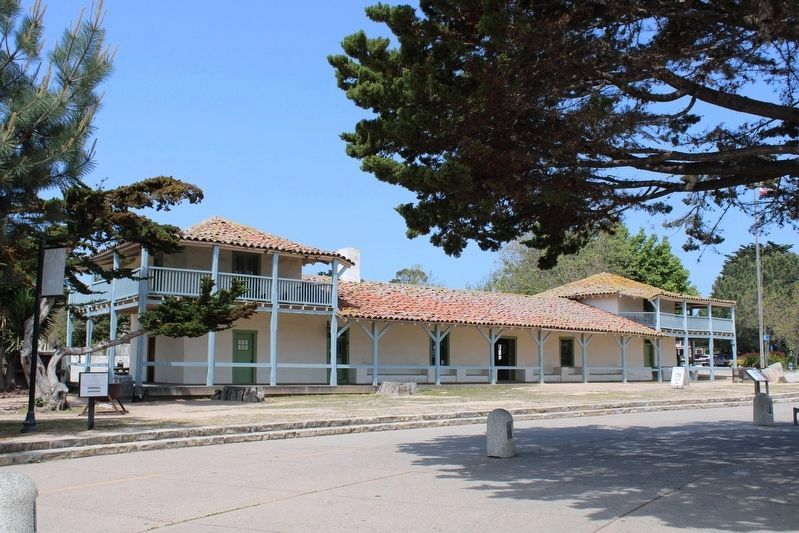
Photographed by Joseph Alvarado, April 26, 2022
3. Custom House
In addition to the Custom House, this included updates to California Historical Landmarks Number
• 179, Castro-Breen Adobe and 180, Plaza Hotel, in San Benito County
• 210, Camilo-Ynitia Adobe, in Marin County
• 368, Reid-Baldwin Adobe, in Los Angeles County, and
• 390, Bridgeport Historic District, in Nevada County
New California Historical Landmarks began with Number 1050, Crystal Cove Historic District in Orange County, approved in November and dedicated in January, followed by
• 1051, Mountain Quarries Railroad Bridge, in El Dorado and Placer Counties
• 1052, Asilomar, in Monterey County
• 1053, Sierra Railway Shops, in Tuolumne County, and
• 1054, Tomo-Kahni, in Kern County
A property must meet at least one of the registration criteria.
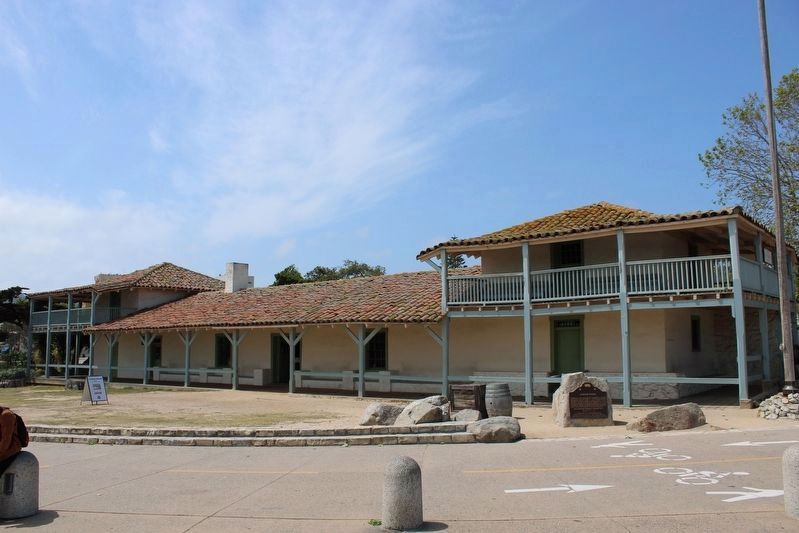
Photographed by Joseph Alvarado, April 26, 2022
4. Custom House
• The first, last, only, or most significant historical property of its type in the region: Southern, Central, and Northern California.
• Associated with an individual or group having a profound influence on the history of California.
• Or notable for its architecture or design
The original nomination for the Custom House recognized the resource for its role in Commodore John D. Sloat’s proclamation of California as part of the United States.
When the Custom House was identified as one of the Parks’ California Historical Landmarks to be updated, I volunteered, because this building represents a personal landmark, a turning point, and the start of a journey that brought me back to Monterey today. Twenty years ago, my husband and I saw each other, without meeting, in the Custom House during Christmas in the Adobes. Steven was a member of the Alta California Dance Company, performing the annual holiday fandango. I was invited to join the dance company, and started rehearsals one week after Steven had knee surgery. We finally met ten months after the fandango. It was at a Monterey State Historic Park event across the plaza in
Photographed by Joseph Alvarado, April 26, 2022
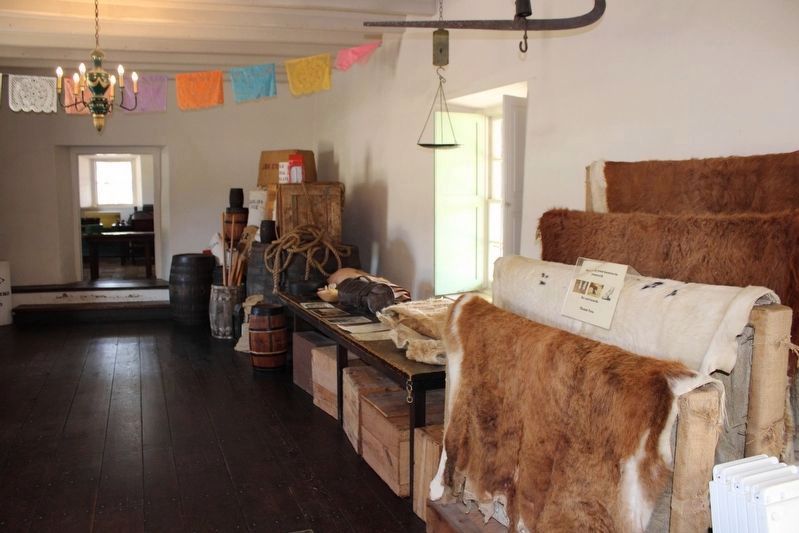
5. Custom House Interior
From State Historic Park volunteer to State Park Historian, it was my honor and privilege to update the Custom House California Historical Landmark nomination, to document the building’s significance as a physical representation of an important phase in the history of California and the United States, a period of great transition. The building played a critical role in the functioning of the Mexican government, as duties from foreign commerce were the prime source of revenue. It was the site of the official takeover of California by the U.S. military in 1846, and remained an important building during the transition to American rule.
Though its importance waned following the Gold Rush and the later moving of customs activities to San Francisco, the building became a symbol of an earlier age.
The Custom House was a catalyst in the preservation movement
Photographed by Joseph Alvarado, April 26, 2022
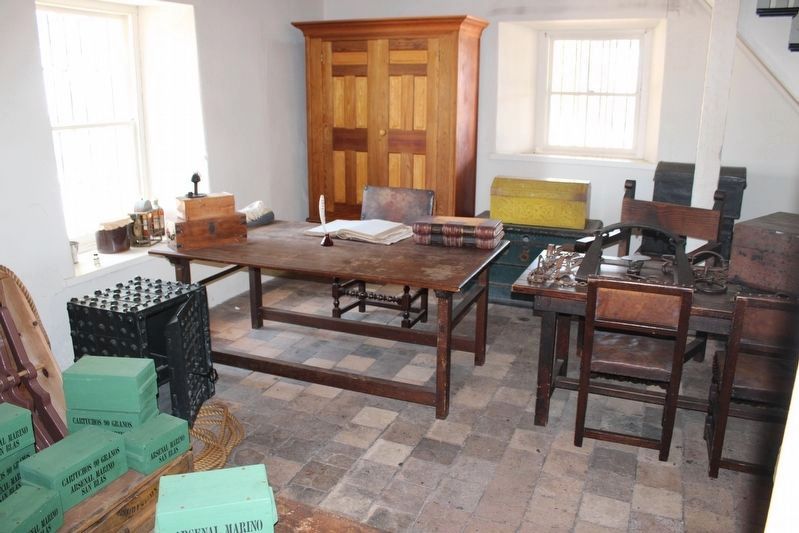
6. Custom Official's Office
Photographed by Joseph Alvarado, April 26, 2022
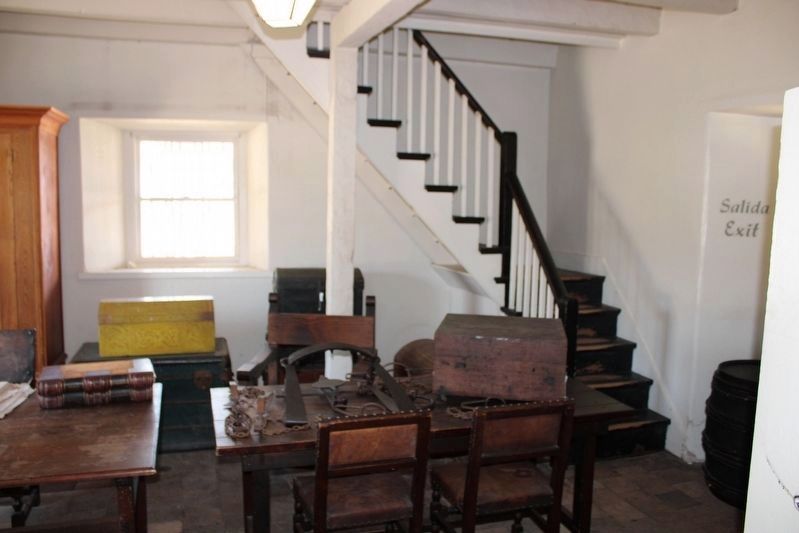
7. Custom Official's Office
Photographed by Patricia Clark-Gray, October 5, 2014
8. Native Sons of the Golden West
Credits. This page was last revised on July 16, 2025. It was originally submitted on October 6, 2014, by James King of San Miguel, California. This page has been viewed 1,158 times since then and 96 times this year. Last updated on April 6, 2015, by James King of San Miguel, California. Photos: 1, 2. submitted on October 6, 2014, by James King of San Miguel, California. 3, 4. submitted on April 27, 2022, by Joseph Alvarado of Livermore, California. 5, 6, 7. submitted on June 28, 2022, by Joseph Alvarado of Livermore, California. 8. submitted on October 6, 2014, by James King of San Miguel, California. • Bill Pfingsten was the editor who published this page.
