Riverside in Montgomery County, Ohio — The American Midwest (Great Lakes)
1st and 7th Emergency Rescue Squadrons
1943 – 1945
| — | B-17 with Life Boat [and] OA-10 | — |
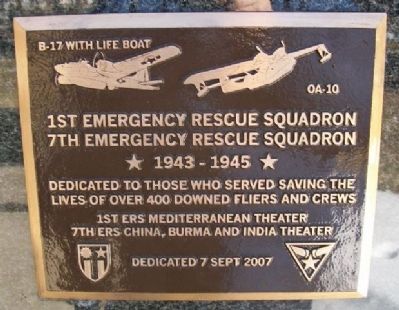
Photographed by William Fischer, Jr., March 5, 2010
1. 1st and 7th Emergency Rescue Squadrons Marker
lives of over 400 downed fliers and crews
1st ERS Mediterranean Theater
7th ERS China, Burma and India Theater
Dedicated 7 Sept 2007
Erected 2007.
Topics. This memorial is listed in these topic lists: Air & Space • Patriots & Patriotism • War, World II. A significant historical date for this entry is September 7, 2007.
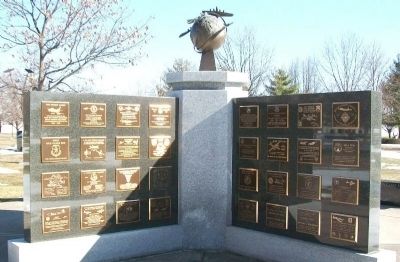
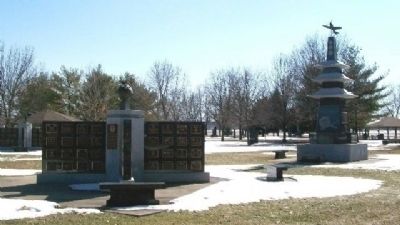
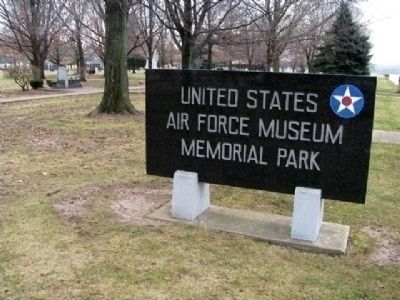
Location. 39° 46.778′ N, 84° 6.757′ W. Memorial is in Riverside, Ohio, in Montgomery County. It can be reached from Spaatz Street. Marker (Memorial Wall #2, 055) is in the Memorial Park of the National Museum of the United States Air Force, with museum access off Springfield Street. Touch for map. Memorial is at or near this postal address: 1100 Spaatz Street, Dayton OH 45431, United States of America. Touch for directions.

Regionally, this memorial is in the Dayton Metro and in the Miami Valley. It is also in the American Midwest and in the Corn Belt. Globally, it is in North America, the Western Hemisphere, the Western World, and the Anglosphere.
this page online
Other nearby markers. At least 8 other markers are within walking distance of this marker: 15th Troop Carrier Squadron (here, next to this marker); 13th “Jungle” Air Force (here, next to this marker); USAF Pilot Class 49C (here, next to this marker); The EC-47 ARDF Mission (here, next to this marker); USAF Pilot Class 48-C (here, next to this marker); B/G Edward J Hopkins (here, next to this marker); 9th Photo Recon Squadron (here, next to this marker); Marvin T. Koerner, P.E. (here, next to this marker). Touch for a list and map of all markers in Riverside.
Also see . . .
1. Tales of Terror - WWII-Europe-CBI. Accounts written by members of the First and Seventh Emergency Rescue Squadrons, collected in 2001 by Chuck Dill. The 62 page spiral-bound book begins with this squadron history:
The 1st ERS was formed at Hunter Field, Savannah, GA in late summer of 1943,(Submitted on September 25, 2024, by Susan Harris of Petersburgh, New York.)comprised of nine PBY5A’s (Army designation OA10) and 7-man flight crews---pilot, co-pilot, navigator, 1st engineer, 2nd engineer and radar and radio operator/gunners. An EM medic was added later. It was activated in compliance with Gen. H. H. Arnold’s order that such a unit be organized and sent to the Mediterranean Theatre of Operations with the least possible delay.Photographed by William Fischer, Jr.2. NMUSAF Memorial Wall #2
The squadron was transferred to Boca Raton, FL for transition training, where it was joined by ground crew specialists and headquarters personnel. The pilots and engineers had previously been trained by the Navy at Pensacola, FL. Simulated rescue flights were flown, cross country, navigation and practice water landing missions on the Atlantic and Lake Okeechobee. After several months the squadron, consisting of 3 operational flights was shipped out to Camp Patrick Henry, VA. After final check of equipment and personnel, the squadron, comprised of 46 officers and 159 enlisted men, proceeded overseas from there in late January 1944 on the S.S. General Billy Mitchell.Photographed by William Fischer, Jr.3. NMUSAF Memorial Wall #2
Without convoy, the Mitchell left Hampton Roads, VA in March 1944 and made the crossing without mishap, arriving at Camp Don Passage, Casablanca, French Morocco. Ground crews were transported in the infamous 40x8 rail cars, from Casablanca to Bizerte’s Sidi Ahmed Air Base, and on to Corsica by LST. Flight crews, however proceeded by rail as far as Port Lyautey, Naval Air Station, where new PBY aircraft were picked up and flown to bases at Ajaccio, Corsica, (C Flight) Foggia, Italy (B Flight) and Grottaglie, Italy, (A Flight). The 3 flights made up of 3 planes and approximately 70 men each were commanded by Lt. Col. Pardue. Flight C conducted the first operational mission and A & B Squadrons began coverage of the Adriatic Sea for survivors of ditched bombers from Balkan raids.
In the following year approximately 300-350 survivors of the USAF, RAF, France, other allies and even German crews were rescued, often under extreme weather conditions and frequent fighter enemy action and shore battery shelling. One Catalina, disabled fromshore gunfire after the rescue of a downed aircrew, then joined their “recent pick-ups” in rubber dinghys until rescued by a British Patrol boat.Photographed by William Fischer, Jr.4. NMUSAF Memorial Park SignMemorial Park map and marker listings
Click for more information.
In 1944, with bomber bases moving north and minimum over water flights, the 1st ERS was split with half staying in the Mediterranean while the other half transferred to China-Burma-India under the 10th AF. Our new commander was Lt. Col. Prim. Leaving Europe, Flights A & C ground personnel left Bari, Italy by Liberty Ship for India, docking in Oran, Algeria, Port Said and Suez. Prevented from traversing the Suez Canal, trucks transported them to Cairo, Egypt for a week stay, then back to Suez and aboard the same ship, enroute to Bombay, India. Boarding a train to Calcutta, a river boat and again a train, they finally arrived at Agartala, India about a week or so after the flight crews.
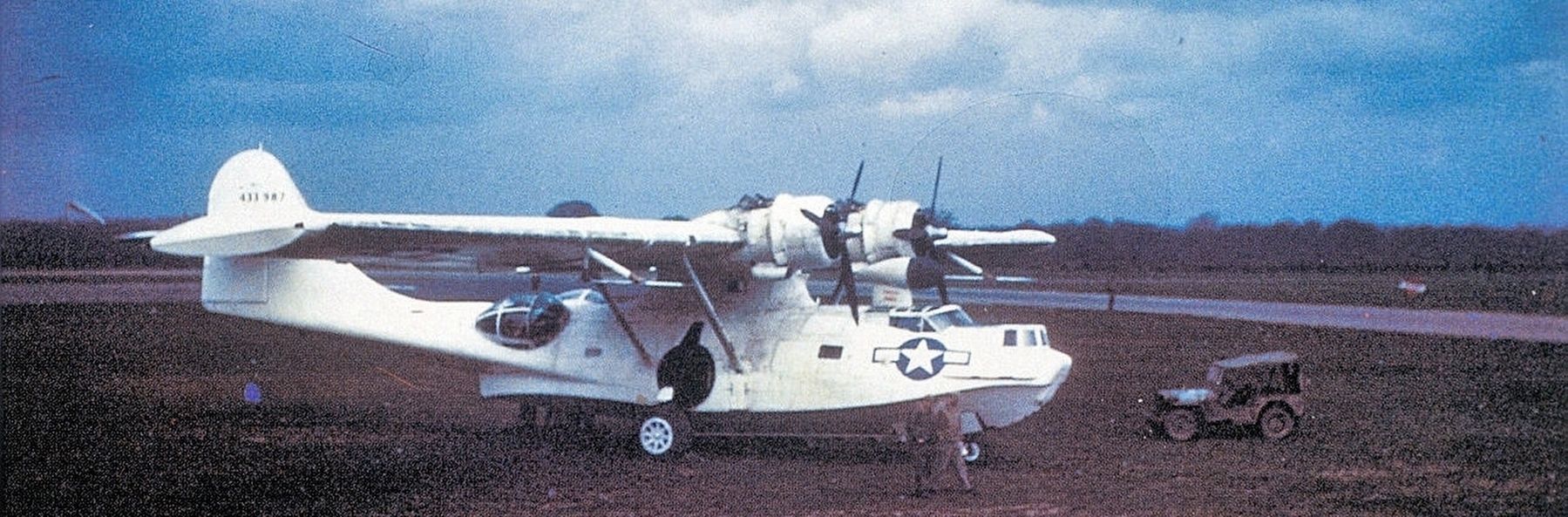
Meanwhile flight crews were flown to India via an Egyptian stopover and a week’s delay in Karachi, India. Operating from a British base at Agartala, India, the redesignated 7th ERS effected additional rescuesfor about 6 months. In India, we were joined by B-17’s with life boats slung beneath their fuselage. After 9 months, the entire squadron was again transferred, this time to Okinawa, near Japan by troopship via Colombo, Ceylon, Australia, New Guinea and Leyte, Philippines where official rescue missions were discontinued with the dropping of the atom bomb. The squadron was deactivated at Biloxi, MS in 1946 or 1947. The squadron insignia was officially accepted after the war and the squadron was awarded the Presidential Unit Citation for our 1944 efforts.via Wikipedia, unknown5. Canadian-built Catalina (PBV-1A) in USAAF service (OA-10); 5th Emergency Rescue SquadronAlso used by both the 1st and 7th Emergency Rescue Squadrons. Similar to the PBY-5A.
In 1994, nearly 50 years after the war, a 1st/7th ERS reunion was organized in Peoria, IL. Included were both squadrons since many served in both the 1st and 7th, but new personnel joined the new squadron in India and thus were only 7th ERS members.
2. 1st and 7th ERS Memory Book. A collection of photographs sent by squadron members to Chuck Dill. Not dated. (Submitted on January 7, 2026, by Susan Harris of Petersburgh, New York.)
3. USAAF "Dumbo" Missions.
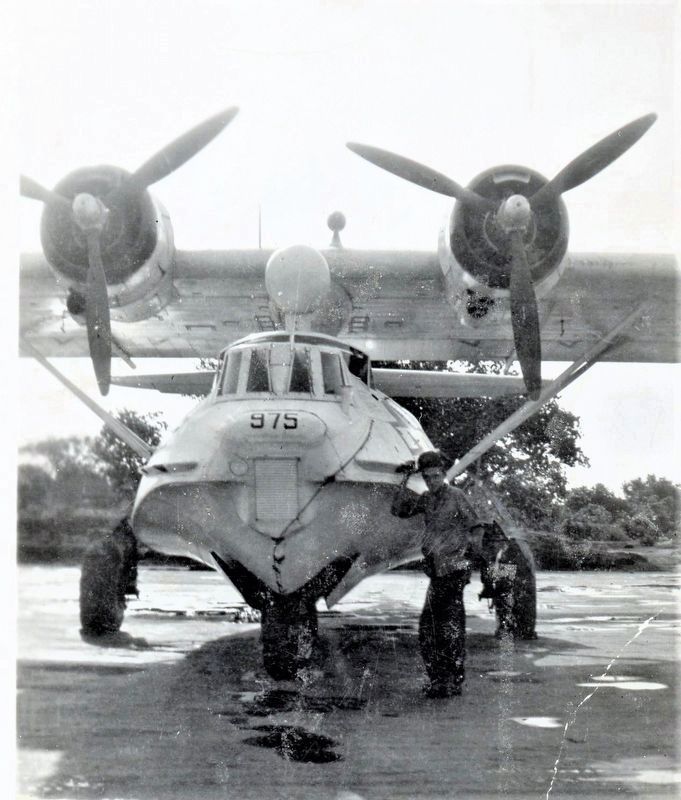
From the collection of Susan Harris, circa 1944
6. Staff Sargent Kenneth Risedorf at his PBY
4. 1st Expeditionary Rescue Group. Wikipedia entry:
Successor to the 1st Emergency Rescue Squadron (Submitted on July 30, 2022, by Larry Gertner of New York, New York.)
5. PBY Catalina International Association Website. This old-school website includes photographs, stories, rosters, and archives of the newsletter. (Submitted on September 30, 2024.)
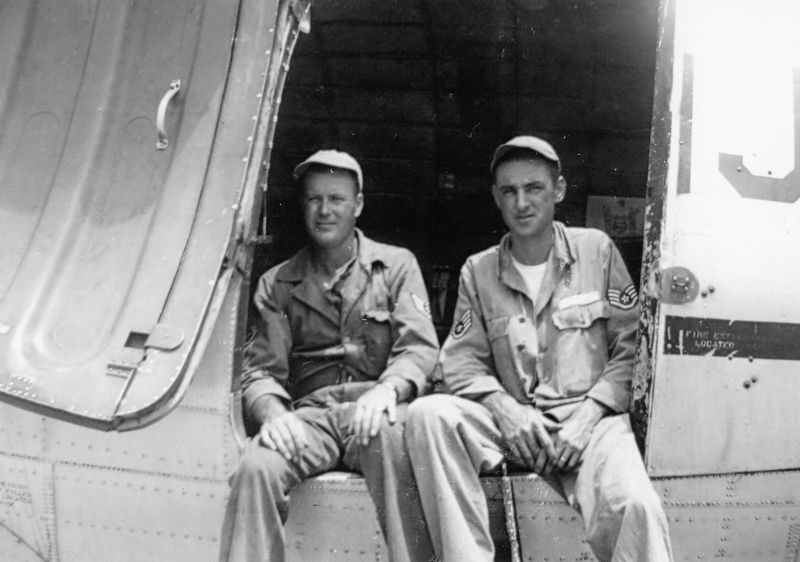
From the Susan Harris collection, circa 1944
7. Squadron members at their PBY
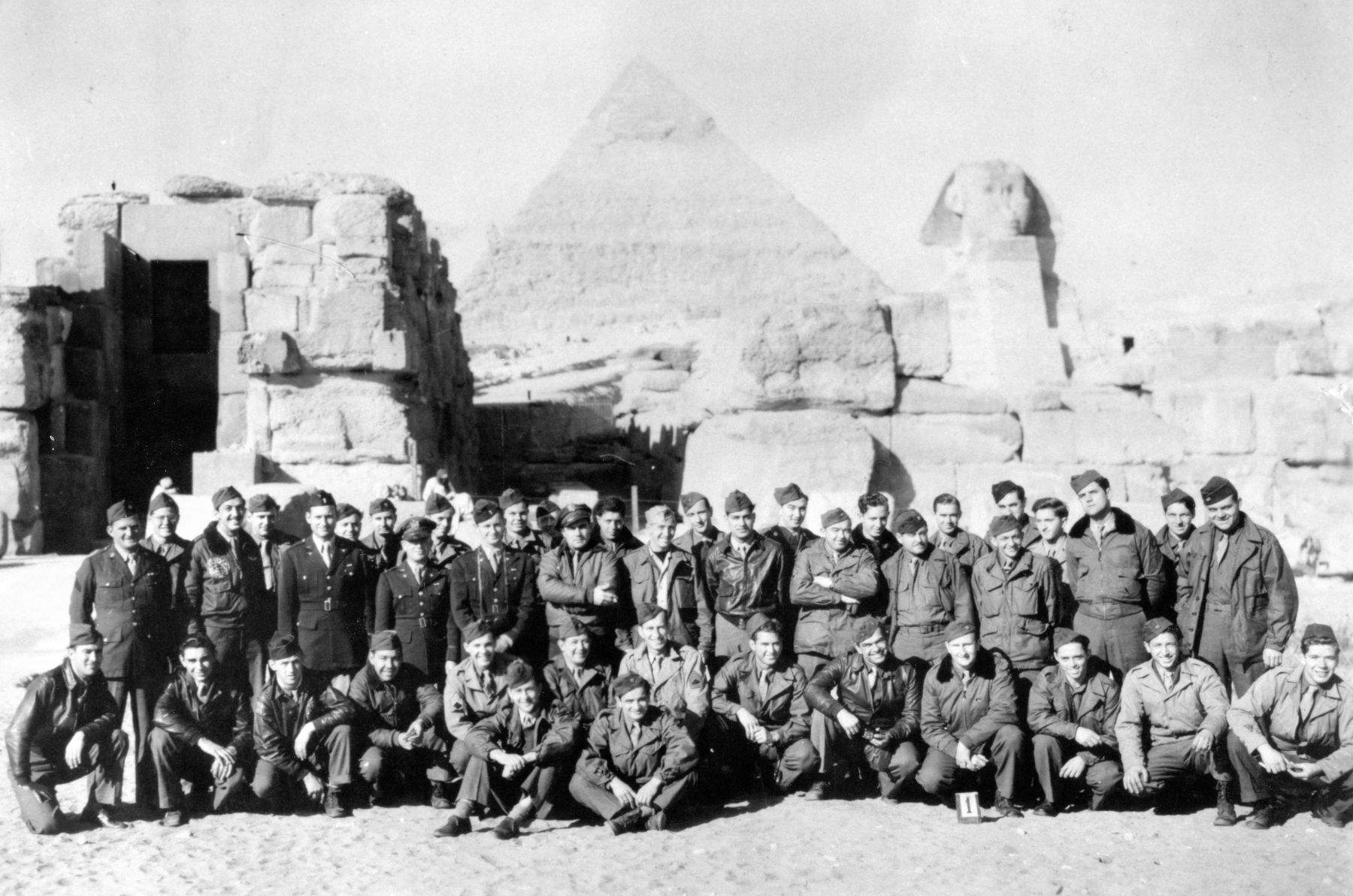
From the collection of Susan Harris
8. 1st Emergency Rescue Squadron in Egypt
Credits. This page was last revised on January 7, 2026. It was originally submitted on April 28, 2015, by William Fischer, Jr. of Reynoldsburg, Ohio. This page has been viewed 1,020 times since then and 100 times this year. Photos: 1. submitted on April 28, 2015, by William Fischer, Jr. of Reynoldsburg, Ohio. 2. submitted on April 25, 2015, by William Fischer, Jr. of Reynoldsburg, Ohio. 3. submitted on April 20, 2015, by William Fischer, Jr. of Reynoldsburg, Ohio. 4. submitted on December 28, 2009, by William Fischer, Jr. of Reynoldsburg, Ohio. 5. submitted on July 30, 2022, by Larry Gertner of New York, New York. 6, 7. submitted on September 30, 2024, by Susan Harris of Petersburgh, New York. 8. submitted on September 27, 2024, by Susan Harris of Petersburgh, New York.
