Cahaba in Dallas County, Alabama — The American South (East South Central)
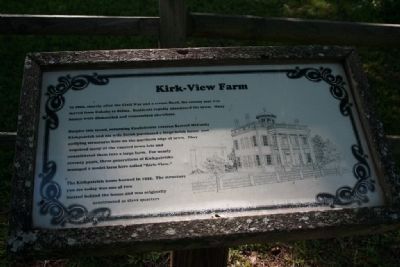
Kirk-View Farm
Photographed by Tim Carr, August 15, 2009
1. Kirk-View Farm Marker
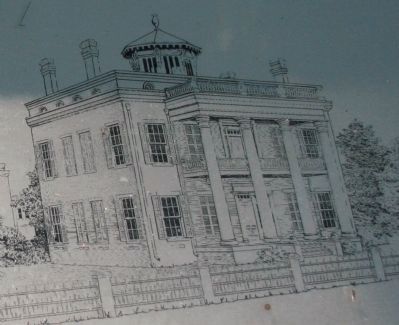
Despite this trend, returning Confederate veteran Samuel McCurdy Kirkpatrick and his wife Sarah purchased a large brick house and outlying structures here on the northern edge of town. They acquired many of the vacated town lots and consolidated them into a large farm. For nearly seventy years, three generations of Kirkpatricks managed a model farm here called "Kirk-View."
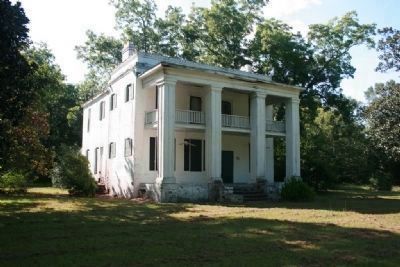
The Kirkpatrick home burned in 1935. The structure you see today was one of two located behind the house and was originally constructed as slave quarters.
Erected by Alabama Historical Commission.
Topics and series. This historical marker is listed in these topic lists: African Americans • Settlements & Settlers • War, US Civil. In addition, it is included in the Alabama Historical Commission series list. A significant historical year for this entry is 1866.
Location. Marker has been permanently removed. It was located near 32° 19.434′ N, 87° 5.892′ W.
this page online
We have been informed that this marker is no longer there and will not be replaced. This page is an archival view of what was.
Regionally, this marker was in the American South, specifically in the Deep South, and in the Black Belt. Globally, it was in North America, a Gulf of Mexico state, the Western Hemisphere, the Western World, and the Anglosphere. Historically, it found itself in what was once New Spain, the territory of the Mississippian Culture, one of the Confederate States of America, and the Antebellum South.

Other nearby markers. At least 8 other markers are within walking distance of this location: A different marker also named The Duke of Cahaba (within shouting distance of this marker); a different marker also named Behind the Big House (within shouting distance of this marker); Cahawba's African American Cemetery (about 700 feet away, measured in a direct line); C.C. Pegues & His Most Unusual Home
Photographed by Tim Carr, August 15, 2009
2. Kirk-View Farm Main House
Other markers no longer nearby. The Duke of Cahaba (was within shouting distance of this marker but has been replaced with another marker now near it); Behind the Big House (was within shouting distance of this marker but has been replaced with another marker now near it); The Old Brick Store (was approx. 0.3 miles away but has been permanently removed); Crocheron's Row (was approx. 0.3 miles away but has been permanently removed).
More about this marker. Located in the Old Cahawba Archaelogical Park.
Also see . . .
1. Old Cahawba, "Alabama's most famous Ghost Town". (Submitted on September 10, 2009, by Timothy Carr of Birmingham, Alabama.)
2. Black and white photo of the Kirk-View farm main house. (Submitted on September 10, 2009, by Timothy Carr of Birmingham, Alabama.)
Photographed by Tim Carr, August 15, 2009
3. The Barker Slave Quarters of Kirk-Wood Farm circa 1860
Credits. This page was last revised on January 10, 2018. It was originally submitted on September 10, 2009, by Timothy Carr of Birmingham, Alabama. This page has been viewed 2,862 times since then and 23 times this year. Last updated on May 20, 2015, by J. Makali Bruton of Washington, District of Columbia. Photos: 1, 2, 3. submitted on September 10, 2009, by Timothy Carr of Birmingham, Alabama. • Bernard Fisher was the editor who published this page.
