Near Williamsport in Hickman County, Tennessee — The American South (East South Central)
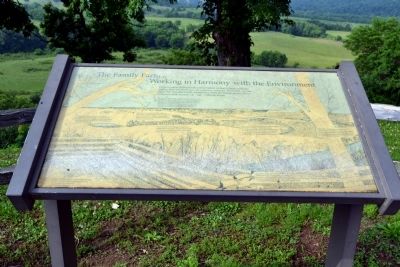
The Family Farm ... Working in Harmony with the Environment
Photographed by Duane Hall, June 4, 2015
1. The Family Farm ... Working in Harmony with the Environment Marker
Farm ponds provide water for livestock, prevent streambank erosion, and provide a habitat for fish and wildlife, provide recreation opportunities, and add to the scenic beauty of the world around us.
Agriculture can co-exist with wildlife by providing wildlife habitat areas that provide food and shelter for wildlife. Agriculture works with the environment by considering all that is part of nature.
Pastureland must be managed to prevent erosion and overgrazing. Conservation works to maintain and restore pasture cover which improves the soil resource.
Grassed waterways prevent gullies from forming while directing water safely across the land with minimal soil erosion.
Conventional tillage (turning the soil) leaves the soil unprotected
this page online
The man-made scars of mining, visible even from a distance, blemish the landscape and are a threat to water quality and the environment. Reclamation efforts heal the land and renew the rural landscape.
Filter strips remove sediment and other pollutants from runoff before the water reaches adjacent streams, ponds, and lakes. Filter strips are used as borders for the cropped fields that are adjacent to Duck River.
(First sentence illegible)
Clean water is a necessity for everyone. Water management and conservation practices enable farmers to protect and improve the quality of our water. The efforts toward water quality on the farm benefit even our most urban citizens. Ultimately we all drink from the same container–planet earth.
Erected by A. Manson Morrow II, Conservation Farmer, Maury County Soil Conservation District, Soil Conservation Service, and National Park Service.
Topics and series. This historical
Photographed by Duane Hall, June 4, 2015
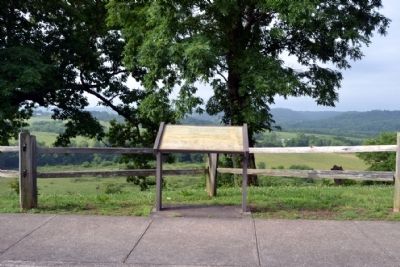
2. The Family Farm ... Working in Harmony with the Environment Marker
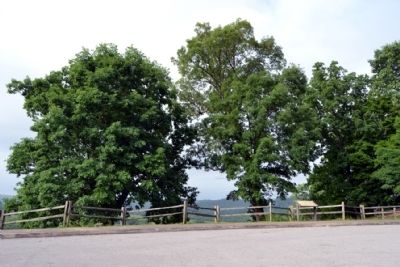
Location. 35° 41.886′ N, 87° 17.262′ W. Marker is near Williamsport, Tennessee, in Hickman County. It can be reached from Natchez Trace Parkway (at milepost 405.1), 2.7 miles south of Williamsport Pike (Tennessee Route 50), on the right when traveling north. Marker is located at the Baker Bluff Overlook turnout. Touch for map. Marker is in this post office area: Duck River TN 38454, United States of America. Touch for directions.

Regionally, this marker is in Middle Tennessee and in the Highland Rim. It is also in the American South and specifically in the Upper South. Globally, it is in North America, the Western Hemisphere, the Western World, and the Anglosphere. Historically, it finds itself in what was once the territory of the Mississippian Culture, one of the Confederate States of America, and the Antebellum South.
Other nearby markers. At least 8 other markers are within 3 miles of this marker, measured as the crow flies: Welcome! (approx. 0.3 miles away);
Photographed by Duane Hall, June 4, 2015
3. Marker at the Baker Bluff Overlook
Another marker is no longer nearby. Old Natchez Trace (was approx. 2.1 miles away but has been confirmed missing).
Also see . . . Natchez Trace. Official National Park Service website. (Submitted on June 21, 2015.)
Photographed by Duane Hall, June 4, 2015
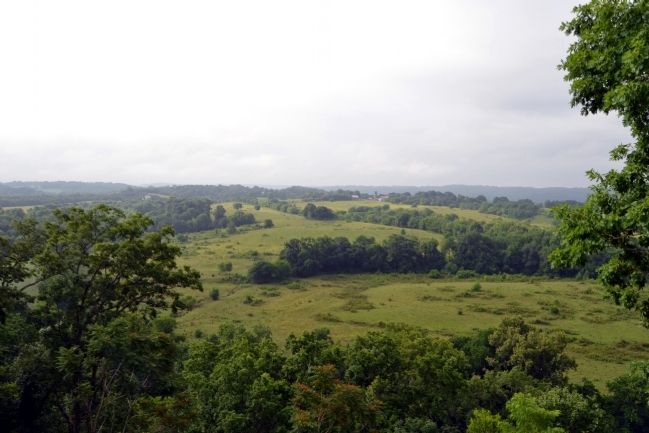
4. Morrow Family Farm
Credits. This page was last revised on June 16, 2016. It was originally submitted on June 21, 2015, by Duane Hall of Abilene, Texas. This page has been viewed 595 times since then and 12 times this year. Photos: 1, 2, 3, 4. submitted on June 21, 2015, by Duane Hall of Abilene, Texas.
