Point Loma in San Diego in San Diego County, California — The American West (Pacific Coastal)
Landing of Cabríllo
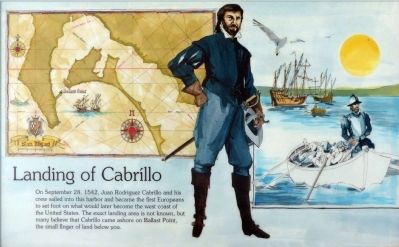
Photographed by Allen C. Browne, May 30, 2015
1. Landing of Cabríllo Marker
Topics. This historical marker is listed in this topic list: Exploration. A significant historical date for this entry is September 28, 1542.
Location. 32° 40.5′ N, 117° 14.362′ W. Marker is in San Diego, California, in San Diego County. It is in Point Loma. It is on Cabrillo Memorial Drive. At the Visitors' Center Cabrillo National Monument. Touch for map. Marker is in this post office area: San Diego CA 92106, United States of America. Touch for directions.

Regionally, this marker is in California’s Peninsular Ranges. It is also in the American Borderlands and on the Pacific Coast. Globally, it is in North America, on the Ring of Fire, on the Pacific Rim, in the Western Hemisphere, in the Western World, and in the Anglosphere. Historically, it finds itself in what was once New Spain and also Mexico’s
this page online
Other nearby markers. At least 8 other markers are within walking distance of this marker: Harbor and City (here, next to this marker); Stephen Tyng Mather (within shouting distance of this marker); Why Portuguese and Spanish Plaques? (about 400 feet away, measured in a direct line); In Homage to the Spanish Expedition (about 400 feet away); João Rodrigues Cabrilho 1542 (about 400 feet away); Beyond Their Known World (about 400 feet away); Harbor Lights (about 500 feet away); Now and Then (about 700 feet away). Touch for a list and map of all markers in San Diego.
Another marker is no longer nearby. Cabrillo’s Ships (was about 400 feet away but has been reported to have been replaced with another marker now near it).
Also see . . . Wikipedia Entry for Juan Rodríguez Cabrillo. “In 1539, Francisco de Ulloa, who had been commissioned by Cortés, discovered the Gulf of California and reached nearly as far north as the 30th parallel. Cabrillo was then commissioned by the new Viceroy of New Spain, Antonio de Mendoza, to lead an expedition up the Pacific coast in search of trade opportunities, perhaps

Photographed by Adam Margolis, March 18, 2018
2. Landing of Cabríllo Marker
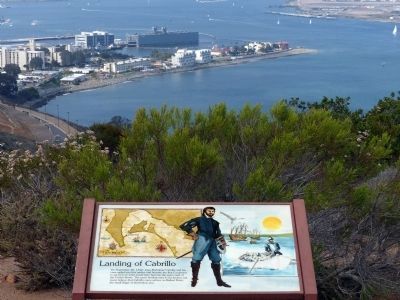
Photographed by Allen C. Browne, May 30, 2015
3. Landing of Cabríllo Marker

Photographed by Adam Margolis, March 18, 2018
4. Landing of Cabríllo Marker
The marker can be seen on the left.
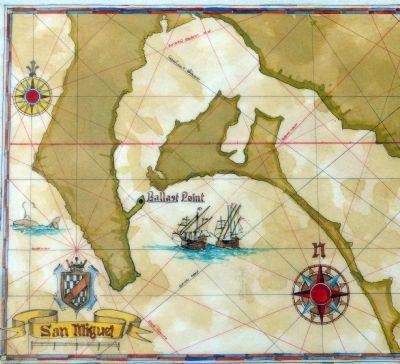
Photographed by Allen C. Browne, May 30, 2015
5. Ballast Point
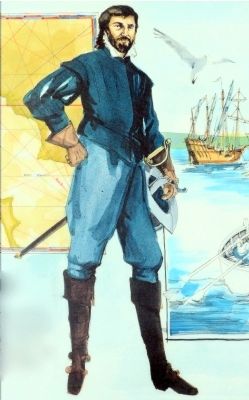
Photographed by Allen C. Browne, May 30, 2015
6. Juan Rodriguez Cabríllo
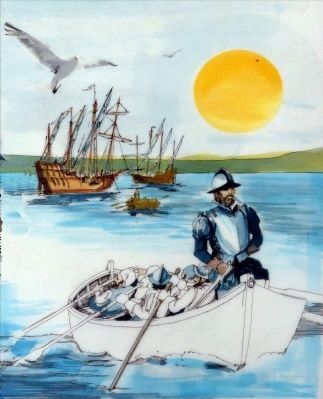
Photographed by Allen C. Browne, May 30, 2015
7. Landing of Cabríllo
Credits. This page was last revised on October 28, 2024. It was originally submitted on July 3, 2015, by Allen C. Browne of Silver Spring, Maryland. This page has been viewed 2,295 times since then and 74 times this year. Last updated on July 5, 2015, by J. Makali Bruton of Washington, District of Columbia. It was the Marker of the Week September 30, 2018. Photos: 1. submitted on July 3, 2015, by Allen C. Browne of Silver Spring, Maryland. 2. submitted on February 16, 2022, by Adam Margolis of Mission Viejo, California. 3. submitted on July 3, 2015, by Allen C. Browne of Silver Spring, Maryland. 4. submitted on February 16, 2022, by Adam Margolis of Mission Viejo, California. 5, 6, 7. submitted on July 3, 2015, by Allen C. Browne of Silver Spring, Maryland. • Andrew Ruppenstein was the editor who published this page.
