Oswego in Oswego County, New York — The American Northeast (Mid-Atlantic)
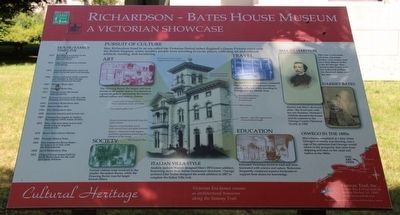
Richardson - Bates House Museum
A Victorian Showcase
| — | Pursuit of Culture | — |
Photographed by Dale K. Benington, July 22, 2015
1. Richardson - Bates House Museum Marker
Max Richardson lived in an era called the Victorian Period (when England's Queen Victoria ruled over the British Empire), when wealthy people were traveling to exotic places, collecting art and cultural artifacts, reading, and socializing.
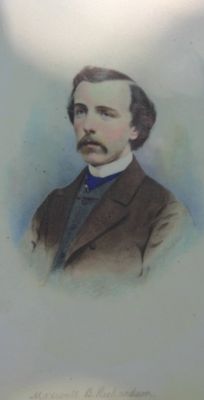
Max Richardson
Max was a real estate attorney, insurance broker, civic leader, and two-term Mayor of the City of Oswego. Max lived in this house with his widowed mother, his divorced sister, and her son.
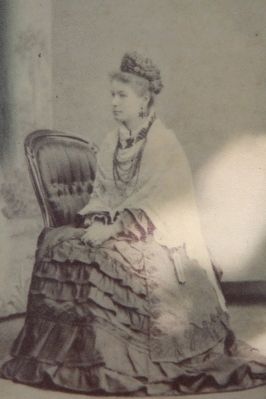
Harriet Bates
Harriet was Max's divorced sister. She lived here with her son Norman. Norman's children donated the house and its contents to the Oswego County Historical Society in 1946.
Oswego in the 1880s
Max's house, completed at a time when Oswego's economy was slowing, was a sign of his optimism that Oswego would return to the prosperity that came from shipping activities on the canal and harbor in the 1860s.
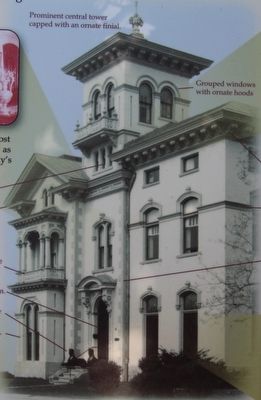
Italian Villa Style
Andrew Jackson Warner designed Max's 1872 tower addition, borrowing styles from Italian renaissance structures. Oswego architect John Seeber designed the south addition in 1887 to complete the Italian Villa look.
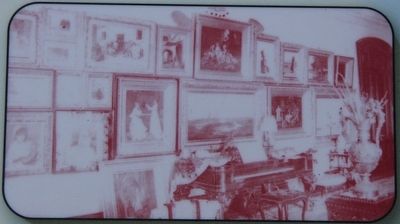
Art
The Drawing Room,
this page online
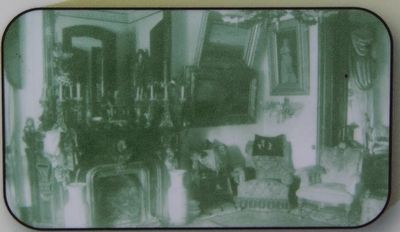
Society
Formal visitors were received in the smaller Reception Room, while the Drawing Room was for larger formal affairs.
Education
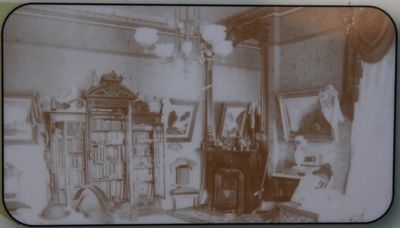
Educated Victorians loved to read and were fascinated with science and nature. Bedrooms frequently contained massive bookcases to support their desire for knowledge.
Travel
The third floor of the tower contained Max's cultural and natural history objects, collected while traveling in Europe and the Middle East.
House / Family Timeline
1852 - Original frame house built by Jacob Richardson for his wife and three children.
1854 - Jacob Richardson dies.
1863 - Harriet marries Byron Bates - he moves in to live with the Richardsons.
1865 - Norman Bates is born.
1870 - Byron Bates leaves Harriet.
1872 - Max adds four-story tower and north wing to original frame house.
1887 - Construction begins to replace the original 1850s frame section.
1899 - Norman marries and moves out.
1903 - Max Richardson dies.
1908 - Harriet Bates dies.
1910 - Lawrence
Photographed by Dale K. Benington, July 22, 2015
2. Richardson - Bates House Museum Marker
Close-up view, that is displayed on the marker, of an illustration, showing the Italian Villa Style of the Richardson - Bates Mansion.
1911 - Norman moves in with his wife Florence and their four children.
1911 - Norman wires the house with electricity.
1923 - Norman Bates dies.
1945 - Florence Bates dies.
1946 - House and most of the contents are donated to the Oswego County Historical Society.
1953 - Piazzas (porches) are removed from the north and west facades.
1974 - Major restoration to exterior of building.
1977 - Building is accepted on the National Register of Historic Places.
Erected by Seaway Trail, Inc.
Topics and series. This historical marker is listed in this topic list: Notable Buildings. In addition, it is included in the Great Lakes Seaway Trail National Scenic Byway series list. A significant historical year for this entry is 1946.
Location. 43° 27.334′ N, 76° 30.244′ W. Marker is in Oswego, New York, in Oswego County. It is on East 3rd Street south of East Mohawk Street, on the left when traveling south. This marker is located on the front grounds of the museum's property, very near the public sidewalk. Touch for map. Marker is in this post office area: Oswego NY 13126, United States of America. Touch for directions.

Regionally, this marker is in Upstate New York, specifically in Central New York, and in the Syracuse Metropolitan Area. It is also in the American Northeast and in the Mid-Atlantic. Globally, it is in North America, on the Great Lakes, in the Western Hemisphere, in the Western World, and in the Anglosphere. Historically, it finds itself in what was once New Netherland and also one of the original Thirteen Colonies.
Other nearby markers. At least 8 other markers are within walking distance of this marker: The O & W Railroad Pedestrian Promenade and Bikeway (about 700 feet away, measured in a direct line); The Oswego Public Library (about 700 feet away); Bicentennial Peace Garden
Photographed by Dale K. Benington, July 22, 2015
3. Richardson - Bates House Museum Marker
Close-up view, that is displayed on the marker, of an illustration, showing the interior of the art room in the Richardson - Bates Mansion.
Photographed by Dale K. Benington, July 22, 2015
4. Richardson - Bates House Museum Marker
Close-up view, that is displayed on the marker, of an illustration, showing the interior of the society room in the Richardson - Bates Mansion.
Photographed by Dale K. Benington, July 22, 2015
5. Richardson - Bates House Museum Marker
Close-up view, that is displayed on the marker, of an illustration, showing the interior of the education room in the Richardson - Bates Mansion.
Photographed by Dale K. Benington, July 22, 2015
6. Richardson - Bates House Museum Marker
Close-up view, that is displayed on the marker, of a painting of Max Richardson.
Photographed by Dale K. Benington, July 22, 2015
7. Richardson - Bates House Museum Marker
Close-up view, that is displayed on the marker, of a photograph of Harriet Bates.
Photographed by Dale K. Benington, July 22, 2015
8. Richardson - Bates House Museum Marker
Photographed by Dale K. Benington, July 22, 2015
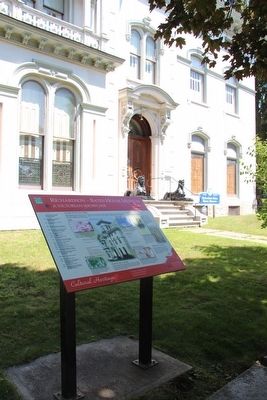
9. Richardson - Bates House Museum Marker
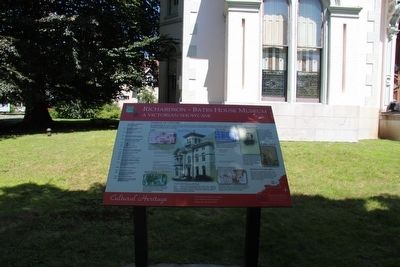
View of the marker with the entrance to the Richardson - Bates Mansion in the background.
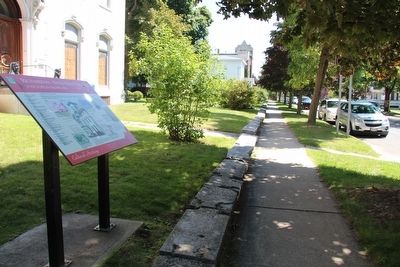
Photographed by Dale K. Benington, July 22, 2015
10. Richardson - Bates House Museum Marker
View of the marker looking south along East 3rd Street.
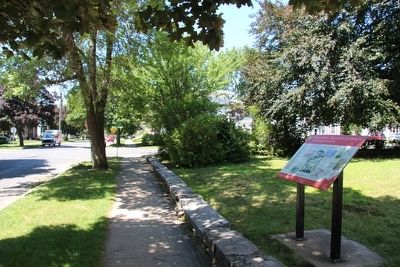
Photographed by Dale K. Benington, July 22, 2015
11. Richardson - Bates House Museum Marker
View of the marker looking north along East 3rd Street.
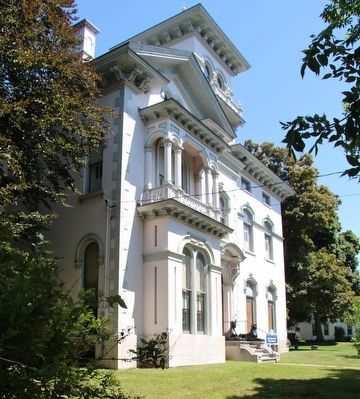
Photographed by Dale K. Benington, July 22, 2015
12. Richardson - Bates House Museum
View of the Richardson - Bates Mansion.
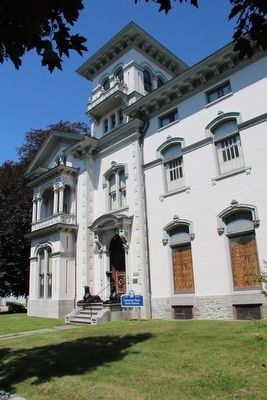
Photographed by Dale K. Benington, July 22, 2015
13. Richardson - Bates House Museum
View of the Richardson - Bates Mansion.
Credits. This page was last revised on June 16, 2016. It was originally submitted on August 1, 2015, by Dale K. Benington of Toledo, Ohio. This page has been viewed 847 times since then and 50 times this year. Photos: 1, 2, 3, 4, 5, 6, 7, 8, 9, 10, 11, 12, 13. submitted on August 2, 2015, by Dale K. Benington of Toledo, Ohio.
