
Downtown in Baltimore, Maryland — The American Northeast (Mid-Atlantic)
Expanding the American Intellect: Icons and Iconoclasts
Mount Vernon Cultural Walk
Photographed by Allen C. Browne, September 5, 2015
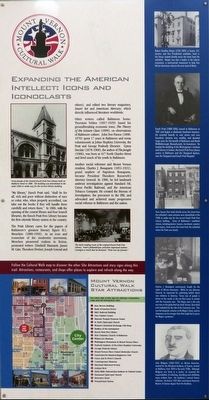
1. Expanding the American Intellect: Icons and Iconoclasts Marker
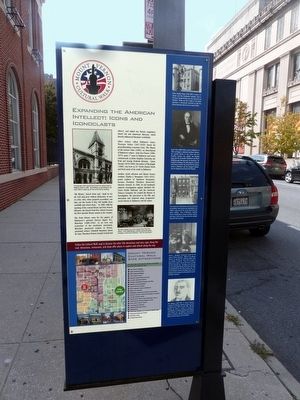
The Pratt Library cares for the papers of Baltimore's greatest literary figure H.L. Mencken (1880-1956). As an icon and iconoclast of the modernist movement, Mencken pioneered realism In fiction, promoted writers (Dashiell Hammett, James M. Cain, Theodore Dreiser, Joseph Conrad and others), and edited two literary magazines, Smart Set and American Mercury, which directly influenced literature worldwide.
Other writers called Baltimore home. Thorstein Veblen (1857-1929) based his groundbreaking economic tome, The Theory of the Leisure Class (1899), on observations of Baltimore culture. John Dos Passos (1896-1970) spent 17 years in Baltimore and wrote voluminously at Johns Hopkins University, the Pratt and George Peabody libraries. Upton Sinclair (1878-1968), the author of The Jungle (1906), was born at 417 North Charles Street and lived much of his youth in Baltimore.
Another social reformer and Mount Vernon resident, Charles J. Bonaparte (1851-1921), grand nephew of Napoleon Bonaparte, became President Theodore Roosevelt's Attorney General. In 1906, he led landmark antitrust investigations against Standard Oil, Union Pacific Railroad, and the American Tobacco Company. He created the Bureau of Investigation, the precursor to the FBI, and advocated and achieved many progressive social reforms in Baltimore and the nation.
Topics and series. This historical marker is listed in these topic lists: Arts, Letters, Music
this page online
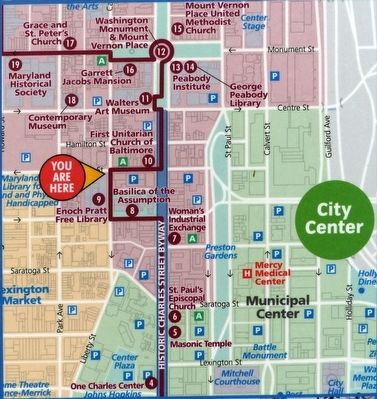
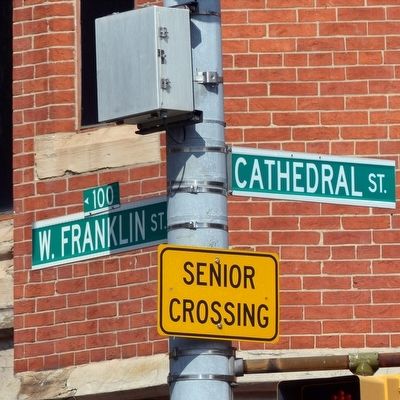
Location. 39° 17.699′ N, 76° 37.007′ W. Marker is in Baltimore, Maryland. It is in Downtown. It is at the intersection of West Franklin Street and Cathedral Street, on the left when traveling west on West Franklin Street. Touch for map. Marker is in this post office area: Baltimore MD 21201, United States of America. Touch for directions.

Regionally, this marker is in Central Maryland. It is also in the American Mid-Atlantic, in the Chesapeake Bay Region, and on the Eastern Seaboard. Globally, it is in the North Atlantic Region, North America, the Western Hemisphere, the Western World, and the Anglosphere. Historically, it finds itself in what was once one of the original Thirteen Colonies and also the Antebellum South.
Other nearby markers. At least 8 other markers are within walking distance of this marker: A different marker also named Enoch Pratt Free Library (within shouting distance of this marker); Basilica of the Assumption of the Blessed Virgin Mary
Photographed by Allen C. Browne, September 5, 2015
2. Expanding the American Intellect: Icons and Iconoclasts Marker
Another marker is no longer nearby. Enoch Pratt Free Library (was within shouting distance of this marker but has been replaced with another marker now near it).
Photographed by Allen C. Browne, September 5, 2015
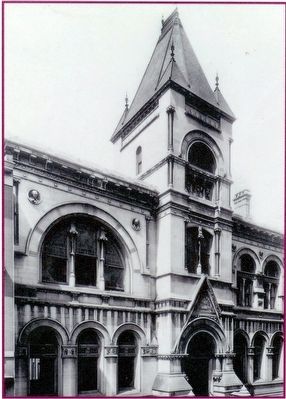
3. Original Central Enoch Pratt Free Library
Front facade of the Central Enoch Pratt Free Library built on Mulberry Street in 1886. The building was demolished in the early 30s to make way for the current library building.
Photographed by Allen C. Browne, September 5, 2015
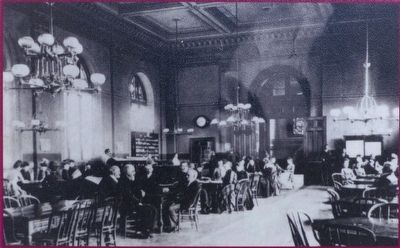
4. The main reading room of the original Pratt Free Library
Pratt's philanthropic activities impressed Andrew Carnegie so much he declared “Pratt was my pioneer.”
Photographed by Allen C. Browne, September 5, 2015
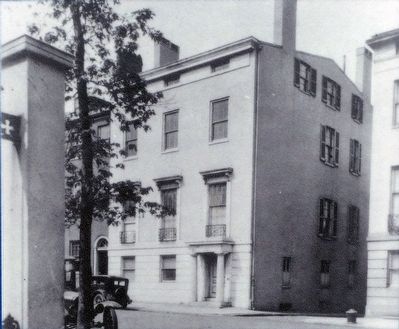
5. Robert Goodloe Harper House
Robert Goodloe Harper (1765-1825), a lawyer, U.S. Senator,. and Vice Presidential candidate, lived in this house, located directly across the street from the cathedral. Harper was also a leader in the Liberia movement, a controversial movement to help free African Americans colonize the west coast of Africa.Close-up of photo on marker
Photographed by Allen C. Browne, September 5, 2015
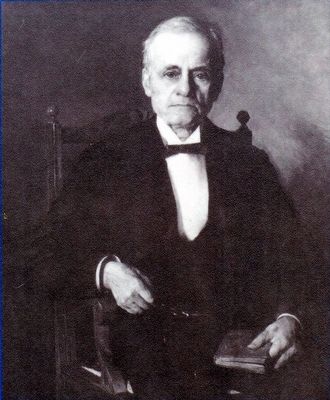
6. Enoch Pratt
Enoch Pratt (1808-1896) moved to Baltimore in 1831 and began a wholesale hardware business. He invested heavily in coal mines and iron foundries, became very wealthy, and donated large sums for the benefit of Baltimore and North Middleborough, Massachusetts, his hometown. He funded the building of the Workingmen's Institute and Library in Canton, the Enoch Pratt Free Library system in Baltimore and the Sheppard Asylum (Now Sheppard and Enoch Pratt Hospital.) Close-up of photo on marker
Photographed by Allen C. Browne, September 5, 2015
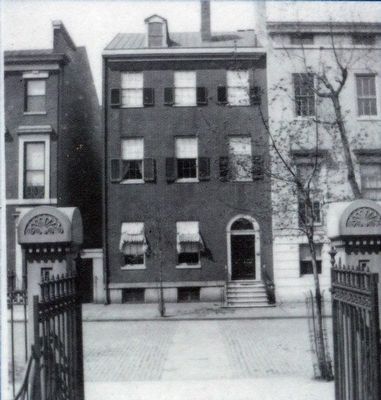
7. Town Houses
Town houses that stood directly across the street from the cathedral's main entrance were demolished in the 1930s to make way for the current Enoch Pratt Free Library Building. Some of Baltimore's wealthiest citizens, including doctors, lawyers, merchants, senators and mayors, lived across the street from the cathedral where Pratt now stands. Close-up of photo on marker
Photographed by Allen C. Browne, September 5, 2015
8. Charles J. Bonaparte
Charles J. Bonaparte continuously fought for the rights of African Americans. While he was Attorney General, he expressed his underlying beliefs about race relations in America, “Every race of people is driven to the woods or die out that comes in contact with the Caucasian race. The Negro race is the only one race on the globe that has lived, thriven, flourished and multiplied by the side of the Caucasian race. This one fact bespeaks volumes in the Negro's favor, and no eloquence can be stronger than that single fad to prove the Negro's greatness.” Close-up of photo on marker
Photographed by Allen C. Browne, September 5, 2015
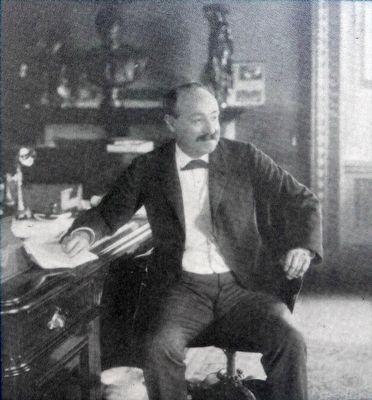
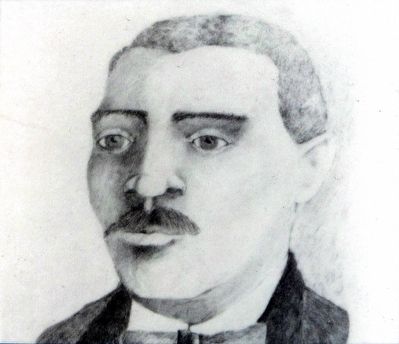
9. John Widgeon
John Widgeon (1850-1937), an African American, worked for the Maryland Academy of Science, located on Mulberry, from 1870 to the early 1930s. Although Widgeon was hired as a janitor, he assumed the responsibilities of collecting, classifying and exhibiting many artifacts from the Academy's natural history collection. He died in 1937 after receiving an honorary Masters of Science degree from the Academy. Close-up of photo on marker
Photographed by Allen C. Browne, September 5, 2015
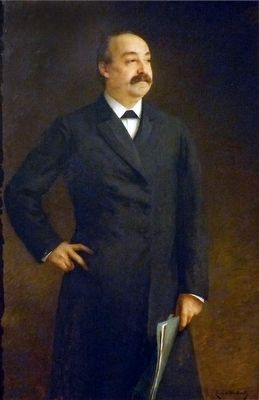
10. Charles Joseph Bonaparte
This 1906-1909 portrait of Charles Joseph Bonaparte by Cecile de Wentworth hangs in the Maryland Historical Society Museum in Baltimore Maryland.
“Cecile de Wentworth painted this portrait of Charles Joseph Bonaparte between 1906 and 1909 when Charles was Attorney General of the United States under President Theodore Roosevelt. Wentworth was a highly acclaimed American portrait artist who worked primarily in France and painted many of the most prominent men of the early twentieth century, including Presidents Theodore Roosevelt and William Howard Taft.” — Maryland Historical Society
“Cecile de Wentworth painted this portrait of Charles Joseph Bonaparte between 1906 and 1909 when Charles was Attorney General of the United States under President Theodore Roosevelt. Wentworth was a highly acclaimed American portrait artist who worked primarily in France and painted many of the most prominent men of the early twentieth century, including Presidents Theodore Roosevelt and William Howard Taft.” — Maryland Historical Society
Photographed by Allen C. Browne, September 5, 2015
11. You Are Here
Photographed by Allen C. Browne, September 5, 2015
12. West Franklin and Cathedral Streets
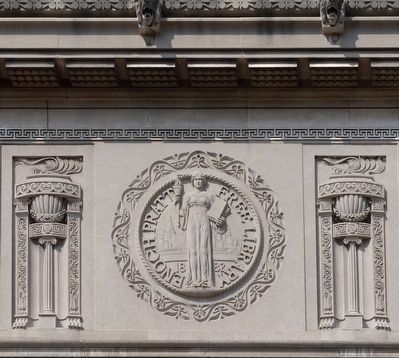
Photographed by Allen C. Browne, September 5, 2015
13. Enoch Pratt Free Library
1882
1882
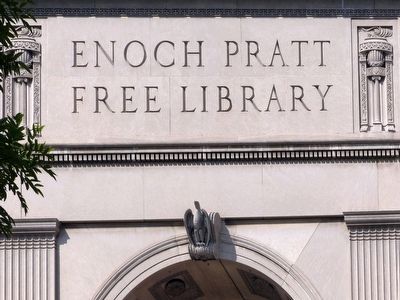
Photographed by Allen C. Browne, September 5, 2015
14. Enoch Pratt Free Library
Credits. This page was last revised on April 17, 2020. It was originally submitted on September 7, 2015, by Allen C. Browne of Silver Spring, Maryland. This page has been viewed 780 times since then and 24 times this year. Photos: 1, 2, 3, 4, 5, 6, 7, 8, 9, 10, 11, 12, 13, 14. submitted on September 7, 2015, by Allen C. Browne of Silver Spring, Maryland. • Bill Pfingsten was the editor who published this page.
