St Andrews in Fife, Scotland, United Kingdom — Northwestern Europe (the British Isles)
A Religious Powerhouse
St Andrews Cathedral
Photographed by Brandon Fletcher, April 5, 2011
1. A Religious Powerhouse Marker
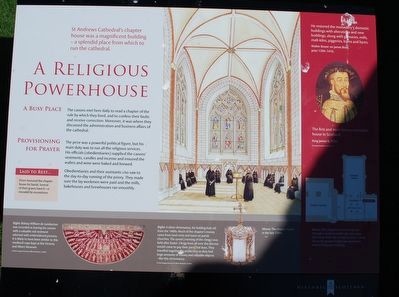
St Andrews Cathedral's chapter house was a magnificent building - a splendid place from which to run the cathedral.
A Busy Place
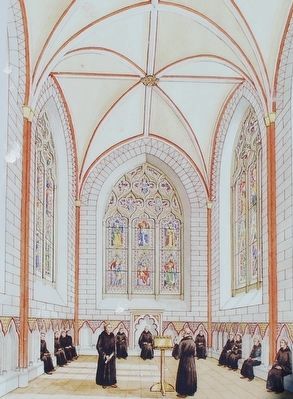
The canons met here daily to read a chapter of the rule by which they lived, and to confess their faults and receive correction. Moreover, it was where they discussed the administration and business affairs of the cathedral.
Provisioning for Prayer
The prior was a powerful political figure, but his main duty was to run all the religious services. His officials (obedientiaries) supplied the canons' vestments, candles and incense and ensured the wafers and wines were baked and brewed.
Obedientiaries and their assistants also saw to the day-to-day running of the priory. They made sure the lay workmen were paid and the mills, bakehouses and brewhouses ran smoothly.
(Red sidebar)
He restored the monastery's domestic buildings with alterations and new buildings, along with granaries, mills, malt-kilns, piggeries, barns and byres.
Walter Bower on James Biser, prior 1394-1416.
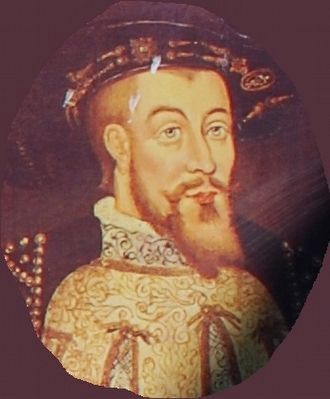
The first and most famous monastic house in Scotland.
King James V, 1533.
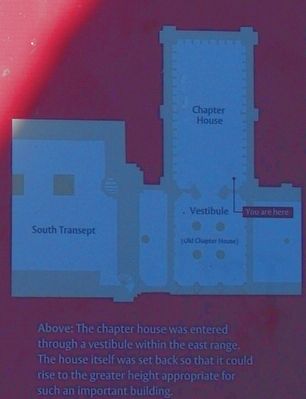
Above: The chapter house was
this page online
(sidebar)
Laid to Rest...
Priors favoured the chapter house for burial. Several of their graves have been revealed by excavations.
(bottom-bar)
Right: Bishop William de Lamberton was recorded as leaving his canons with a valuable red vestment adorned with embroidered pictures. It is likely to have been similar to his medieval cope kept a the Victoria and Albert Museum.
Right: A silver chrismatory, for holding holy oil, from the 1400s. Much of the chapter's money came from land rents and taxes on parish churches. They synod (meeting of the clergy) was held after Easter. Clergy from all over the diocese would come to pay their parochial dues. They travelled together for protection as they had large amounts of money and valuable objects - like this chrismatory.
Above: The chapter house in the late 1300s.
Erected by Historic Scotalnd.
Topics. This historical marker is listed in this topic list: Religion & Religious Structures.
Location. 56° 20.4′ N,
Photographed by Brandon Fletcher, April 5, 2011
2. The chapter house in the late 1300s

Regionally, this marker is in the Kingdom of Fife. Globally, it is on the Atlantic Ocean, in the North Atlantic Region, in Europe, on the Celtic Fringe, in Atlantic Europe, on one of the British Isles, in the Western World, and in the Anglosphere.
Other nearby markers. At least 5 other markers are within 18 kilometers of this marker, measured as the crow flies: Lofty Beginnings (within shouting distance of this marker); The Many Faces of St Andrews Castle (approx. 0.3 kilometers away); Patrick Hamilton (approx. 0.4 kilometers away); The "Battle" of May Island (approx. 14.3 kilometers away); Flight of Captain Bennett (approx. 17.1 kilometers away).
Photographed by Brandon Fletcher, April 5, 2011
3. Chapter House Map
Photographed by Brandon Fletcher, April 5, 2011
4. King James V
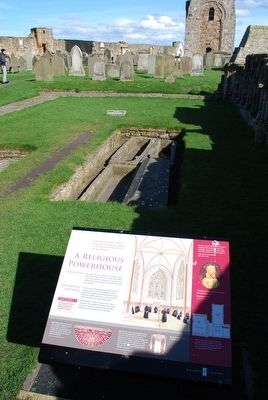
Photographed by Brandon Fletcher, April 5, 2011
5. A Religious Powerhouse Marker
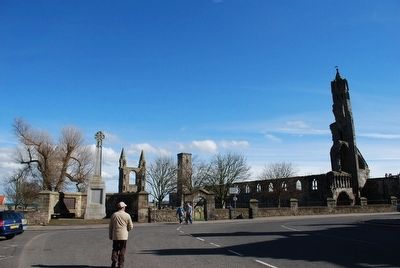
Photographed by Brandon Fletcher, April 5, 2011
6. St Andrews Cathedral
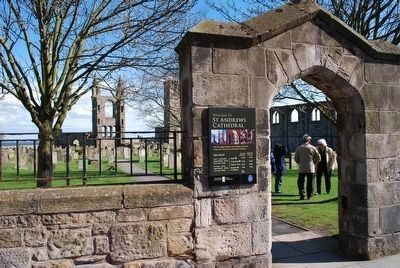
Photographed by Brandon Fletcher, April 5, 2011
7. St Andrews Cathedral
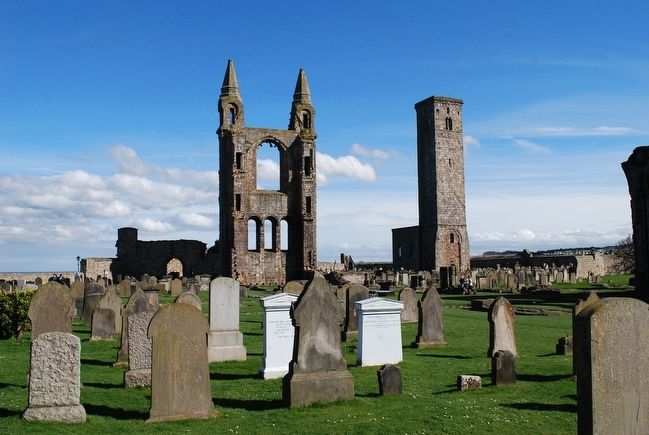
Photographed by Brandon Fletcher, April 5, 2011
8. St Andrews Cathedral
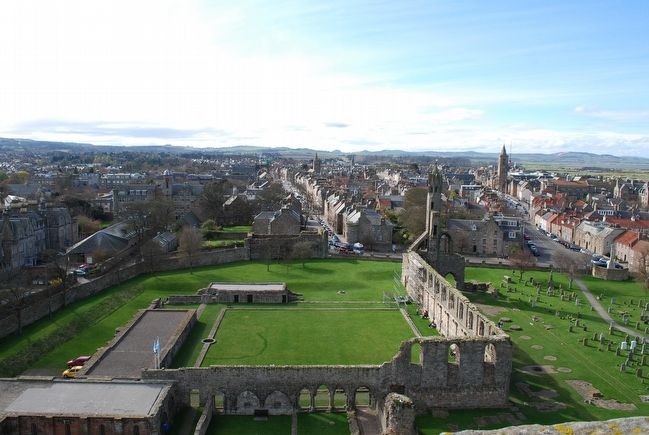
Photographed by Brandon Fletcher, April 5, 2011
9. St Andrews Cathedral from atop St. Rule's Tower
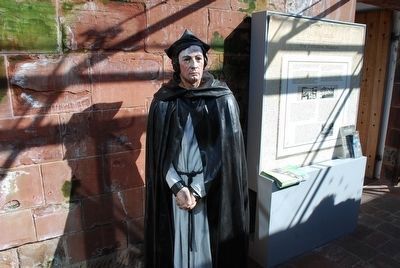
Photographed by Brandon Fletcher, April 5, 2011
10. St Andrews Cathedral Museum & Bishop
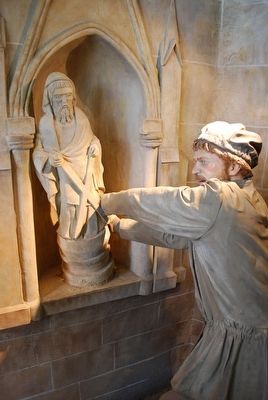
Photographed by Brandon Fletcher, April 5, 2011
11. The Reformation Destruction
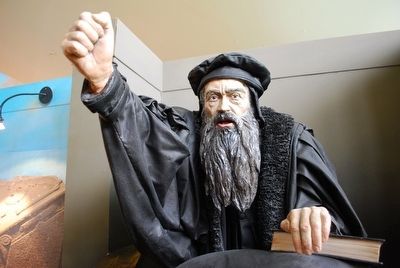
Photographed by Brandon Fletcher, April 5, 2011
12. John Knox and the Reformation
Photographed by Brandon Fletcher, April 5, 2011
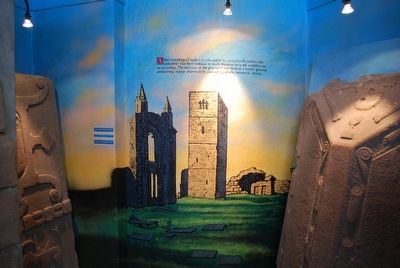
13. Reformation and Neglect
The ruins of St Andrews Cathedral were caused due to the Protestant Reformation and neglect over the centuries.
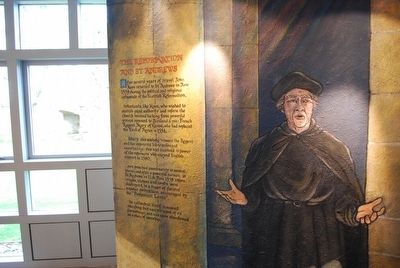
Photographed by Brandon Fletcher, April 5, 2011
14. Reformation and St Andrews
Credits. This page was last revised on January 27, 2022. It was originally submitted on September 23, 2015, by Brandon Fletcher of Chattanooga, Tennessee. This page has been viewed 367 times since then and 17 times this year. Photos: 1, 2, 3, 4, 5, 6, 7, 8, 9, 10, 11, 12, 13, 14. submitted on September 23, 2015, by Brandon Fletcher of Chattanooga, Tennessee. • Andrew Ruppenstein was the editor who published this page.
