Bella Vista in Benton County, Arkansas — The American South (West South Central)
Revolutionary War
Photographed by William Fischer, Jr., October 31, 2015
1. Revolutionary War Marker
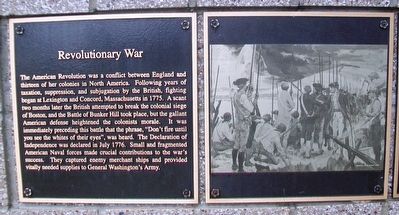
 The American Revolution was a conflict between England and thirteen of her colonies in North America. Following years of taxation, suppression, and subjugation by the British, fighting began at Lexington and Concord, Massachusetts in 1775. A scant two months later the British attempted to break the colonial siege of Boston, and the Battle of Bunker Hill took place, but the gallant American defense heightened the colonists[’] morale. It was immediately preceding this battle that the phrase, “Don’t fire until you see the whites of their eyes”, was heard. The Declaration of Independence was declared in July 1776. Small and fragmented American Naval forces made crucial contributions to the war’s success. They captured enemy merchant ships and provided vitally needed supplies to General Washington’s Army.
[Image] Battle of Bunker Hill
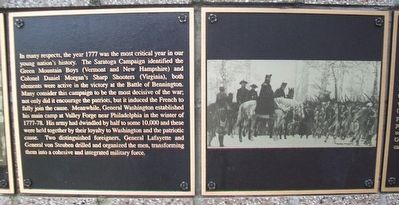
In many respects, the year 1777 was the most critical year in our young nation’s history. The Saratoga Campaign identified the Green Mountain Boys (Vermont and New Hampshire) and Colonel Daniel Morgan’s Sharp Shooters (Virginia), both elements were active in the victory at the Battle of
this page online
[Image] Valley Forge
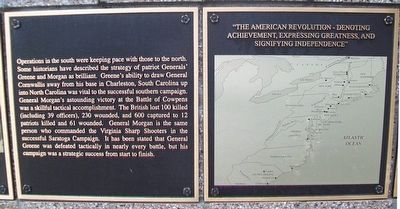
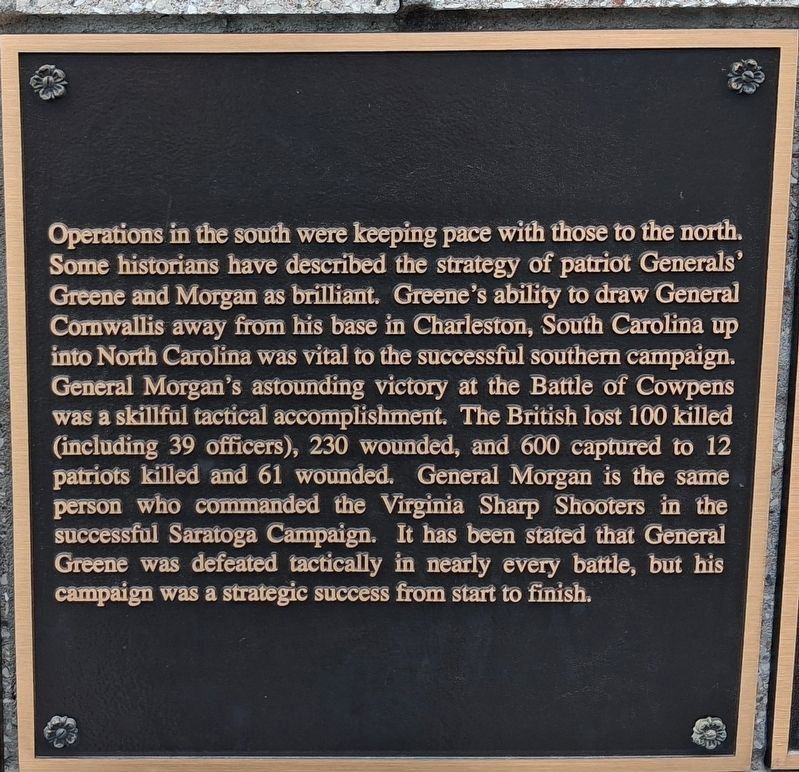
Operations in the south were keeping pace with those to the north. Some historians have described the strategy of patriot Generals’ Greene and Morgan as brilliant. Greene’s ability to draw General Cornwallis away from his base in Charleston, South Carolina up into North Carolina was vital to the successful southern campaign. General Morgan’s astounding victory at the Battle of Cowpens was a skillful tactical accomplishment. The British lost 100 killed (including 39 officers), 230 wounded, and 600 captured to 12 patriots killed and 61 wounded.
Photographed by William Fischer, Jr., October 31, 2015
2. Revolutionary War Marker
[Map showing] “The American Revolution – Denoting Achievement, Expressing Greatness, and Signifying Independence”
Erected 2012 by the Veterans Council of Northwest Arkansas and Many Concerned Citizens and Organizations.
Topics and series. This historical marker is listed in this topic list: War, US Revolutionary. In addition, it is included in the Former U.S. Presidents: #01 George Washington series list. A significant historical month for this entry is July 1776.
Location. 36° 26.009′ N, 94° 13.786′ W. Marker is in Bella Vista, Arkansas, in Benton County. It can be reached from Veterans Way. Marker is at the Veterans Wall of Honor. Touch for map. Marker is at or near this postal address: 103 Veterans Way, Bella Vista AR 72714, United States of America. Touch for directions.

Regionally, this marker is in Northwest Arkansas, on the Ozark Plateau, in the Cherokee Heritage Region,
Photographed by William Fischer, Jr., October 31, 2015
3. Revolutionary War Marker
Other nearby markers. At least 8 other markers are within walking distance of this marker: Lewis & Clark Expedition (here, next to this marker); War of 1812 (here, next to this marker); The Alamo (here, next to this marker); Mexican War (here, next to this marker); Frontier Wars (a few steps from this marker); Veterans Wall of Honor (a few steps from this marker); Purple Heart (a few steps from this marker); Silver Star Medal (a few steps from this marker). Touch for a list and map of all markers in Bella Vista.
Also see . . .
1. The American Revolution. Nation Park Service entry on related national parks. (Submitted on December 11, 2015, by William Fischer, Jr. of Reynoldsburg, Ohio.)
2. American Revolution.

Photographed by William Fischer, Jr., October 31, 2015
4. Revolutionary War Marker
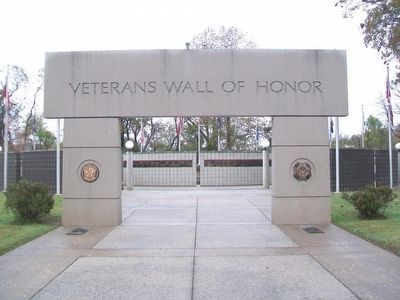
Photographed by William Fischer, Jr., October 31, 2015
5. Veterans Wall of Honor, Bella Vista AR
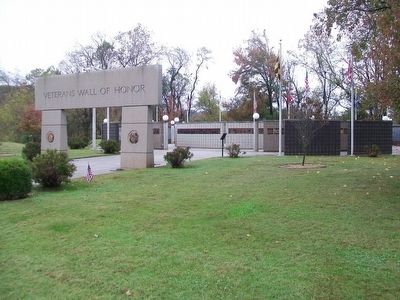
Photographed by William Fischer, Jr.
6. Veterans Wall of Honor, Bella Vista AR
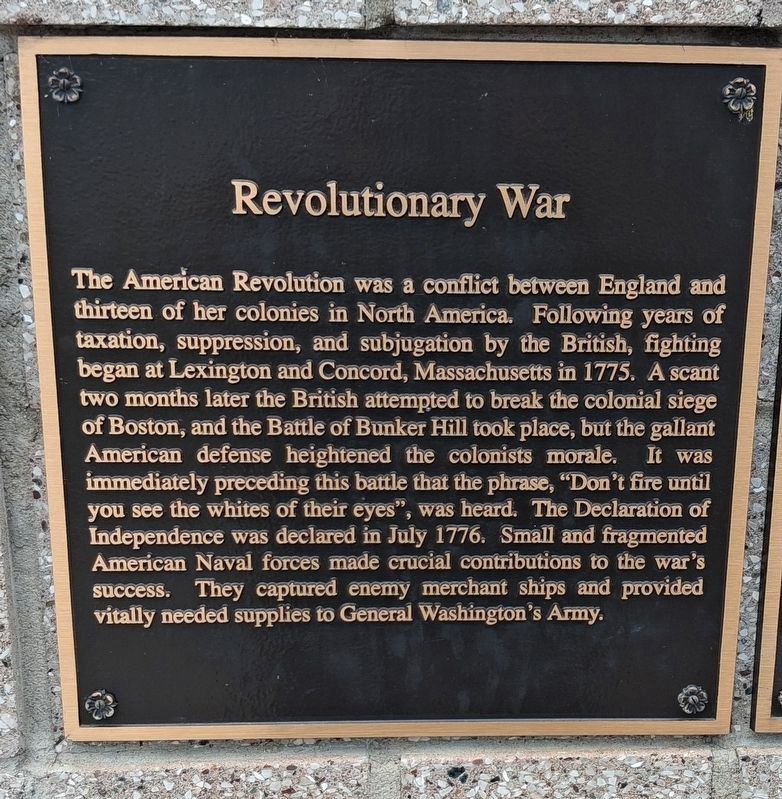
Photographed by Marc Hayot, August 6, 2026
7. Revolutionary War Marker
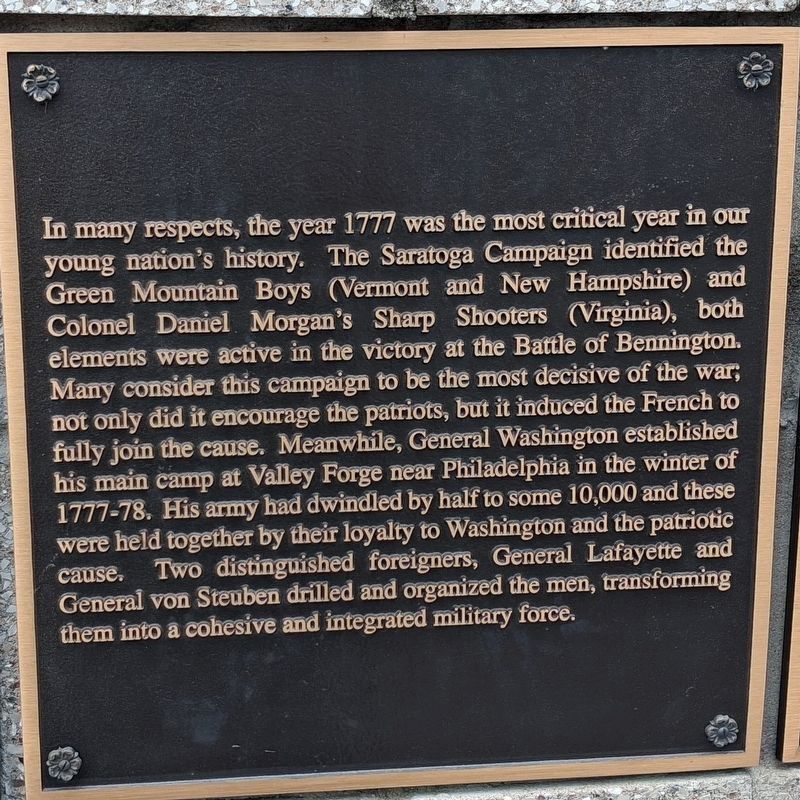
Photographed by Marc Hayot, August 6, 2026
8. Revolutionary War Marker 2
Photographed by Marc Hayot, August 6, 2026
9. Revolutionary War Marker 3
Credits. This page was last revised on August 17, 2026. It was originally submitted on December 11, 2015, by William Fischer, Jr. of Reynoldsburg, Ohio. This page has been viewed 920 times since then and 71 times this year. Photos: 1, 2, 3, 4, 5. submitted on December 11, 2015, by William Fischer, Jr. of Reynoldsburg, Ohio. 6. submitted on November 20, 2015, by William Fischer, Jr. of Reynoldsburg, Ohio. 7, 8, 9. submitted on August 7, 2026, by Marc Hayot of Siloam Springs, Arkansas.