Colonia Villa Gustavo A. Madero in Ciudad de México, Mexico — The Valley of Mexico (The Central Highlands)
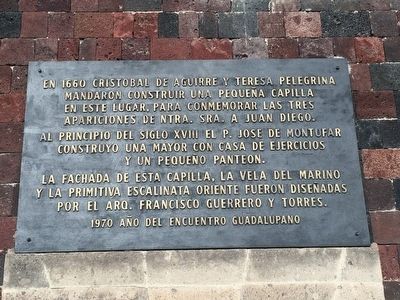
Tepeyac Chapel
La Capilla del Cerrito
Photographed by J. Makali Bruton, November 2, 2015
1. Tepeyac Chapel Marker

1970 Año del Encuentro Guadalupano
1970 The Year of Guadalupe
Erected 1970.
Topics. This historical marker is listed in these topic lists: Architecture • Religion & Religious Structures. A significant historical year for this entry is 1660.
Location. 19° 29.164′ N,
this page online

Regionally, this marker is in Central Mexico and specifically in Mexico City Metropolitan Area. Globally, it is in North America, specifically in Mesoamerica, on the Ring of Fire, and in the Western Hemisphere. Historically, it finds itself in what was once New Spain, a Spanish colony, and the Aztec Empire.
Other nearby markers. At least 8 other markers are within 5 kilometers of this marker, measured as the crow flies: The Virgin of Guadalupe and Juan Diego (a few steps from this marker); José María Morelos y Pavón Stopped to Pray Here (about 120 meters away, measured in a direct line); The Banner of Atotonilco and the Parish of the Natives (about 120 meters away); The Parish of the Natives (about 120 meters away);
Photographed by J. Makali Bruton, November 2, 2015
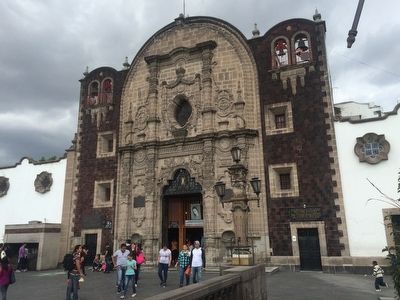
2. Tepeyac Chapel Marker
The marker is to the left of the chapel entrance in this view.
Photographed by J. Makali Bruton, November 2, 2015
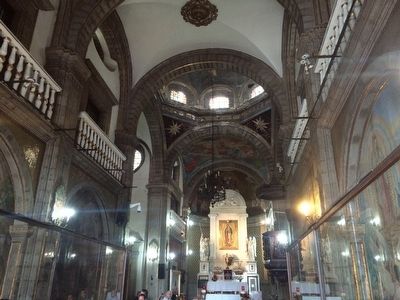
3. Tepeyac Chapel Marker
Interior view of the chapel. The image above the altar is a reproduction of the famous original, kept in the modern Basilica.

Photographed by J. Makali Bruton, November 2, 2015
4. The Mariner's Sail (La Vela del Marino), further down the hill from the Tepeyac Chapel.
Photographed by J. Makali Bruton, November 2, 2015
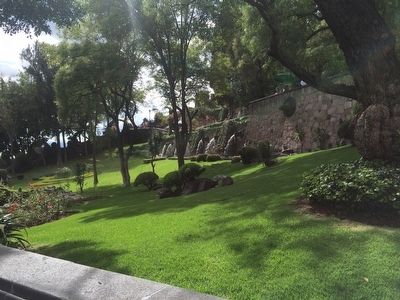
5. The eastern staircase mentioned in the marker, descending from Tepeyac Hill.
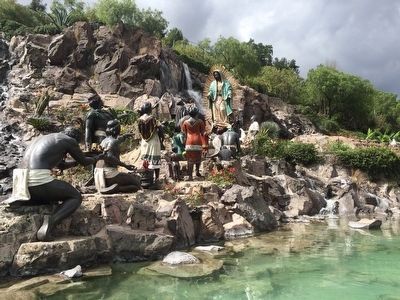
Photographed by J. Makali Bruton, November 2, 2015
6. A commemorative fountain known as "The Offering" ("La Ofrenda") at the base of Tepeyac Hill.
Credits. This page was last revised on August 21, 2024. It was originally submitted on January 11, 2016, by J. Makali Bruton of Washington, District of Columbia. This page has been viewed 1,166 times since then and 100 times this year. Photos: 1, 2, 3, 4, 5, 6. submitted on January 11, 2016, by J. Makali Bruton of Washington, District of Columbia.
