Lacrosse in Alachua County, Florida — The American South (South Atlantic)
LaCrosse
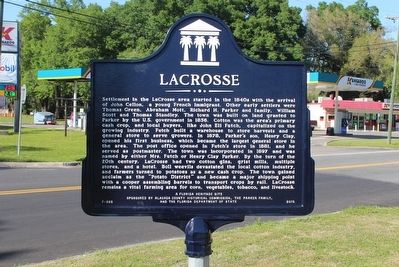
Photographed by Tim Fillmon, April 9, 2016
1. Lacrosse Marker
this page online
Erected 2015 by Alachua County Historical Commission, the Parker Family, and the Florida Department of State. (Marker Number F-865.)
Topics. This historical marker is listed in these topic lists: Industry & Commerce • Settlements & Settlers.
Location. 29° 50.592′ N, 82° 24.296′ W. Marker is in Lacrosse, Florida, in Alachua County. It is at the intersection of State Road 121 and State Road 235, on the right when traveling north on State Road 121. Marker is located in front of the Lacrosse Fire Department. Touch for map. Marker is at or near this postal address: 20421 N State Road 121, La Crosse FL 32658, United States of America. Touch for directions.

Regionally, this marker is in North Florida. It is also in the American South. Globally, it is in the North Atlantic Region, North America, a Gulf of Mexico state, the Western Hemisphere, the Western World, and the Anglosphere. Historically, it finds itself in what was once New Spain, the territory of the
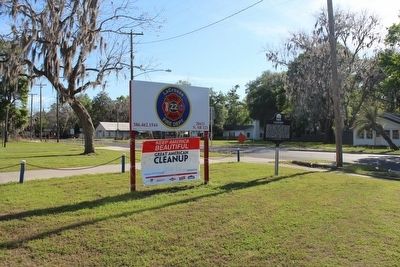
Photographed by Tim Fillmon, April 9, 2016
2. Lacrosse Marker looking south down FL 121
Other nearby markers. At least 8 other markers are within 7 miles of this marker, measured as the crow flies: Newnansville Methodist Church Site (approx. 5.1 miles away); Newnansville Town Site (approx. 5.2 miles away); Alachua County Training School (approx. 6.2 miles away); Alachua Methodist Church (approx. 6½ miles away); City of Alachua Downtown Historic District (approx. 6½ miles away); Alachua Veterans Memorial (approx. 6½ miles away); City of Alachua (approx. 6.6 miles away); Williams/Leroy House (approx. 6.6 miles away).
Another marker is no longer nearby. LaCrosse, Florida (was here, next to this marker but has been permanently removed).
More about this marker. This marker is a replacement of an earlier marker that was located at the same location.
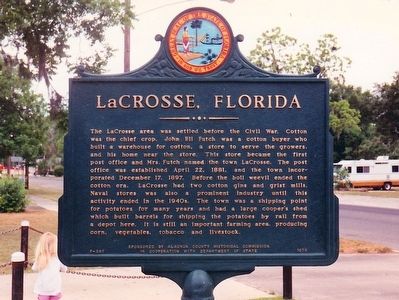
Photographed by Tim Fillmon, circa 1993
3. Photo of old marker taken in 1993.
Credits. This page was last revised on October 9, 2020. It was originally submitted on April 12, 2016, by Tim Fillmon of Webster, Florida. This page has been viewed 753 times since then and 62 times this year. Photos: 1, 2, 3. submitted on April 12, 2016, by Tim Fillmon of Webster, Florida. • Bernard Fisher was the editor who published this page.
