Big Island in Bedford County, Virginia — The American South (Mid-Atlantic)
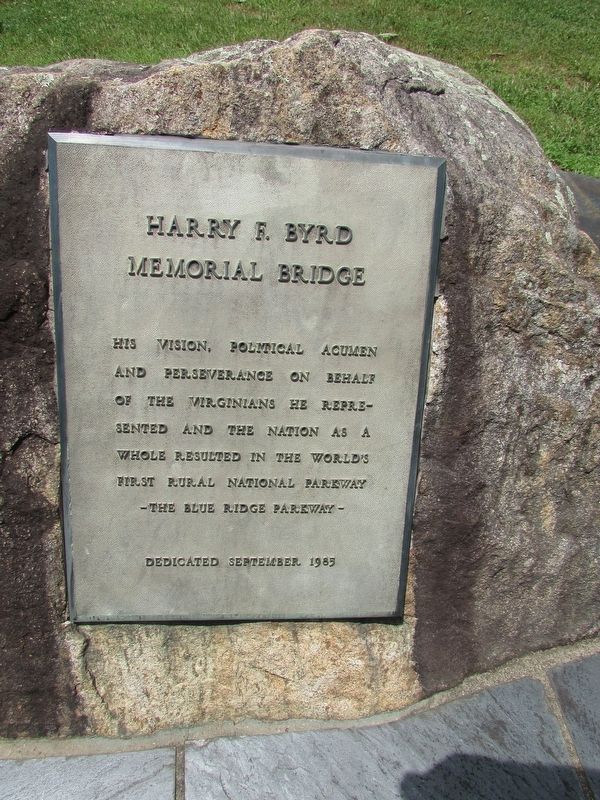
Harry F. Byrd Memorial Bridge
Photographed by Bill Coughlin, July 15, 2016
1. Harry F. Byrd Memorial Bridge Marker
on behalf of the Virginians he represented and the nation
as a whole resulted in the world’s first rural National Parkway
– The Blue Ridge Parkway -
Dedicated September 1985
Erected 1985.
Topics and series. This historical marker is listed in this topic list: Bridges & Viaducts. In addition, it is included in the Blue Ridge Parkway series list. A significant historical year for this entry is 1985.
Location. 37° 33.321′ N, 79° 21.956′ W. Marker is on Big Island, Virginia, in Bedford County. It can be reached from Blue Ridge Parkway (at milepost 64), on the left when traveling south. Marker is located near the James River Visitor Center (MP 63.6), on the Blue Ridge Parkway. Touch for map. Marker is in this post office area: Big Island VA 24526, United States of America. Touch for directions.

Regionally, this marker is in Southwest Virginia. It is also in the American South and specifically in the Upper South. Globally, it is in North America, the Western Hemisphere, the Western World, and the Anglosphere. Historically, it finds itself in what was once the territory
this page online
Other nearby markers. At least 8 other markers are within 5 miles of this marker, measured as the crow flies: James River (a few steps from this marker); A Transportation Corridor (within shouting distance of this marker); Battery Creek Lock (within shouting distance of this marker); Water Gap (within shouting distance of this marker); a different marker also named Battery Creek Lock (within shouting distance of this marker); A Lock Canal / A Lift Lock (about 400 feet away, measured in a direct line); The Lock Gate (about 500 feet away); Amherst County / Rockbridge County (approx. 5.1 miles away). Touch for a list and map of all markers in Big Island.
Another marker is no longer nearby. The Courage of Frank Padget (was approx. 5.1 miles away but has been permanently removed).
Photographed by Bill Coughlin, July 15, 2016
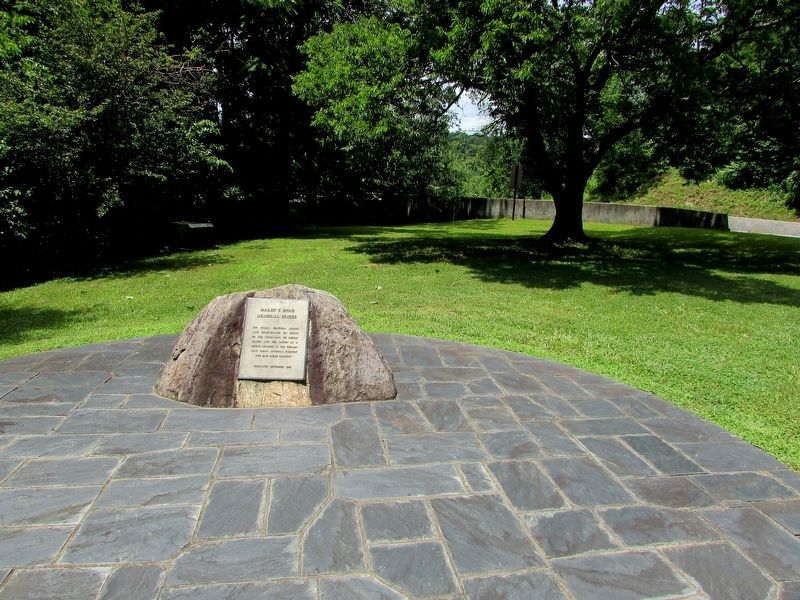
2. Harry F. Byrd Memorial Bridge Marker
Photographed by Bill Coughlin, July 15, 2016
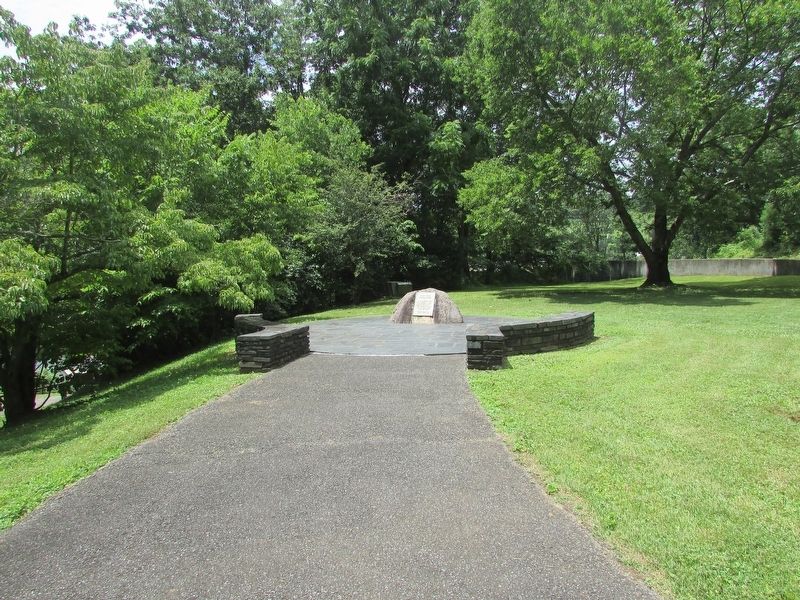
3. Marker on the Blue Ridge Parkway
Photographed by Bill Coughlin, July 15, 2016
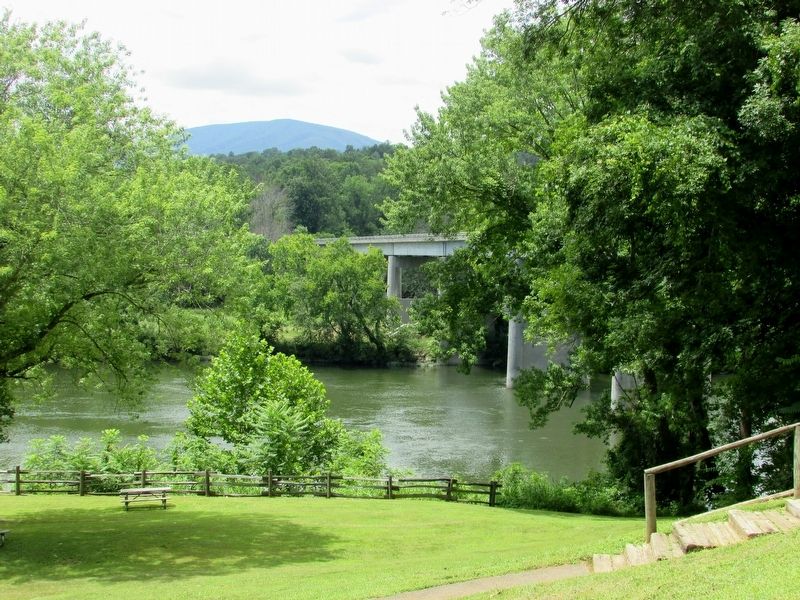
4. Harry F. Byrd Memorial Bridge
Photographed by Allen C. Browne, December 2, 2015
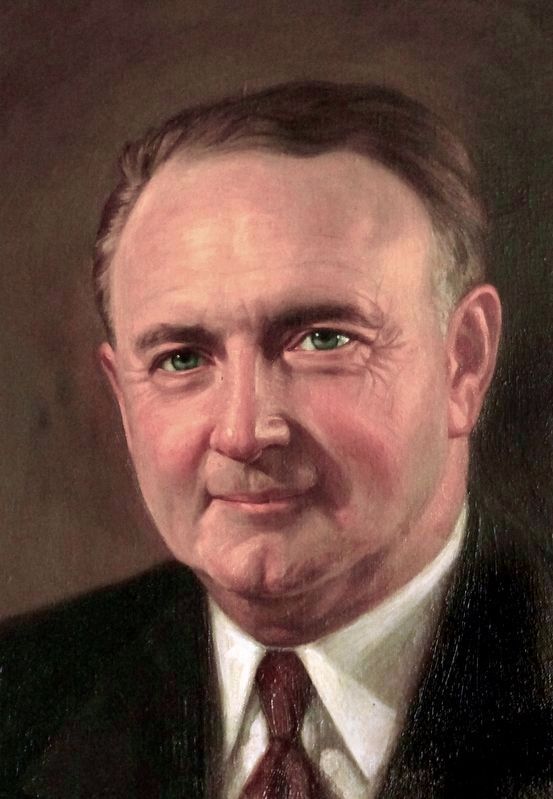
5. Harry Flood Byrd
This painting of Harry Flood Byrd (1887–1966) by John Slavin hangs in the Virginia Capitol Building in Richmond, Virginia.
“Harry F. Byrd served as a Virginia state senator (1915–1925), governor (1926–1930), and United States senator (1933–1965), was the father of a U.S. senator, and for forty years led the Democratic political machine known as the Byrd Organization. By virtue of both his service and power, he was one of the most prominent Virginians of the twentieth century. But much of that power was wielded in mostly vain opposition to the New Deal's big-government programs and the civil rights legislation of the 1960s. As governor he instituted a popular downsizing of state government that increased efficiency, but the end of his career was marked by his now-infamous ‘massive resistance’ to federally mandated school desegregation.” — Encyclopedia of Virginia
“Harry F. Byrd served as a Virginia state senator (1915–1925), governor (1926–1930), and United States senator (1933–1965), was the father of a U.S. senator, and for forty years led the Democratic political machine known as the Byrd Organization. By virtue of both his service and power, he was one of the most prominent Virginians of the twentieth century. But much of that power was wielded in mostly vain opposition to the New Deal's big-government programs and the civil rights legislation of the 1960s. As governor he instituted a popular downsizing of state government that increased efficiency, but the end of his career was marked by his now-infamous ‘massive resistance’ to federally mandated school desegregation.” — Encyclopedia of Virginia
David Haas - Library of Congress
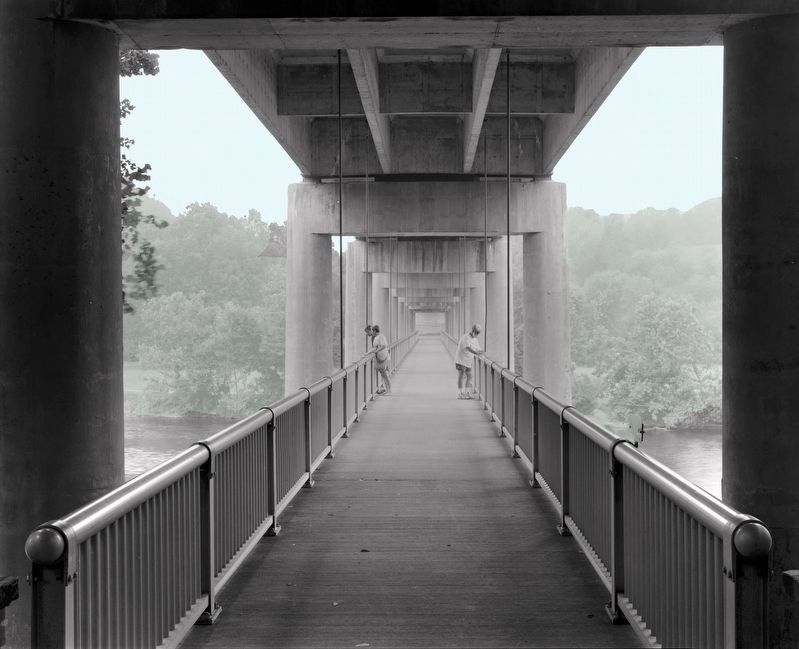
6. Harry Flood Byrd Memorial Bridge
“View of the underslung pedestrian bridge which provides access between the James River Visitor Center and the James River and Kanawha Canal. View is facing west-southwest.” – Library of Congress
Photographed by Allen C. Browne
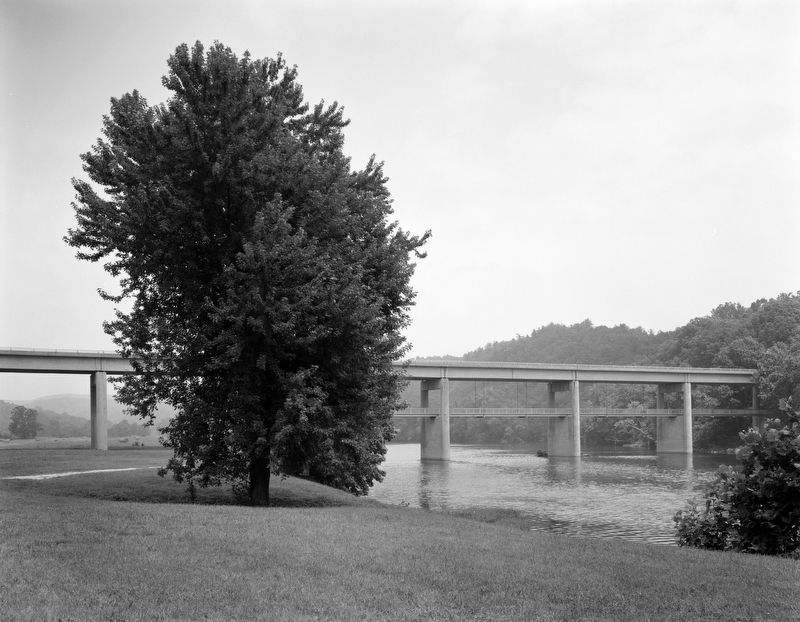
7. Harry Flood Byrd Memorial Bridge
"This 1,040 prestressed concrete girder bridge, built in 1959, is the longest of its type on the parkway." – Library of Congress
Credits. This page was last revised on October 17, 2017. It was originally submitted on July 18, 2016, by Bill Coughlin of Woodland Park, New Jersey. This page has been viewed 994 times since then and 66 times this year. Photos: 1, 2, 3, 4. submitted on July 18, 2016, by Bill Coughlin of Woodland Park, New Jersey. 5, 6. submitted on October 16, 2017, by Allen C. Browne of Silver Spring, Maryland. 7. submitted on October 17, 2017, by Allen C. Browne of Silver Spring, Maryland.
